10 Websites That Ask for Your Email But Don't Deserve Your Real One
Last Tuesday I needed a single PDF. A free industry report — publicly available, legitimately offered at no cost.
But the download button led to a form. Name. Company. Job title. Email address. "Required."
I gave them a disposable inbox from TempMailMaster.io, downloaded the PDF in 40 seconds, and moved on with my day.
Two days later, the email tied to that form received 11 marketing emails. A newsletter. A follow-up from a sales rep. An invitation to a webinar. A "did you get our last email?" follow-up to the follow-up.
The disposable inbox absorbed all of it. My real inbox stayed clean.
That's the whole story. And it plays out in dozens of situations every week if you know where to look.
Why Most People Give Away Their Real Email Without Thinking
The form appears. You want the thing behind it. You type your real email on autopilot. It takes about three seconds.
What you don't think about in those three seconds: that email address now exists in a marketing database. It may get sold to third-party partners. It will almost certainly get added to an automated email sequence. And there's no easy way to undo it once it's submitted.
This isn't paranoia. It's how commercial email marketing works. Companies collect addresses, segment audiences, and send targeted campaigns — that's the entire business model behind most "free" content.
The solution isn't to avoid useful content. It's to be selective about which websites actually deserve your permanent contact information.
Here are 10 categories where the answer is almost always: they don't.
1. Free eBook, Report, and Template Download Sites
The formula is everywhere: a free resource gated behind an email capture form. Resume templates. Financial planning spreadsheets. Marketing playbooks. SEO checklists. Industry reports.
The resource is genuinely useful. The email list you're joining is not.
What happens after you submit:
- Welcome email (day 1)
- "Did you use the template?" follow-up (day 3)
- Promotional email for their paid product (day 7)
- Weekly newsletter you never subscribed to (ongoing)
Use a temp email. Get the file. Close the tab. Move on.
2. Free Trial SaaS Tools
The SaaS industry runs on email. Sign up for a free trial, and you're entering a carefully engineered sequence designed to convert you into a paying customer.
That sequence doesn't stop when your trial ends. It continues for months — sometimes indefinitely — with re-engagement campaigns, discount offers, case studies, and feature announcements.
If you're genuinely evaluating a tool and might pay for it, a real email makes sense. But if you're just taking a quick look? Disposable inbox.
The nuance: Some SaaS tools block known temp email domains at sign-up. If that happens, it tells you something useful — they care about email quality, and this product is probably serious about its user base. Take that as a signal to engage properly, or move on.
For a full breakdown of when temp vs. real email makes sense, read: Temporary Email vs Real Email — Which One Should You Use?
3. Online Forums and Niche Communities You'll Visit Once
You have a specific question. A Reddit thread points you to a specialist forum. The forum requires account registration to post. Registration requires an email.
You create the account, ask your question, get your answer, and never return.
The forum keeps emailing you. Digest emails. Reply notifications. Community announcements. Platform updates.
You never asked to be a community member. You just had one question.
Use a temp email for any forum, discussion board, or community platform where you don't intend to be a regular participant.
4. Coupon and Discount Code Websites
"Enter your email to reveal this 15% off code."
The discount is real. The email list is also real — and persistent.
Coupon aggregator sites are often run by affiliate marketers whose entire revenue model depends on building large email lists. Your address gets added, segmented by shopping behavior, and used to send you promotions indefinitely.
The 15% discount on a $30 purchase saves you $4.50. The email list costs you an inbox full of promotions for the next two years.
Use a temp email to claim the code. Use your real one to check out if the retailer requires a purchase email.
5. Public Wi-Fi Login Portals
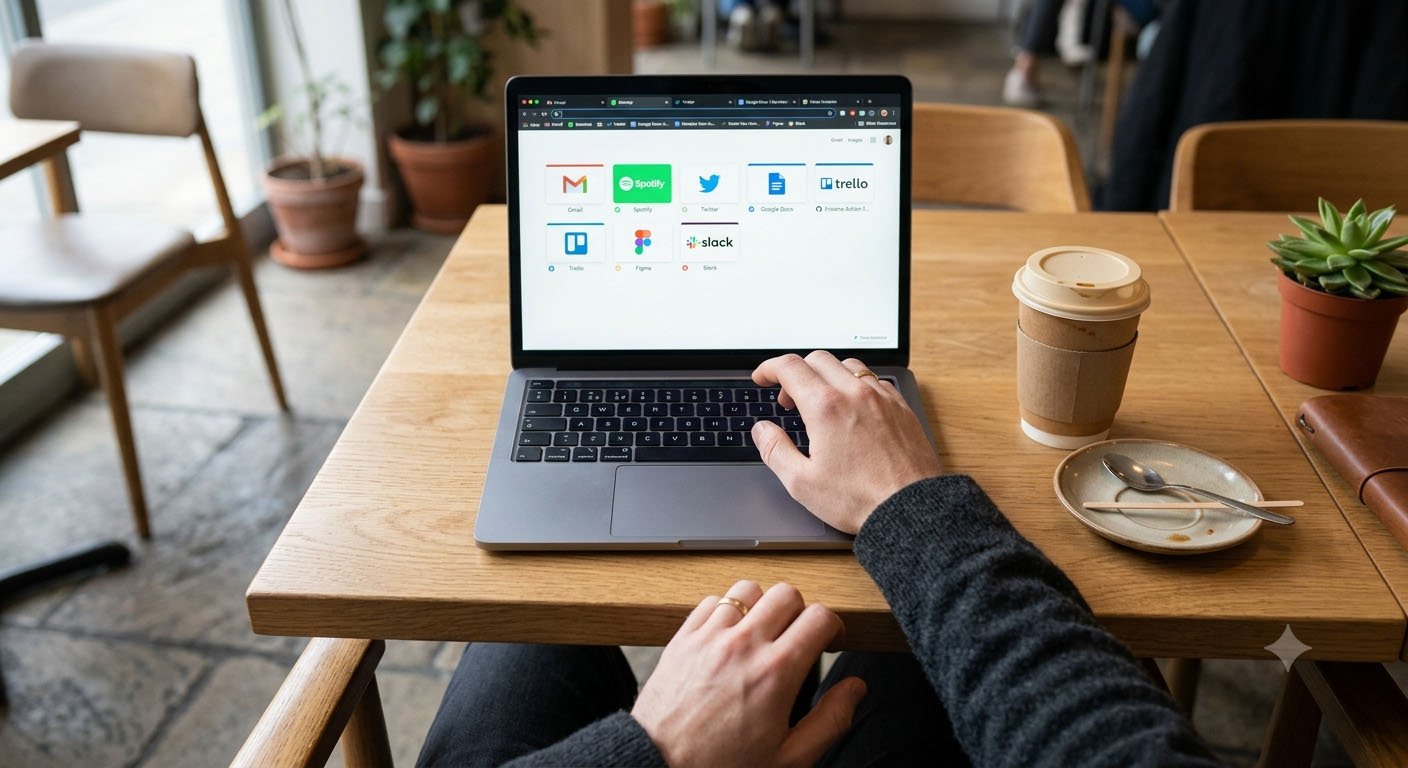
Hotel lobbies. Airport lounges. Coffee shops. Shopping malls. Many public Wi-Fi networks require an email address before granting access.
This data collection is almost never for network security purposes. It's marketing. The venue, or a third-party Wi-Fi provider, is building a list of visitors and their contact information.
Some networks sell this data to advertisers. Others use it to send promotional emails about the venue. Very few actually need your email to give you internet access.
Use a temp email to connect. The Wi-Fi works exactly the same either way.
If you're also concerned about connection security on public networks, that's a separate problem — one that a VPN solves rather than a disposable inbox. We break down the difference here: Temp Email vs VPN: Which One Do You Actually Need?
6. Webinars and Virtual Events You're Attending Once
Online conferences, expert Q&As, product demos, virtual workshops — these almost always require email registration.
The event might be excellent. But the organizer's post-event email sequence is coming regardless: the recording link, the follow-up survey, the "similar event next month," the sponsor emails.
Sponsor emails deserve a special mention. Many webinars are funded by multiple sponsors, and some registration pages include buried consent language that allows them to share your email with "event partners." Read carefully — or just use a disposable inbox.
Use a temp email for any one-off event where you're attending as an observer, not building an ongoing relationship with the organizer.
7. News Sites With Article Limits
Several major news and media organizations use metered paywalls: you can read 3–5 free articles per month before being asked to register or subscribe.
Registration is free. But it requires an email. And it enrolls you in their newsletter ecosystem.
If you read that publication regularly and want to support their journalism, subscribing with your real email makes sense. If you just needed to read one specific article? A temp inbox lets you past the wall without the commitment.
Practical note: This works more reliably on smaller publications than on major outlets like the New York Times, which has invested in identifying and blocking disposable email domains.
8. App and Software Beta Programs
Developers often gate beta access behind email registration. Early access lists, waitlists, and beta programs collect emails to manage rollouts — but those addresses also end up in launch sequences, product update lists, and investor announcement newsletters long after the beta ends.
Use a temp email for beta programs you're curious about but not committed to. If the product earns your real engagement, you can always create a proper account later.
9. Academic and Research Paper Downloads
Universities, think tanks, research firms, and consultancies frequently gate their publications behind email forms. The research is often genuinely valuable and free.
The email capture is for lead generation — your address gets added to a list that will receive quarterly reports, related research, conference invitations, and consulting service promotions.
Use a temp email to download the research. Your inbox shouldn't be collateral for academic reading.
10. Any Site You Haven't Vetted and Don't Fully Trust
This one is broad — intentionally so.
If you've landed on a website you've never visited before, the offer seems slightly too good, the branding looks generic, or something feels slightly off — trust that instinct.
A disposable inbox is a first-layer filter. It doesn't protect your device or your connection (that's what antivirus software and VPNs are for), but it does ensure that even if the site is a data harvesting operation, your real email stays out of their database.
You can always give your real email later once you've decided a site is legitimate and worth your trust. You can't take it back after you've already submitted it.
For more on how your email address becomes a target and how to protect it: Why Your Real Email Is a Target — and How TempMailMaster.io Shields You
The Pattern Behind All 10
Every example above shares the same structure:
- You want something (content, access, a discount)
- A website wants something in return (your email address)
- The exchange feels equal but isn't — you get value once, they get your contact information indefinitely
This isn't a conspiracy. It's just how email marketing works. And there's nothing wrong with it — unless you're the person whose inbox fills up as a result.
A disposable email rebalances that exchange. You get what you came for. They get a functioning email address that expires. Everyone moves on.
How to Use TempMailMaster.io in Under 30 Seconds
No sign-up. No configuration. No personal information required.
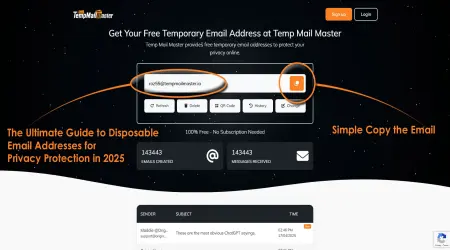
- Visit TempMailMaster.io
- Your temporary email address is already generated and waiting
- Copy it
- Paste it into whatever form is asking for your email
- Return to TempMailMaster.io to check for any incoming emails (confirmation links, download access, verification codes)
- Done
The inbox handles itself after that. You don't need to delete it, manage it, or think about it again.
Want to understand the full range of what temp email protects you from? Start here: 5 Smart Ways to Use a Temporary Email and Keep Your Data Safe
FAQ
Can I use a temp email for anything that requires ongoing access? No — if you need to log back into an account later, reset a password, or receive future notifications, a disposable inbox isn't appropriate. Use your real email for anything with a long-term relationship.
What if the site rejects my temp email? Some platforms block known disposable domains. If that happens, you have two options: use your real email for that specific service, or try a different temp email provider. A rejection usually signals the platform is serious about identity verification — take that as useful information.
Is it rude or unfair to websites to use a temp email? Not really. You're not stealing anything. You're simply choosing not to hand over your personal contact information. Websites that require email for access have built their model around that exchange — but that doesn't obligate you to participate with your primary address.
How long does a TempMailMaster.io inbox last? Long enough to receive confirmation emails and access links. For most use cases — downloading a file, verifying an account, clicking a link — you need only a few minutes.
Does using a temp email affect the quality of what I download or access? No. You receive exactly what was offered. The email address is just a verification mechanism. What's behind the form is unaffected by which inbox you used to get there.
References
- Statista — Global email spam rate https://www.statista.com/statistics/420391/spam-email-traffic-share/
- Verizon DBIR 2024 — Email as an attack vector https://www.verizon.com/business/resources/reports/dbir/
- Litmus — Email marketing statistics 2024 https://www.litmus.com/email-marketing-statistics
- FTC — CAN-SPAM Act guidelines https://www.ftc.gov/business-guidance/resources/can-spam-act-compliance-guide-business
- GDPR.eu — Right to data minimization https://gdpr.eu/article-5-how-to-process-personal-data/
- ICO — Email marketing and PECR https://ico.org.uk/for-organisations/direct-marketing/
- Mailchimp — Email list hygiene practices https://mailchimp.com/resources/email-list-hygiene/
- HubSpot — State of email marketing 2024 https://www.hubspot.com/state-of-marketing
- Pew Research — Online privacy and information sharing https://www.pewresearch.org/internet/
- ENISA — Personal data protection guidelines https://www.enisa.europa.eu
Published: June 2026 | Author: Arslan | Category: Privacy Tips & Practical Guides