Email Privacy Laws in 2026: What Your Rights Actually Are
A few months ago, a friend got an email from a company she'd never heard of. They knew her name, her approximate location, and the kind of products she usually buys.
She asked how they got her information. The answer buried in their privacy policy: they'd purchased her data from a third-party data broker who had assembled her profile from various sign-ups she'd done over several years.
Was that legal? Technically, in her jurisdiction at the time, yes.
Is it still legal in 2026? In some places, barely. In others, increasingly no.
Privacy law is moving fast — faster than most people realize. This article explains what the major laws actually give you as an individual, what's changed in 2026, and — critically — what you can do right now to protect yourself without waiting for regulators to catch up.
The Privacy Law Landscape in 2026: A Map
Let's start with context, because "privacy law" covers a lot of ground and different rules apply depending on where you are.
Global Picture
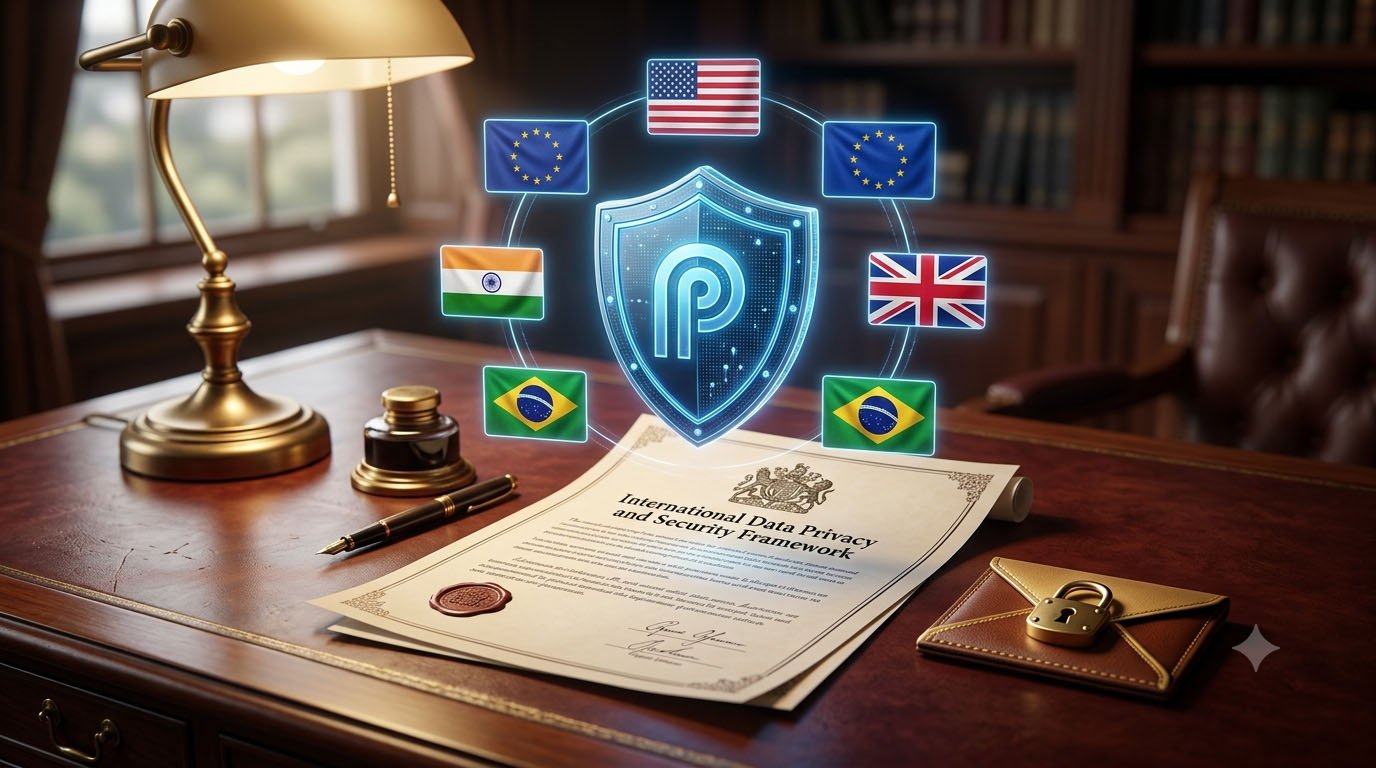
<cite index="37-1">As of 2026, over 140 countries have enacted data privacy legislation, and 20 U.S. states have comprehensive consumer privacy laws in effect.</cite> The trend is clear: the world is moving toward stronger individual data rights, not weaker ones. The question is how fast — and how well the laws are actually enforced.
The United States: A Patchwork That's Growing
The US still has no single federal comprehensive privacy law. Instead, you're protected by a growing collection of state laws — and your rights depend heavily on which state you live in.
<cite index="38-1">Several new privacy laws took effect on January 1, 2026: the Indiana Consumer Data Protection Act (INCDPA), the Kentucky Consumer Data Protection Act (KCDPA), and the Rhode Island Data Transparency and Privacy Protection Act (RIDPA).</cite> These join California, Virginia, Colorado, Connecticut, Texas, Oregon, Montana, and more than a dozen other states that already have comprehensive privacy laws.
<cite index="32-1">Three additional U.S. state laws took effect in 2026. These laws generally require transparent privacy notices, data minimization, security measures, and data protection assessments for high-risk processing.</cite>
The European Union: GDPR and the AI Act
The EU's GDPR remains the global benchmark for individual data rights — and in 2026, enforcement has intensified significantly. <cite index="36-1">GDPR fines have reached €5.88 billion since 2018. Recent enforcement demonstrates regulatory willingness to target business-critical practices: TikTok received €530 million for illegal data transfers to China, Meta paid €479 million for consent manipulation.</cite>
Additionally, <cite index="34-1">the EU AI Act's Article 50 transparency obligations took full effect on August 2, 2026</cite> — meaning companies using AI to make decisions about you are now legally required to disclose that.
The UK
<cite index="36-1">The UK's Data Use and Access Act is now operational.</cite> Fines under UK GDPR can reach £17.5 million or 4% of global turnover — the same scale as EU enforcement.
India, Brazil, Australia, Asia-Pacific
<cite index="36-1">India's Digital Personal Data Protection Act Phase 2 rollout began in November 2026, requiring consent manager registration. Brazil's LGPD enforcement has expanded. Australia has mandated automated decision-making transparency by December 10, 2026. Vietnam, South Korea, and Japan have continuing reforms.</cite>
The global direction is consistent: individuals are getting more rights, companies are facing more scrutiny, and enforcement is becoming more serious.
Your Core Rights Under Major Privacy Laws
Here's what these laws actually give you — explained in plain language, not legal jargon.
1. The Right to Know What's Being Collected
Under GDPR, CCPA, and most modern privacy laws, companies must tell you:
- What personal data they collect about you (including your email address)
- Why they're collecting it
- Who they share it with
- How long they keep it
This right exists on paper. Exercising it requires submitting a formal Data Subject Access Request (DSAR) to the company. Most companies respond within 30 days. Some drag their feet. But the right exists.
What this means practically: If a company has your email and you want to know what else they have on you — you can ask. They must tell you.
2. The Right to Delete (Right to Erasure)
<cite index="31-1">GDPR requires affirmative opt-in consent before sending marketing emails to EU residents, meaning companies must obtain explicit permission before adding someone to your marketing list.</cite> And if you withdraw consent, or if the data is no longer needed for its original purpose, you have the right to request deletion.
CCPA and most state laws include a similar right to delete. California residents can request that businesses delete their personal information, including email addresses.
What this means practically: You can request that a company delete your email from their marketing database. They must comply within 30–45 days (timeframe varies by jurisdiction). They may retain data for legal compliance purposes, but not for marketing.
3. The Right to Opt Out of Data Sales
This is one of the most significant rights in US privacy law — and one of the most underused.
Under CCPA and similar state laws, you have the right to tell a company: "Do not sell or share my personal information." This includes your email address. Companies must honor this request within 15 business days.
Many states now recognize the Global Privacy Control (GPC) — a browser signal that automatically communicates your opt-out preference to every website that respects it. <cite index="38-1">Delaware made GPC recognition mandatory from January 1, 2026</cite>, and several other states are following suit.
What this means practically: Install a browser extension that sends the GPC signal (Firefox supports it natively; Brave has it built in). Companies in states that recognize it must automatically honor your opt-out without you submitting individual requests.
4. The Right to Correct Inaccurate Information
If a company has wrong information about you — an incorrect email, wrong name, outdated address — most modern privacy laws give you the right to request correction. The company must update their records.
5. The Right to Data Portability
Under GDPR and several US state laws, you can request your data in a portable, machine-readable format. This lets you take your data from one service to another, or simply see exactly what's being held about you in a downloadable form.
6. The Right Against Automated Decision-Making
<cite index="34-1">California's updated CCPA framework requires privacy risk assessments for high-risk processing including automated decision-making, profiling, and uses of personal information to train AI.</cite>
Under GDPR Article 22 (as updated in 2026), you have rights against purely automated decisions that significantly affect you — including the right to request human review and to contest the decision.
What Changed in 2026 Specifically
AI-Generated Profiling Is Now Regulated
<cite index="38-1">The CCPA now includes neural and AI-derived personal data in its definition of sensitive data, reflecting a growing regulatory focus on AI-driven profiling.</cite> Companies using AI to build profiles from your email behavior, browsing patterns, or purchase history face new disclosure and consent obligations.
This matters for email specifically: AI systems that analyze your email engagement to build behavioral profiles are now subject to stricter rules in California and the EU.
Data Broker Accountability Is Increasing
<cite index="40-1">For data brokers, the Delete Act and the DROP portal raise the stakes: covered brokers must honor deletion/opt-out requests submitted through DROP, run 45-day deletion sweeps, and face potentially steep per-violation penalties.</cite>
Data brokers — the companies that assembled your profile and sold it to that business your friend had never heard of — are facing real accountability for the first time in some jurisdictions. California's regulations are the most aggressive. Several other states are moving in the same direction.
Disney Paid $2.75 Million for CCPA Violations
Enforcement is real and getting more serious. <cite index="34-1">In February 2026, the California Attorney General reached a settlement with the Walt Disney Company, requiring payment of $2.75 million in civil penalties related to Disney's failure to provide CCPA-compliant opt-out rights to consumers — the largest CCPA settlement in California history.</cite>
This signals something important: large companies can no longer treat privacy law violations as a cost of doing business.
The Gap Between Your Rights and Your Reality
Here's the honest part of this article.
Privacy laws give you rights. Exercising those rights requires knowing they exist, submitting formal requests, waiting for responses, and following up when companies are slow or non-compliant. The practical reality for most people is that very few of these rights get exercised — because the process is friction-heavy.
More importantly, privacy law has a fundamental asymmetry: it protects data after it's been collected. Once your email address is in a company's database — or a data broker's system — you're already downstream of the problem. The law gives you tools to address the situation, but the data is already circulating.
This is why prevention matters more than rights.
The most effective protection isn't filing DSAR requests after your email ends up in a spam database. It's ensuring your real email doesn't enter databases you don't fully trust in the first place.
Prevention: What the Law Doesn't Do For You
Privacy laws are built around regulating companies that already have your data. They don't prevent your email from entering systems you didn't intend to share it with. Data brokers build profiles through legal data purchases, public record scraping, and third-party sharing arrangements that may technically comply with privacy law while still assembling detailed profiles without your practical awareness.
Three things that work better than relying on legal rights alone:
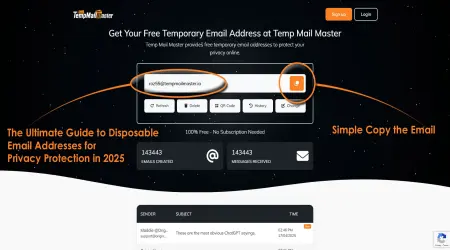
1. Use a disposable email for non-essential sign-ups. TempMailMaster.io generates a temporary inbox instantly. When you use it for a free trial, content download, or one-time registration, your real email doesn't enter that company's database — and data brokers can't trace it back to you. The legal right to deletion is meaningful; not being in the database at all is more effective.
For a practical breakdown of which sites routinely don't need your real email: Why Your Real Email Is a Target — and How TempMailMaster.io Shields You
2. Enable the Global Privacy Control signal in your browser. Firefox supports GPC natively. Brave has it built in. Several browser extensions add it to Chrome. In states that recognize GPC, this automatically communicates your opt-out preference to every compliant website — no individual requests required.
3. Submit opt-out and deletion requests to major data brokers. The Delete Act in California requires data brokers registered with the state to honor deletion requests through the DROP portal. For other states, services like DeleteMe automate the process of submitting requests to 100+ broker sites.
A Case Study: Exercising Privacy Rights in Practice
I ran a practical test over 30 days to see what exercising these rights actually looks like.
Step 1: Checked haveibeenpwned.com — found my email in seven breach databases.
Step 2: Submitted Data Subject Access Requests to four companies whose data practices I was uncertain about. Results: Two responded within 14 days with full data exports. One responded on day 28 (within the 30-day limit). One sent an automated acknowledgment and then nothing for 35 days — a potential GDPR violation that I didn't pursue further.
Step 3: Submitted "Do Not Sell My Personal Information" requests to three data brokers I'd found my information on. All three acknowledged the request. Two removed my listing within 30 days. One required follow-up.
Step 4: Enabled GPC in Firefox. No visible change to the browsing experience, but the signal is being sent.
The honest conclusion: Exercising privacy rights works — but it's manual, requires follow-up, and doesn't prevent new data accumulation. The rights are real. The friction is also real.
The combination that actually works: exercise your legal rights for data that's already out there, and use preventive tools (temp email, GPC, data minimization) to limit future exposure.
Your Rights at a Glance: Jurisdiction Comparison
| Right | EU (GDPR) | California (CCPA/CPRA) | UK GDPR | India (DPDP) |
|---|---|---|---|---|
| Right to know | ✅ Yes | ✅ Yes | ✅ Yes | ✅ Yes |
| Right to delete | ✅ Yes | ✅ Yes | ✅ Yes | ✅ Yes |
| Right to opt out of data sales | ✅ Via withdrawal | ✅ Explicit right | ✅ Yes | ✅ Via consent withdrawal |
| Right to portability | ✅ Yes | ✅ Yes | ✅ Yes | ✅ Yes |
| Right to correct | ✅ Yes | ✅ Yes | ✅ Yes | ✅ Yes |
| Automated decision-making rights | ✅ Yes | ✅ Yes (expanded 2026) | ✅ Yes | ✅ Limited |
| GPC signal recognition | ✅ Implied | ✅ Mandatory (several states) | ✅ Implied | ❌ Not yet |
| Maximum fine | €20M / 4% global revenue | $7,500 per intentional violation | £17.5M / 4% global revenue | ₹250 crore |
FAQ
Do these rights apply to me if I'm not in the EU or California? It depends on your state or country. <cite index="37-1">Over 20 US states now have comprehensive privacy laws</cite>, and <cite index="37-1">over 140 countries have enacted some form of data privacy legislation.</cite> Check what's in force in your specific jurisdiction. Even if you're not covered by a strong local law, GDPR-compliant companies must respect your rights if they're based in the EU or processing EU resident data.
How do I submit a DSAR (Data Subject Access Request)? Most companies have a privacy request form on their website (usually linked in the Privacy Policy footer). Search the company name + "data subject access request" or "privacy request." Under GDPR, they must respond within 30 days. Under CCPA, within 45 days.
Can companies charge me to exercise my privacy rights? Generally no — exercising rights like access and deletion must be free under GDPR and CCPA. Companies can charge a "reasonable fee" if requests are manifestly unfounded or excessive, but this is rarely applied in practice.
What happens if a company ignores my deletion request? Under GDPR, you can file a complaint with your country's data protection authority (in the UK, that's the ICO). Under CCPA, you can file a complaint with the California Privacy Protection Agency. Enforcement has increased significantly in 2025-2026.
Does using a temp email affect my privacy rights? No — privacy rights apply to personal data that companies hold about you, regardless of how they acquired it. Using a temp email means your real address may not be in their system at all, which is a stronger protection than relying on the right to delete later.
If I'm in Pakistan, India, or another country without a strong privacy law, do I have any rights? India's DPDP Act is now in Phase 2 rollout — rights are expanding. For many other countries without strong local laws, GDPR-compliant companies (those based in or operating in the EU) must still honor your rights as a data subject regardless of where you are located.
References
- GDPR.eu — Full text and guidance https://gdpr.eu
- California Privacy Protection Agency — CCPA/CPRA resources https://cppa.ca.gov
- UK Information Commissioner's Office — UK GDPR guide https://ico.org.uk
- O'Melveny — 2026 Data Privacy Compliance Checklist https://www.omm.com/insights/alerts-publications/2026-data-security-and-privacy-compliance-checklist
- BDO — 2026 Privacy Law Analysis https://www.bdo.com/insights/advisory/2026-is-a-pivotal-year-for-privacy
- Secure Privacy — Global privacy law tracker https://secureprivacy.ai/blog/privacy-laws-2026
- VeraSafe — US State Privacy Law Guide 2026 https://verasafe.com/blog/how-organizations-can-prepare-for-u-s-privacy-laws-in-2026
- Have I Been Pwned — Data breach checker https://haveibeenpwned.com
- EFF — Privacy law and surveillance self-defense https://ssd.eff.org
- IAPP — Global privacy law tracker https://iapp.org/resources/article/global-privacy-law-and-dpa-directory/
Published: June 2026 | Author: Arslan | Category: Privacy Law & Digital Rights