
Metaverse Identity: Temp Mail for Web3 Wallet Backup
The Metaverse Identity: Why Your Web3 Wallet Needs a Disposable Email Backup
Introduction: The Vulnerable Bridge to the Decentralized World
The promise of Web3 and the Metaverse is a decentralized, sovereign digital identity. Your Web3 wallet (e.g., MetaMask, Trust Wallet) is the key to this new world, holding your cryptocurrencies, NFTs, and entire digital persona. Yet, for all the cryptographic security of the blockchain, the bridge connecting your wallet to the real world—your email address—remains the single most vulnerable point of attack.
This article argues that in the high-stakes environment of Web3, where a single mistake can lead to the permanent loss of assets, a traditional email address is a liability. Instead, a disposable email backup is not just a best practice; it is an essential, ephemeral shield that protects your digital fortune from the most common and devastating forms of social engineering and account compromise.
The Web3 Paradox: Decentralized Assets, Centralized Vulnerability
The security of your Web3 identity is only as strong as its weakest link.
The email address is the "backdoor" that centralized services (like exchanges, NFT marketplaces, and even some wallets) use for account recovery, security alerts, and critical communication. This makes it the prime target for attackers.
Part I: The Phishing Epidemic and the Disposable Defense
Phishing remains the number one threat to Web3 users, and it almost always starts with an email.
1. The NFT Marketplace Phishing Loophole
NFT marketplaces and Web3 platforms often require an email for account creation, notifications, and, crucially, password resets.
•Targeted Phishing: Attackers scrape public blockchain data to identify high-value wallet holders. They then craft highly personalized phishing emails that mimic official marketplace communications, often asking the user to "re-verify" their wallet connection or "claim a free NFT."
•The Disposable Solution: By using a disposable email for every single Web3 service, the user ensures that:
•Zero-Day Breach Isolation: If a marketplace suffers a data breach, the exposed email is non-attributable and cannot be used to target the user's primary identity.
•Phishing Isolation: Any phishing attempt is directed to an ephemeral inbox, which is designed to be a dead end, preventing the attacker from gaining a foothold in the user's long-term digital life.
2. The SIM Swap and Account Recovery Hijack
A SIM swap attack is a form of identity theft where an attacker convinces a mobile carrier to transfer a victim's phone number to a new SIM card.
•The Attack Vector: Once the attacker controls the phone number, they can intercept two-factor authentication (2FA) codes and, more importantly, email account recovery links. If the user's primary email is linked to their Web3 accounts, the attacker can use the phone number to reset the email password, and then use the email to reset the Web3 account password.
•The Disposable Backup: A disposable email that is not linked to a phone number and is only used for Web3-related notifications acts as a critical backup layer. If the primary email is compromised, the disposable email remains isolated and secure, preventing the attacker from completing the chain of compromise.
Part II: Metaverse Identity and the Need for Ephemeral Personas
As the Metaverse evolves, your identity will become a composite of your wallet, your avatar, and your associated digital assets. Protecting this composite identity requires a strategy of pseudonymity.
1. The Right to Pseudonymity in Web3
The philosophical argument for the "Right to Pseudonymity" 4
is particularly relevant in Web3. You should be able to interact, trade, and build in the Metaverse without linking every action to your real-world identity.
•Disposable Email for Pseudonyms: Each Metaverse persona (e.g., a gaming avatar, a trading bot, a DAO member) should be registered with a unique, disposable email. This prevents the doxxing of your entire digital life if one persona is compromised or if you wish to retire a specific identity.
•Preventing Cross-Platform Tracking: Centralized entities are attempting to bridge Web2 and Web3 data. Using a disposable email for Web3 interactions ensures that your Web3 activity cannot be easily correlated with your Web2 browsing history, social media, or real-world identity.
2. The Role of Email in Wallet Security Alerts
Many secure wallets and DeFi platforms offer email alerts for large transactions, login attempts, or security breaches.
•Secure Alert Channel: This alert system is vital, but it must be secured. Using a disposable email that is only accessed via a secure, session-based login (like TempMailMaster.io) ensures that the alert itself is not intercepted by a compromised primary email account.
•The "Clean Room" Principle: The disposable email acts as a "clean room" 5
for all Web3-related communication, ensuring that no malicious code or tracking pixels from a compromised Web2 service can enter the Web3 security perimeter.
Part III: Practical Steps for Web3 Users
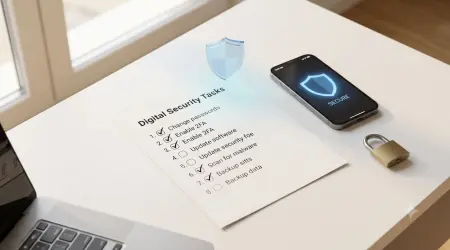
To effectively use a disposable email as a Web3 wallet backup, follow this protocol:
Part IV: Advanced Security Strategies: The Technical Edge of Ephemeral Email
The utility of a disposable email in the Web3 space extends beyond simple phishing prevention. It is a fundamental component of an advanced, layered security architecture that leverages the technical properties of temporary email services.
1. The Zero-Log Policy and Non-Attributability
The core security feature of a high-quality disposable email service is its zero-log policy. Unlike major email providers that log every IP address, every login, and every piece of metadata, a true temporary email service is designed to be ephemeral and non-attributable.
•Forensic Resistance: In the event of a compromise on a third-party Web3 platform, the attacker may attempt to trace the user's identity through the associated email address. If that email is a disposable one with a zero-log policy, the forensic trail ends abruptly. There is no permanent record of the user's IP address, device, or other identifying information linked to the creation or access of that specific email address. This non-attributability is a powerful defense against state-level actors or highly sophisticated, targeted attacks.
•Data Minimization Principle: This practice aligns perfectly with the data minimization principle central to modern privacy regulations like GDPR and CCPA 9
. By using a disposable email, the user is ensuring that the minimum amount of personal data is exposed to any given Web3 service, drastically reducing the attack surface.
2. Evasion of Email Tracking Pixels in the Metaverse
The Metaverse, while decentralized in its core, is still heavily influenced by Web2 marketing and tracking technologies. Email tracking pixels—tiny, invisible images embedded in emails—are used by marketers and, increasingly, by malicious actors to confirm email activity.
•The Threat of Confirmation: When a user opens an email containing a tracking pixel, the sender is notified of the exact time, the user's IP address, and often the device used. In the context of Web3, this can be used to confirm that a specific email address is active and belongs to a high-value target, making the user vulnerable to a follow-up, more aggressive attack.
•Disposable Email as a Firewall: Many advanced disposable email services automatically strip or block these tracking pixels. Even if they don't, the very nature of a session-based, temporary inbox means that the IP address logged by the tracker is the temporary IP of the service's server, not the user's home IP. This provides an essential layer of anonymity and prevents the confirmation of a "live" target 9
.
3. The Role of Disposable Email in Decentralized Autonomous Organizations (DAOs)
DAOs rely on governance proposals and voting, which often require email notifications for critical updates.
•Maintaining Pseudonymous Governance: A DAO member may wish to participate in governance without linking their voting power to their real-world identity. Using a unique disposable email for each DAO membership ensures that their participation remains pseudonymous. This is crucial for protecting members from external pressure or retaliation based on their voting record.
•Security for High-Value Proposals: For high-value proposals, the email channel is a potential vector for social engineering. An attacker could send a fake "emergency vote" email. By using a dedicated disposable email for DAO communications, the user can quickly isolate and identify suspicious activity that does not arrive in that specific, known-secure channel.
Part V: The Future of Web3 Security: From Backup to Primary Defense
The evolution of Web3 security is moving away from relying on centralized Web2 infrastructure. Disposable email is positioned to become a primary defense mechanism, not just a backup.
1. The Shift from Account Recovery to Wallet Recovery
Traditional Web2 security focuses on account recovery via email. Web3 security focuses on wallet recovery via seed phrase. The email's role is shifting from a recovery tool to a notification and identity isolation tool.
•Decoupling Identity: The most secure Web3 practice is to completely decouple your financial identity (your wallet) from your communication identity (your email). A disposable email facilitates this decoupling by providing a necessary communication channel without the permanence and traceability of a traditional email.
•The "Burner" Mindset: The concept of a "burner" phone has been adopted for security. The "burner" email is the digital equivalent. It is a tool to be used and discarded, minimizing the long-term data footprint and making the user a less appealing target for long-term surveillance or data harvesting 9
.
2. Case Study: Preventing NFT Airdrop Scams
NFT airdrop scams are a common tactic where users are sent an email claiming they have received a free NFT and are prompted to click a link to "mint" or "claim" it. This link often leads to a malicious site that drains their wallet.
•The Scam's Weakness: The scam relies on the user's email being known and the user trusting the source.
•The Disposable Advantage: If the user uses a unique disposable email for each NFT platform, they can immediately spot a scam if an airdrop notification for a specific platform arrives in the wrong disposable inbox. This cross-referencing acts as an immediate, low-friction security check.
3. The Interplay with Hardware Wallets
Even users with the most secure hardware wallets (e.g., Ledger, Trezor) are vulnerable to email-based social engineering.
•The Hardware Wallet's Blind Spot: A hardware wallet protects the private key, but it cannot protect the user from being tricked into signing a malicious transaction. The initial trick—the phishing email—is the weak point.
•Disposable Email as the First Line of Defense: By filtering all Web3-related communication through a disposable email, the user adds a layer of abstraction between the attacker and the final, critical action. The disposable email acts as a necessary buffer, ensuring that only legitimate, expected communications reach the user's attention.
Part IV: Advanced Security Strategies: The Technical Edge of Ephemeral Email
The utility of a disposable email in the Web3 space extends beyond simple phishing prevention. It is a fundamental component of an advanced, layered security architecture that leverages the technical properties of temporary email services.
1. The Zero-Log Policy and Non-Attributability
The core security feature of a high-quality disposable email service is its zero-log policy. Unlike major email providers that log every IP address, every login, and every piece of metadata, a true temporary email service is designed to be ephemeral and non-attributable.
•Forensic Resistance: In the event of a compromise on a third-party Web3 platform, the attacker may attempt to trace the user's identity through the associated email address. If that email is a disposable one with a zero-log policy, the forensic trail ends abruptly. There is no permanent record of the user's IP address, device, or other identifying information linked to the creation or access of that specific email address. This non-attributability is a powerful defense against state-level actors or highly sophisticated, targeted attacks.
•Data Minimization Principle: This practice aligns perfectly with the data minimization principle central to modern privacy regulations like GDPR and CCPA 9
. By using a disposable email, the user is ensuring that the minimum amount of personal data is exposed to any given Web3 service, drastically reducing the attack surface.
2. Evasion of Email Tracking Pixels in the Metaverse
The Metaverse, while decentralized in its core, is still heavily influenced by Web2 marketing and tracking technologies. Email tracking pixels—tiny, invisible images embedded in emails—are used by marketers and, increasingly, by malicious actors to confirm email activity.
•The Threat of Confirmation: When a user opens an email containing a tracking pixel, the sender is notified of the exact time, the user's IP address, and often the device used. In the context of Web3, this can be used to confirm that a specific email address is active and belongs to a high-value target, making the user vulnerable to a follow-up, more aggressive attack.
•Disposable Email as a Firewall: Many advanced disposable email services automatically strip or block these tracking pixels. Even if they don't, the very nature of a session-based, temporary inbox means that the IP address logged by the tracker is the temporary IP of the service's server, not the user's home IP. This provides an essential layer of anonymity and prevents the confirmation of a "live" target 9
.
3. The Role of Disposable Email in Decentralized Autonomous Organizations (DAOs)
DAOs rely on governance proposals and voting, which often require email notifications for critical updates.
•Maintaining Pseudonymous Governance: A DAO member may wish to participate in governance without linking their voting power to their real-world identity. Using a unique disposable email for each DAO membership ensures that their participation remains pseudonymous. This is crucial for protecting members from external pressure or retaliation based on their voting record.
•Security for High-Value Proposals: For high-value proposals, the email channel is a potential vector for social engineering. An attacker could send a fake "emergency vote" email. By using a dedicated disposable email for DAO communications, the user can quickly isolate and identify suspicious activity that does not arrive in that specific, known-secure channel.
Part V: The Future of Web3 Security: From Backup to Primary Defense
The evolution of Web3 security is moving away from relying on centralized Web2 infrastructure. Disposable email is positioned to become a primary defense mechanism, not just a backup.
1. The Shift from Account Recovery to Wallet Recovery
Traditional Web2 security focuses on account recovery via email. Web3 security focuses on wallet recovery via seed phrase. The email's role is shifting from a recovery tool to a notification and identity isolation tool.
•Decoupling Identity: The most secure Web3 practice is to completely decouple your financial identity (your wallet) from your communication identity (your email). A disposable email facilitates this decoupling by providing a necessary communication channel without the permanence and traceability of a traditional email.
•The "Burner" Mindset: The concept of a "burner" phone has been adopted for security. The "burner" email is the digital equivalent. It is a tool to be used and discarded, minimizing the long-term data footprint and making the user a less appealing target for long-term surveillance or data harvesting 9
.
2. Case Study: Preventing NFT Airdrop Scams
NFT airdrop scams are a common tactic where users are sent an email claiming they have received a free NFT and are prompted to click a link to "mint" or "claim" it. This link often leads to a malicious site that drains their wallet.
•The Scam's Weakness: The scam relies on the user's email being known and the user trusting the source.
•The Disposable Advantage: If the user uses a unique disposable email for each NFT platform, they can immediately spot a scam if an airdrop notification for a specific platform arrives in the wrong disposable inbox. This cross-referencing acts as an immediate, low-friction security check.
3. The Interplay with Hardware Wallets
Even users with the most secure hardware wallets (e.g., Ledger, Trezor) are vulnerable to email-based social engineering.
•The Hardware Wallet's Blind Spot: A hardware wallet protects the private key, but it cannot protect the user from being tricked into signing a malicious transaction. The initial trick—the phishing email—is the weak point.
•Disposable Email as the First Line of Defense: By filtering all Web3-related communication through a disposable email, the user adds a layer of abstraction between the attacker and the final, critical action. The disposable email acts as a necessary buffer, ensuring that only legitimate, expected communications reach the user's attention.
Valuable FAQ: Web3 and Disposable Email
Q1: Why can't I just use a new Gmail account for my Web3 backup?
A: A new Gmail account is still a centralized, permanent identity linked to Google's massive data ecosystem. It is vulnerable to SIM swap attacks (if linked to a phone number), government subpoenas, and Google's own data breaches. A disposable email, especially one with a zero-log policy, offers a level of ephemerality and non-attributability that a major email provider cannot match.
Q2: Is it safe to use a disposable email for my crypto exchange account?
A: Yes, but with a caveat. For the highest-security accounts (like a major exchange holding significant funds), you should use a dedicated, secure email (like Proton Mail) with hardware 2FA. However, for NFT marketplaces, DeFi protocol notifications, and new dApp sign-ups, a disposable email is highly recommended to isolate the risk of phishing and data breaches.
Q3: What is the biggest risk of not using a disposable email for Web3?
A: The biggest risk is identity correlation. If an attacker compromises a low-security Web2 account (e.g., a forum) that shares the same email as your high-value Web3 wallet, they can use that information to target you with sophisticated social engineering attacks, leading to a total loss of assets.
Q4: Does a disposable email protect my seed phrase?
A: No. A disposable email protects the email-based access points to your Web3 identity. Your seed phrase (private key) is the ultimate key. You must still store your seed phrase offline and never enter it into any website or application. The disposable email protects you from the attacks that try to trick you into revealing that seed phrase.
Q5: How does a disposable email help with Metaverse identity theft?
A: Metaverse identity theft often involves compromising the email linked to your avatar or digital assets. By using a disposable email, you ensure that even if your Metaverse account is compromised, the attacker cannot use that email to pivot to your real-world identity or other, more valuable accounts. It limits the damage to a single, ephemeral persona.
Q6: Can I use a disposable email for my Web3 domain name registration (e.g., ENS)?
A: Yes, and it is highly recommended. Registering a Web3 domain name (like an Ethereum Name Service or ENS domain) often requires an email for initial setup and renewal notifications. Using a disposable email ensures that the registration is not tied to your permanent identity, enhancing your pseudonymity. However, ensure the disposable service is reliable enough to receive critical renewal notices, or use a dedicated, long-lived burner email for this purpose.
Q7: What is the "identity correlation" risk in Web3?
A: Identity correlation is the process by which an attacker or data broker links your pseudonymous Web3 activities (wallet address, NFT ownership, DAO votes) to your real-world identity (name, location, other accounts). This is often achieved by finding a common, permanent identifier—like a traditional email address—used across both Web2 and Web3 platforms. A disposable email breaks this correlation chain, making it significantly harder to de-anonymize your Web3 persona.
References
[1] TempMailMaster.io Blog. (2025). GDPR, CCPA, and Temp Mail: The Right to Be Forgotten vs. Service Abuse. [Internal Link: /blog/gdpr-ccpa-temp-mail]
[2] TempMailMaster.io Blog. (2025). The Invisible Inbox: A Deep Dive into Email Tracking Pixel Evasion Rates. [Internal Link: /blog/invisible-inbox]
[3] TempMailMaster.io Blog. (2025). Deep Dive: The Technical Difference Between a 'Burner' Email and a 'Forwarding Alias'. [Internal Link: /blog/burner-vs-alia## References
[4] TempMailMaster.io Blog. (2025). The 'Right to Pseudonymity': A Philosophical and Practical Argument for Disposable Email. [Internal Link: /blog/right-to-pseudonymity]
[5] TempMailMaster.io Blog. (2025). The 'Clean Room' Technique: Using Temp Mail for Secure Software Testing. [Internal Link: /blog/clean-room-testing]
[6] Checkpoint Blog. (2025). NFT Security Guide: Protect Your Digital Assets. [Source Link:
[7] Fireblocks Blog. (2024 ). How to protect your business from NFT phishing attacks and spam. [Source Link:
[8] DXC Technology. (n.d. ). Practice smart security in the metaverse. [Source Link:
[9] TempMailMaster.io Blog. (2025 ). GDPR, CCPA, and Temp Mail: The Right to Be Forgotten vs. Service Abuse. [Internal Link: /blog/gdpr-ccpa-temp-mail]
[9] TempMailMaster.io Blog. (2025). The Invisible Inbox: A Deep Dive into Email Tracking Pixel Evasion Rates. [Internal Link: /blog/invisible-inbox]
[9] TempMailMaster.io Blog. (2025). Deep Dive: The Technical Difference Between a 'Burner' Email and a 'Forwarding Alias'. [Internal Link: /blog/burner-vs-alias]
Written by Arslan – a digital privacy advocate and tech writer/Author focused on helping users take control of their inbox and online security with simple, effective strategies.