Email Privacy for Students: What Your University Email Reveals and What to Use Instead
When you got your university email address, you probably thought of it as a practical tool. A way to receive class announcements. A required login for the learning management system. A professional-looking email to put on your resume.
What you probably didn't think about: that email address connects your academic identity to your personal behavior across dozens of platforms — and the data flows in ways most students never consider.
This isn't about being paranoid. It's about understanding a system that affects you directly, and making simple choices that protect you without complicating your life.
What Your University Email Actually Reveals
Your university email address carries more context than a random Gmail address. The domain identifies your institution, your enrollment status, your geographic location, and often your approximate age bracket and life stage.
When you use it to sign up for things:
The platform knows you're a student. Many services offer student discounts precisely because they can identify student email domains — and because acquiring students as users creates long-term customer relationships. The discount is the customer acquisition cost.
Your institution is linked to your account. For services that verify student status, your university domain creates a verified link between your online account and your real-world institutional identity.
Your sign-up data carries academic context. A marketer or data broker knows that email addresses from university domains represent a specific demographic — typically 18–24, certain income range, particular life priorities. This makes university-domain emails valuable for targeting.
Institutional exposure if you use it for personal things. Your university IT department can see activity associated with your university email account — including third-party verification emails sent to it. Using your university email for personal dating apps, political organizations, or other activities you'd rather keep private creates institutional visibility.
The EdTech Data Privacy Problem
Here's something most students — and many faculty — don't know: many educational technology platforms used in universities have significantly less rigorous data protection than the major consumer platforms most people are already skeptical about.
Under FERPA (Family Educational Rights and Privacy Act), schools are required to protect student education records. However, FERPA was written before the current landscape of cloud-based EdTech and has gaps that allow considerable data sharing with third-party vendors under the "school official" exception.
When your school contracts with an EdTech platform (a learning management system, an online testing tool, a plagiarism detection service, a video lecture platform), that vendor becomes a "school official" under FERPA and can receive your data — including your email address and academic activity — as part of the contract.
What those vendors do with that data depends on their own privacy policies and practices. Some are excellent. Some are less so. Students rarely have visibility into which vendor has their data or what those vendors do with it.
Platforms commonly used in universities that collect student data:
- Learning Management Systems (Canvas, Blackboard, Moodle)
- Online proctoring tools (Proctorio, Honorlock, ExamSoft) — these often collect extensive data including webcam footage, eye tracking, and browser activity
- Plagiarism detection services (Turnitin, Unicheck) — these retain copies of submitted work
- Video lecture platforms (Panopto, Kaltura)
- Student response systems (Poll Everywhere, iClicker)
Each platform your institution uses has its own privacy practices. You're subject to all of them simultaneously.
Student Discount Sites: The Data Collection Trap
Student discount sites deserve specific attention because they're the place where students most commonly give away their university email without thinking about the consequences.
Student discount aggregators (UNiDAYS, Student Beans, Prime Student verification sites) require you to verify your student status through your university email. This is genuinely useful — you get real discounts on real products.
But the data collection behind these platforms is extensive:
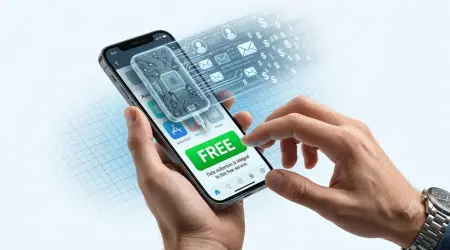
Your verified student status becomes a marketable data point. These platforms know your institution, your approximate age, and often additional demographic information you provide during verification. This data is commercially valuable — verified student audiences are high-value advertising targets.
The brands offering discounts receive information about your verification. When you verify student status to get a discount from a specific brand, that brand learns you're a verified student. This data gets incorporated into their customer profile of you.
The email addresses collected through verification get added to marketing systems. Your university email, used for verification, may end up in multiple marketing databases through the partner relationships of the verification platform.
The discount is real. The data collection is also real.
For student discounts where you genuinely want the discount and are comfortable with ongoing communication from the brand: your university email or a dedicated sign-up email is appropriate.
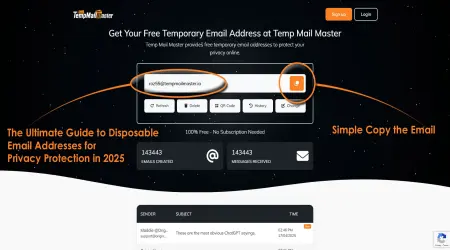
For student discount sites you're using to claim a one-time discount and don't intend to engage with further: TempMailMaster.io for the verification step keeps your real email out of their systems — though some verification systems check email domain against university records and may require an actual university email.
The Three-Email System for Students
The most practical approach for students is a deliberate three-tier email system:
Tier 1: Your University Email (Institutional Only)
Use this email for:
- University portals and course platforms (required)
- Faculty and staff communication (required)
- Legitimate student discount verification (intentional choice)
- Internship and job applications during enrollment (credibility benefit)
Do not use it for:
- Personal social media accounts
- Personal subscriptions and sign-ups
- Any platform where you wouldn't want your institution to see the association
Tier 2: A Dedicated Personal Email
Create a clean Gmail or similar account used exclusively for your real personal accounts: banking, healthcare, family contacts, long-term subscriptions, professional networking you'll continue after graduation.
This email never gets used for sign-ups you're not fully committed to. It stays clean throughout your academic career and remains your primary contact after graduation.
Tier 3: Temp Email for Everything Else
TempMailMaster.io for:
- Free trials of software tools
- One-time content downloads (academic papers, templates)
- Webinars and online events
- Any platform you're exploring once
- App sign-ups you're testing
This tier handles the constant stream of sign-ups that student life generates — free tools for coursework, platforms recommended by professors, research databases, career exploration resources — without those sign-ups accumulating in your real email addresses.
Academic Research and Database Access
Many academic databases require email registration to access full-text papers, reports, or datasets. This is a common place where students give away university or personal email unnecessarily.
For one-time access to a specific paper: Many papers are available through institutional library access (no personal email required) or through open-access repositories like arXiv, SSRN, or the author's personal website. Check these before surrendering your email.
For research databases you'll use repeatedly: If your library has institutional access, use it — no personal email needed. If you need personal account features, a dedicated research email or your institutional email is appropriate.
For general research resources and tools: Temp email for one-time registrations is appropriate.
Online Privacy After Graduation
Your email practices during university have implications that extend beyond graduation:
University email typically expires after graduation. Any accounts tied to your university email become inaccessible when the address is deactivated — usually 6–12 months post-graduation. If you've used your university email for personal accounts, plan migration well before graduation.
Data collected during student years persists. EdTech platforms retain student data beyond graduation. The behavioral and academic data collected while you were a student may remain in vendor systems for years.
Your student email data becomes part of your adult profile. Data broker profiles built from student-years sign-ups follow you into professional life. The email habits you build during university either protect or expose you in the years that follow.
A Note on Online Proctoring Software
Online proctoring tools deserve special attention because they collect significantly more intrusive data than most students realize.
Tools like Proctorio and ExamSoft can access:
- Your webcam and microphone (during the exam)
- Your screen (everything on your monitor)
- Your browsing history (to verify you're not switching tabs)
- Eye movement tracking (to detect looking away from the screen)
- Room scan capability (to check your physical environment)
This data is collected, stored, and processed by a third-party company under a contract with your institution. You typically have no meaningful ability to opt out if your institution requires it for exams.
Understanding this doesn't mean there's an easy solution — if your institution requires proctored online exams, you're subject to the tool's data collection. But being aware of what these systems collect is important, and it's worth knowing which tools your institution uses and reviewing their data retention policies.
FAQ
Can my university see what I do with my university email? Yes. Your university IT administrators have access to the email account — it's their system. Anything sent to or from your university email is potentially visible to institutional administrators. This is standard for any employer-provided or institution-provided email system.
Do student discounts track my purchase behavior? Verification platforms like UNiDAYS often do track which discounts you claim. This data helps them demonstrate value to brand partners and improve their targeting. Brands you verify with receive information about your interaction with their discount offer.
Is it against university policy to use my university email for personal sign-ups? Most universities have Acceptable Use Policies for their IT resources, including email. Many prohibit use of university accounts for non-academic commercial purposes. Check your specific institution's policy.
Should I use my university email for job applications? During your enrollment period, yes — it signals current student status and is appropriate for internship and entry-level applications. After graduation, migrate to a personal professional email. Continuing to use a university email after graduation looks outdated and means you lose access when the address expires.
What happens to my EdTech data after I graduate? It depends on each vendor's data retention policy and your institution's contracts with those vendors. FERPA provides some rights to access and review educational records, but these rights are complex to exercise in practice for third-party vendor data.
References
- EFF — Student Privacy https://www.eff.org/issues/student-privacy
- FERPA — Student privacy rights https://studentprivacy.ed.gov/ferpa
- Common Sense Media — Privacy ratings for EdTech https://www.commonsensemedia.org/privacy-research
- Electronic Privacy Information Center — Student data https://epic.org/issues/student-privacy/
- FTC — Children's Online Privacy (COPPA) https://www.ftc.gov/business-guidance/resources/complying-coppa-frequently-asked-questions
- CISA — Cybersecurity for students https://www.cisa.gov
- EFF — Surveillance in education https://www.eff.org/issues/student-privacy
- ENISA — Data protection in education https://www.enisa.europa.eu
- Privacy Rights Clearinghouse — Student data brokers https://privacyrights.org
- AppOpportunity — EdTech underserved research https://appopportunity.com/blog/underserved-app-niches-2026
Published: June 2026 | Author: Arslan | Category: Student Privacy & Email Security