The Hidden Cost of "Free" Apps: What They Take When You Sign Up
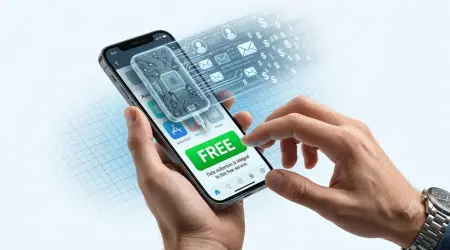
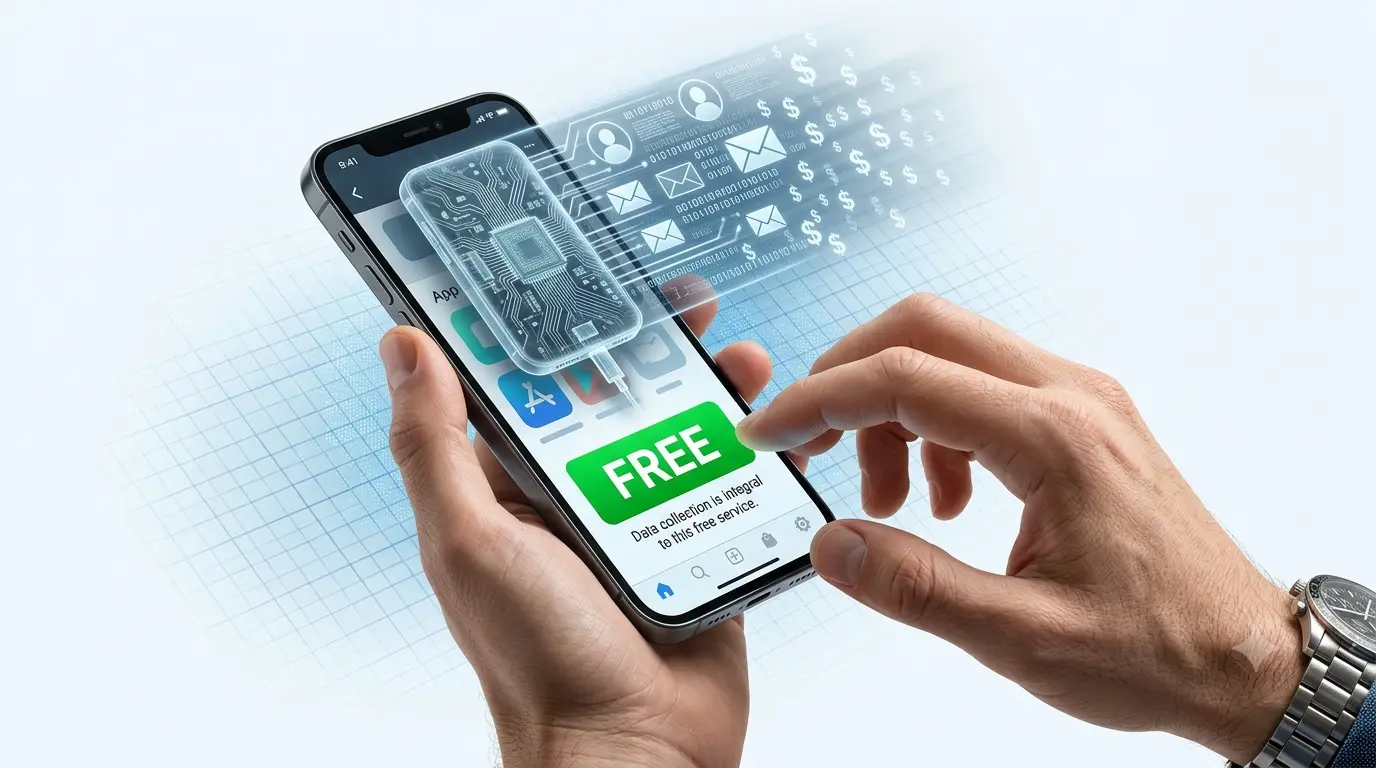
The app is free. The download takes thirty seconds. The sign-up form asks for your email address, and you type it in without thinking twice.
Here's what you actually paid.
Your email address — depending on your demographic profile, interests, and browsing behavior — is worth somewhere between $0.50 and $250 to the right buyer. Your behavioral data from using the app may be worth considerably more over time. And the company that built that free app almost certainly knew this before they decided to charge you nothing.
"Free" is a pricing strategy, not a gift.
The Real Business Model Behind Free Apps
When a company offers something for free, the question worth asking is: how do they make money?
For most free apps and online services, the answer involves one or more of these mechanisms:
Advertising revenue: The app shows you ads. The more it knows about you — your interests, demographics, location, purchase intent — the more valuable those ad impressions are. Your data makes the ads more targeted, which makes them worth more to advertisers.
Data monetization: The company collects your data and sells it to data brokers, advertising networks, or analytics companies. Your sign-up email, combined with your usage patterns, becomes a sellable asset.
Lead generation: The "free" product is designed to attract people in a specific demographic. Your sign-up information gets sold as a qualified lead to companies targeting that demographic. This is especially common in financial services, insurance, and health-adjacent apps.
Freemium conversion: The free tier is intentionally limited to push you toward a paid subscription. This is the most transparent model — you know the upgrade exists. Even here, though, your data often gets collected and monetized even if you never pay.
Venture-backed growth: Some free apps aren't yet profitable — they're burning investor money to acquire users. Your email and data are being stockpiled for future monetization when the company needs to generate revenue.
Understanding which model a specific app uses helps you evaluate what you're actually agreeing to when you sign up.
What Your Email Address Is Actually Worth
Let's put specific numbers on this.
The value of an email address varies dramatically based on the profile attached to it. A raw, unverified email with no demographic context might be worth a fraction of a cent in bulk. But an enriched email address — one with verified activity, a demographic profile, and interest data — can be worth significantly more.
According to data broker industry research, email addresses sell for approximately:
- General consumer email (minimal profile): $0.50–$2
- Email matched to specific consumer interest (e.g., home improvement, travel): $5–$25
- Email with high purchase intent signal (recently searched for high-value product): $25–$100
- Email with detailed financial profile (income, investment interest, insurance): $50–$250+
When a free app collects your email, they're starting with a raw address. But by observing your behavior inside the app — what features you use, what you search for, what you purchase or save — they rapidly enrich that address into a higher-value profile.
Over time, your usage of a free app generates far more value for its developer than a one-time purchase price would have.
The Sign-Up Form: What's Actually Being Collected
When you fill in a sign-up form for a free app, you're providing more than what the fields ask for.
What you knowingly provide:
- Email address
- Name (if requested)
- Date of birth (if requested)
- Location (if requested)
What gets collected automatically during the sign-up process:
- Your IP address (reveals approximate location, ISP, organization)
- Browser type and version
- Operating system and device type
- Referring URL (which website sent you to this sign-up page)
- Time and date of sign-up
- Screen resolution and browser settings (can be used for fingerprinting)
What gets collected as you use the app:
- Feature usage patterns (what you click, how long you spend)
- Content you create or save within the app
- Search queries within the app
- Purchase or transaction behavior
- App session frequency and duration
- Device sensor data (some mobile apps)
The sign-up email is just the anchor. Everything else builds around it.
The Permission Gap: What You Agreed to Without Reading
Most app sign-up forms include a checkbox near the submit button: "I agree to the Terms of Service and Privacy Policy." Most users click it without reading either document.
In those documents — sometimes tens of thousands of words long — are the actual data collection and sharing terms. Common provisions include:
"We may share your information with trusted third-party partners" — Translation: your data, including your email, may be sold to or shared with advertising networks, data brokers, and analytics companies.
"We may use your information to improve our services and for marketing purposes" — Translation: we'll use your behavior data to target ads, and possibly share your email for co-marketing with other companies.
"In the event of a merger or acquisition, your information may be transferred" — Translation: if we sell the company, your data goes with it, potentially to a buyer with very different privacy practices.
"We retain your information for as long as necessary" — Translation: even if you delete your account, we may keep your email and usage data indefinitely.
None of this is hidden. It's all in the policy you agreed to. The business model is technically disclosed — it's just designed to be easy to miss.
Which App Categories Are the Worst Offenders
Not all free apps have the same data practices. Some categories are consistently more aggressive:
Fitness and Health Apps
Health data is among the most valuable consumer data. Free fitness apps, meditation apps, calorie counters, and period trackers collect deeply personal information. Several major fitness apps have faced regulatory action for selling health-adjacent data to insurance companies and employers.
Weather Apps
This seems innocuous, but weather apps require location data to function — and location data is extremely valuable to advertisers and data brokers. Multiple weather app companies have been caught selling precise location data to hedge funds and advertising networks.
Free VPNs
The supreme irony: a free VPN promising privacy while monetizing your traffic data. Several prominent free VPN providers have been documented selling user browsing data. A free VPN is worse than no VPN if it's mining your traffic.
Games and Casual Entertainment
Free mobile games are advertising delivery systems with gameplay attached. The game keeps you engaged. The engagement generates ad impressions. Your behavior data improves ad targeting. Your email anchors the profile.
Productivity and Utility Apps
Template libraries, PDF converters, image editors, and similar tools often have business models built around data collection. The utility is real; so is the data collection.
The Email Address as the Anchor Point
Your email address is specifically valuable because it's persistent and connectable.
Unlike a cookie (which can be cleared) or an IP address (which changes), your email address stays the same across devices, sessions, and years. It can be matched across databases to build a comprehensive profile. It can be used to contact you directly.
When a free app collects your email, they're establishing a permanent anchor point that connects your behavior inside their app to everything else known about that email address in the broader commercial data ecosystem.
This is why the email field on a free app sign-up form is worth far more than it appears.
Using TempMailMaster.io for free app sign-ups removes this anchor point. The app gets a functional verification email. They can confirm your account. But they can't connect your usage behavior to a persistent, connectable real-world identity.
When the temp inbox expires, the anchor is gone. Whatever profile they built during your usage period can't be extended, enriched, or reliably sold — because the email address it was built around no longer exists.
When Temp Email Works and When to Use Your Real Address
This distinction matters:
Use temp email for free app sign-ups when:
- You're trying the app out and haven't decided to commit
- The app offers a feature you need once (PDF conversion, one-time image edit)
- You don't intend to sync data across devices or access the account from multiple places
- You don't need to recover the account if you forget the password
Use your real email (or a permanent alias) when:
- You're genuinely committing to the app long-term
- The app syncs important data across devices
- The account has payment information attached
- You'll need account recovery in the future
For a full comparison of temp email versus email aliases for recurring accounts: Temp Email vs Email Alias: What's the Actual Difference?
Practical Steps Before Installing Any Free App
Before you type your email into a free app sign-up form, sixty seconds of due diligence can tell you a lot:
Check the privacy policy for these specific phrases:
- "Share with third parties" or "trusted partners"
- "Sell your information" or "data monetization"
- "Advertising partners" or "ad networks"
Search the app name + "privacy" or "data selling" — significant data practice issues usually generate news coverage or user complaints.
Check app permissions before installation — a flashlight app that requests access to your contacts and microphone is a red flag. A fitness app that requests always-on location access beyond what's needed for its core function deserves scrutiny.
Look up the developer — an app from a company with no website, no clear business model, and a newly registered domain is higher risk than one from an established company.
None of this takes more than a minute. And for apps you decide to try despite uncertain practices, temp email removes the most persistent piece of personal information from the equation.
FAQ
If I pay for an app, does that mean they won't collect my data? Not necessarily. Many paid apps still collect usage data for analytics and product improvement. Some share that data with third parties. Paying for an app reduces the likelihood that your data is the primary revenue source, but it doesn't guarantee data minimization. Check the privacy policy regardless.
Can I use a temp email to sign up for an app and then switch to my real email later? On most platforms, yes — account settings allow you to update your email address. Use the temp email for sign-up, verify the account, and then update the email to a real address (or alias) once you've decided to keep the app. You'll need to verify the new address while the temp inbox is still active.
What's the difference between a free app collecting data and a paid service like Gmail? Both collect data. Gmail's model is using your email data to target ads within Google's ecosystem. A free app's model may involve sharing or selling your data to external parties. The key question is whether data stays within one company's ecosystem or gets distributed to third parties.
Is there a way to use an app completely anonymously? For most consumer apps, complete anonymity is difficult — usage patterns, device identifiers, and IP addresses all create trackable signals even without an email address. Temp email addresses the email anchor specifically. For more comprehensive anonymity, combining temp email with a VPN reduces the network-level signal as well.
Are there genuinely free apps that don't harvest data? Yes — open-source apps and tools funded by donations or grants often have strong data minimization practices. Signal (messaging), Bitwarden (password manager), and many Linux-based tools are examples of genuinely privacy-respecting free software. The distinguishing factor is usually the funding model: if there's no advertising revenue and no data selling, there's less incentive to collect extensively.
References
- Brightside AI — Data privacy tips 2026 https://www.brside.com/blog/10-data-privacy-tips-to-protect-your-info-online-in-2026
- FTC — Mobile privacy disclosures https://www.ftc.gov/reports/mobile-privacy-disclosures
- Anonyome Labs — Online privacy guide 2026 https://anonyome.com/resources/blog/your-complete-guide-to-online-privacy/
- ENISA — Mobile app security and privacy https://www.enisa.europa.eu
- EFF — Who has your back? https://www.eff.org/issues/who-has-your-back
- IAPP — App data practices research https://iapp.org
- Consumer Reports — App privacy guide https://www.consumerreports.org/electronics/privacy
- Pew Research — Americans and privacy 2025 https://www.pewresearch.org/internet/
- GDPR.eu — Consent for app data collection https://gdpr.eu/gdpr-consent/
- Security.org — Internet data privacy 2026 https://www.security.org/digital-safety/data-privacy/
Published: June 2026 | Author: Arslan | Category: App Privacy & Digital Security