Travel Privacy: How Hotels, Airlines, and Booking Sites Track Your Email After You Check Out
I booked a hotel room for three nights last spring. Standard trip — nothing exotic. I used my real email for the reservation because I needed the confirmation and check-in details.
Three months after I checked out, I was still receiving emails from that hotel group. Promotional offers. Loyalty program invitations. Partner hotel announcements. A survey about my stay that arrived 11 weeks after I'd left.
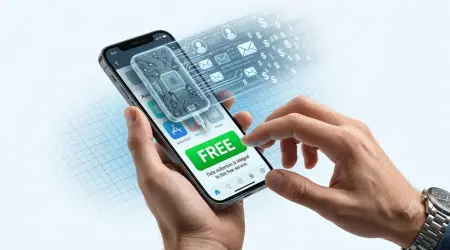
That's not unusual. What I didn't know until I looked into it: that hotel had shared my booking data — including my email — with their parent company's marketing division, two hospitality analytics firms, and a travel-specific data broker. All from one three-night stay.
The travel industry's data practices are aggressive even by the standards of an industry where aggressive data collection is the norm. Here's what actually happens to your email when you book travel — and how to think about it.
Why the Travel Industry Is Especially Data-Hungry
Travel companies have specific incentives that make email data particularly valuable to them:
Long purchase cycles with high intent signals. When you research a hotel, you're showing high commercial intent. You're not browsing casually — you're actively planning to spend money. This makes travel email addresses worth significantly more to advertisers than general consumer lists.
Repeat customer lifetime value. A traveler who stays at a hotel once might stay dozens of times over their lifetime. The potential lifetime value justifies significant marketing investment to maintain the relationship — and significant data collection to personalize that marketing.
Cross-selling ecosystem. Hotels partner with airlines, car rentals, travel insurance, tour operators, and experience providers. Your email address, attached to your travel preferences and booking history, is valuable across this entire ecosystem.
Loyalty program economics. Loyalty programs are fundamentally data collection systems. The points are the incentive for you to centralize your travel spending in one ecosystem and generate a rich behavioral dataset for the brand.
What Booking Sites Collect (And What They Do With It)
Online Travel Agencies (Booking.com, Expedia, Hotels.com, Airbnb)
When you book through an OTA, your email goes into at minimum:
- The OTA's customer database
- The specific hotel or host's communication system
- The OTA's marketing automation platform
OTAs are explicit in their privacy policies about using your booking and browsing data for advertising — including retargeting you on other websites with ads for properties you've viewed. Your email is the anchor connecting your browsing behavior to the ad retargeting profile.
Most major OTAs also participate in advertising networks that enable cross-platform retargeting. If you search for hotels in Barcelona on Booking.com and then read a news article twenty minutes later, the Barcelona hotel ad that appears isn't a coincidence.
Hotel Direct Booking
Booking directly with a hotel brand (Marriott, Hilton, IHG, Hyatt) gives the hotel more complete data than OTA bookings — but doesn't protect your privacy. Direct hotel brands operate sophisticated CRM and marketing platforms. Your email from a direct booking enters their database and generates a customer profile that persists across all properties in their portfolio.
Many major hotel groups are part of larger hospitality conglomerates with portfolio sizes in the thousands of properties. Booking one Marriott property means your email exists in a system that serves thousands of hotels globally.
Airline Booking
Airline email data is particularly persistent. Frequent flyer programs — essentially loyalty programs — are among the most data-intensive marketing systems ever built. Every flight, every meal preference, every seat selection, every partner interaction creates a data point. Your email is the identifier that connects all of it.
Airlines also sell their customer data to travel industry partners. The privacy policies of major carriers explicitly permit sharing with code-share partners, alliance members, and "trusted service providers" — which in practice means your travel data circulates extensively beyond the airline you actually flew with.
The Loyalty Program Trade-Off
Loyalty programs deserve specific attention because they represent a deliberate data exchange that most travelers don't fully think through.
When you join a hotel or airline loyalty program, you're making an explicit trade: you share your travel behavior and personal data in exchange for points that eventually become free nights or flights.
The economics of this trade:
What you give: Complete travel history. Every booking, every stay, every preference. Your email as the persistent identifier. Your payment information. Often your home address and phone number.
What you get: Points worth approximately 0.5–1 cent each for most programs. A free night after approximately 10–15 paid nights at many programs.
What the program gets: A complete behavioral dataset on a high-value consumer, updated continuously with every interaction, worth far more than the redemption value they eventually provide.
This isn't a reason to avoid loyalty programs — for frequent travelers, they provide genuine value. It's a reason to understand what you're trading when you join.
The Email You Need vs. The Email You're Giving Away
For travel specifically, your email is genuinely needed for some things and unnecessarily shared for others.
You genuinely need your real email for:
- Booking confirmations (you need this)
- Check-in information and room details (you need this)
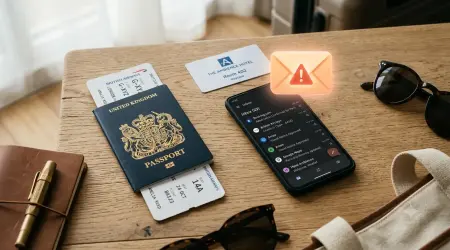
- Boarding passes and flight updates (you need this)
- Account credentials for loyalty programs you've committed to (you need this)
- Post-stay receipts for expense reporting (you need this)
You don't need to give your real email for:
- Researching hotels, flights, and experiences on OTA websites
- Creating accounts to save searches or wishlists on booking platforms you're exploring
- Signing up for travel deal newsletters you're curious about
- Hotel restaurant reservations and spa bookings at properties where you're not staying
- Tourism board resources and travel guide downloads
For the research and exploration phase of travel planning, TempMailMaster.io handles sign-up requirements without adding your real email to the marketing ecosystems of every platform you investigate.
A Practical Travel Email Strategy
For Serious Travel Planning (Committed Booking)
Use your real email or a dedicated travel email alias. You need the confirmations and communications. The trade-off is accepting the ongoing marketing relationship. Manage this by: unsubscribing after travel is complete, using an alias so you can disable it if it becomes overwhelming, or accepting it as the cost of convenient direct booking.
For Research and Exploration
Use temp email. When you're comparing fifteen hotels or looking at five different booking platforms to find the best rate, you're generating research browsing that you don't want attached to your real identity or email. Disposable addresses for research phase sign-ups prevent the retargeting cascade that follows travel research.
For One-Time Bookings at Independent Properties
A temp email or alias is appropriate. If you're booking a small independent hotel you'll likely never stay at again and don't need an ongoing relationship with, a disposable address handles the booking confirmation requirement while preventing you from entering their (likely less privacy-rigorous) marketing system.
For Loyalty Programs You're Committed To
Your real email — or a dedicated loyalty email you use consistently across all programs you participate in. Loyalty programs are designed for persistent relationships. A consistent email makes that work. A dedicated loyalty email (separate from your primary personal email) lets you keep loyalty communications organized and separate from personal correspondence.
Hotel Wi-Fi: A Special Case
Every section of this article has focused on email. Hotel Wi-Fi deserves a specific mention because it intersects with email in an important way.
Most hotel Wi-Fi requires an email address to connect. That email goes into the hotel's (or their Wi-Fi vendor's) marketing database. The hotel Wi-Fi provider is often a third-party company that markets the data independently from the hotel.
For hotel Wi-Fi email requirements: temp email. You just need to connect to the internet. You don't need an ongoing relationship with the hotel's Wi-Fi vendor.
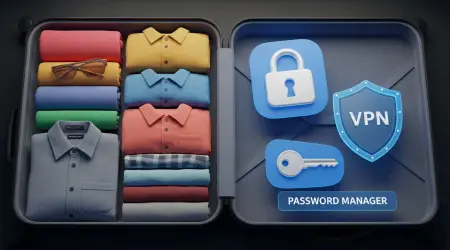
Additionally: hotel Wi-Fi networks are shared networks with unknown security configurations. Accessing sensitive email accounts (banking, work) on hotel Wi-Fi without a VPN is a security risk entirely separate from the email privacy issue. Use a VPN on hotel Wi-Fi for connection security, and a temp email for the Wi-Fi login email requirement.
Case Study: What One Hotel Sent Over 90 Days After a Stay
To make this concrete, I tracked exactly what communications I received from a mid-range hotel brand after a two-night business trip where I booked directly and provided my real email.
During stay: Check-in confirmation, room upgrade notification, dining reservation confirmation.
Immediately after checkout: Receipt email, satisfaction survey invitation.
Week 2: "We hope you enjoyed your stay" follow-up with loyalty program sign-up invitation.
Week 4: Email from the hotel's loyalty program (which I didn't sign up for) with a points offer.
Week 6: Promotional rate offer for my next stay.
Week 8: Partner offer from a rental car company — my data had been shared with a travel partner.
Week 10: Hotel brand newsletter with global property promotions.
Week 12: Another satisfaction survey (second attempt).
Week 13: Black Friday promotional rates, despite the holiday being months away.
Thirteen separate email sends over 90 days from one two-night stay. And based on the partner rental car email, my booking data had traveled to at least one third party.
FAQ
Can I use a temp email to actually complete a hotel booking? Yes, for most online bookings. The booking confirmation arrives in the temp inbox — retrieve it immediately and save the confirmation number and details. For anything requiring long-term communication (loyalty points credit, changes, cancellations), a real email or permanent alias is more practical.
Will hotels require a matching email at check-in? Most hotels verify your identity at check-in with a government ID, not by checking your email. The email is primarily for pre-arrival and post-stay communication. A mismatch between the booking email and your ID is rarely checked.
Do travel price comparison sites (Google Flights, Kayak, Skyscanner) require email? Most price comparison sites don't require email for basic search. They may prompt for email to create a "price alert" account. Use a temp email for price alerts — you want the alert, not the ongoing marketing relationship.
Is booking directly with airlines safer than through OTAs for email privacy? Not necessarily. Airlines have their own extensive data practices. Direct booking may give the airline more complete data than an OTA booking. From a privacy standpoint, both involve your email entering a sophisticated marketing system.
What about travel insurance — should I use my real email? Yes. Travel insurance is a financial product with ongoing coverage implications. You need reliable email access for policy documents, claims communication, and coverage verification. Use your real email or a permanent alias for insurance.
References
- Booking.com — Privacy Policy https://www.booking.com/content/privacy.html
- Marriott — Data practices disclosure https://www.marriott.com/about/privacy.mi
- EFF — Online privacy guide https://ssd.eff.org
- FTC — Travel industry data practices https://www.ftc.gov/business-guidance/privacy-security
- GDPR.eu — Right to data minimization https://gdpr.eu/article-5-how-to-process-personal-data/
- ENISA — Personal data in hospitality https://www.enisa.europa.eu
- Pew Research — Consumer data and travel https://www.pewresearch.org/internet/
- CISA — Public Wi-Fi security https://www.cisa.gov/tips/st05-002
- ICO — Direct marketing in hospitality https://ico.org.uk/for-organisations/direct-marketing/
- IBM — Travel industry data breach risks https://www.ibm.com/security/data-breach
Published: June 2026 | Author: Arslan | Category: Travel Privacy & Email Security