
How Data Brokers Build a Profile on You (And How to Make It Harder)
Last year, I searched my own name on a people-search website I'd never visited before.
The results listed my full name, my current city, two previous cities I'd lived in, my approximate age, the names of three family members, a phone number I'd stopped using four years ago, and — listed under "email addresses" — two email addresses I use regularly.
I hadn't given this website any of that information. I'd never created an account. I'd never visited the site before.
A data broker had assembled my profile from dozens of other sources and made it available to anyone willing to pay a few dollars for a background report.
Here's exactly how that happened — and what actually makes it harder.
What Data Brokers Are
Data brokers are companies whose primary business is collecting, aggregating, enriching, and selling personal information about individuals.
They operate largely invisibly. You don't sign up for their service. You don't interact with them directly. You never consent to them specifically. And yet most adults in developed countries have detailed profiles in multiple data broker databases.
The industry is worth over $400 billion globally and employs sophisticated technology to continuously update and expand the profiles it maintains.
There are roughly 4,000 data broker companies operating globally. Many specialize in specific niches: background checks, marketing data, risk assessment, people-search, financial profiling. The largest — LexisNexis, Acxiom, Experian, TransUnion, Equifax — are household names in other contexts. Behind them are hundreds of smaller operations most people have never heard of.
The Seven Sources Data Brokers Use to Build Your Profile
Understanding where the data comes from is essential to understanding how to make profiling harder.
1. Public Records
Government records are the foundation of most data broker profiles. These are legally public documents:
- Property records (who owns what address)
- Court records (civil cases, criminal records, bankruptcies)
- Voter registration (name, address, party in some states)
- Business filings (if you own or direct a company)
- Professional licenses (doctor, lawyer, contractor, real estate agent)
- Marriage and divorce records
- Birth and death records
These are collected automatically through bulk data access agreements and continuously updated as new records are filed.
2. Commercial Transactions
When you buy something online or sign up for a loyalty program, that transaction data often gets sold or shared with data broker networks. Your purchase history reveals your interests, your spending capacity, and your lifestyle — all commercially valuable.
3. Online Sign-Ups and Registrations
Every website you've signed up for is a potential data source. Some websites explicitly monetize their email list by selling to brokers. Others share sign-up data with advertising networks that broker relationships. Your email address — provided voluntarily at sign-up — becomes the linking thread that connects your online identity to your public records profile.
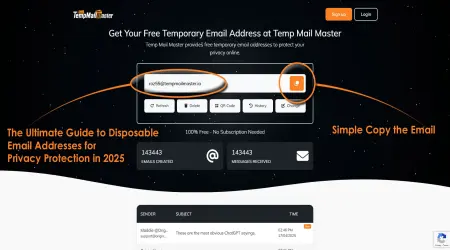
This is the specific link where TempMailMaster.io breaks the chain. If a website's data reaches a broker, the email address they have is a disposable one that no longer exists — it can't be matched to your real identity.
4. Social Media Scraping
Publicly visible social media content gets scraped and indexed. Your LinkedIn employment history, your Facebook location tags, your Twitter location and interests — all of this feeds broker profiles when publicly accessible.
5. Data Breach Compilations
This is the part most people find surprising: data brokers purchase and process breach data. The enormous compilations of leaked credentials, user databases, and personal information that circulate following major breaches get incorporated into commercial data products.
The 16 billion credentials exposed in the MOAB (Mother of All Breaches) compilation are the kind of dataset that enriches broker profiles — connecting previously separate records through email addresses, usernames, and passwords that appear across multiple breaches.
6. Purchased Lists
Data brokers buy from other data brokers. When Company A enriches a profile, they sell that enriched data to Companies B, C, and D. The same information circulates through the ecosystem, growing more comprehensive with each transaction.
Your email address, purchased by one broker from a website you signed up on, eventually reaches dozens of brokers — each adding their own enrichment data.
7. Inference and Modeling
Modern data brokers don't just collect — they infer. Statistical models predict attributes you've never disclosed based on correlations with attributes they do know.
Your neighborhood, your purchase patterns, your browsing behavior, and your social connections can predict your income range, health status, political affiliation, and life stage with surprising accuracy. These inferred attributes become part of your profile even though you never provided them directly.
What a Completed Profile Looks Like
After aggregating from these sources, a typical data broker profile on an adult in their thirties might include:
- Full name and any previous names
- Current and previous addresses (with dates)
- Phone numbers (current and historical)
- Email addresses (multiple)
- Date of birth
- Employment history and current employer
- Income estimate
- Property ownership status
- Vehicle ownership
- Family members and their relationships
- Social media profiles
- Political affiliation (from voter registration)
- Estimated interests and consumer categories
- Credit risk score (from financial broker affiliates)
- Criminal and court record summary
- Professional licenses held
This profile is sold to: background check companies, insurance underwriters, marketers targeting specific demographics, private investigators, landlords, employers, and anyone else willing to pay.
How Your Email Is the Master Key in This System
Your email address is unique among the data points brokers use because it's both persistent and voluntarily connected to your real-world identity.
An IP address changes. A cookie can be cleared. A phone number can be changed. But most people use the same email address for years — and they attach it to their real name, sometimes their employer, sometimes their location, when signing up for services.
When a broker has your email, they can:
- Match it against other brokers' databases to merge records
- Connect your online sign-up history to your offline public records
- Link your multiple email addresses if they've appeared in the same sign-up forms
- Build a timeline of your interests, locations, and activities across years
Remove the email from the equation — or replace it with a disposable one that expires — and the broker has a record they can't enrich, can't match, and can't sell at premium value.
The Enrichment Cycle: How Profiles Get More Detailed Over Time
Data broker profiles aren't static. They're continuously enriched through a cycle:
- Initial collection: Email appears in a sign-up database sold to a broker
- Public record match: Broker matches the email against voter records, finding a name and address
- Social media cross-reference: Name + location matched against LinkedIn, adding employer and job history
- Transaction data purchase: Employer + income estimate matched against purchase history, adding interests and spending patterns
- Inference modeling: All collected data run through statistical models, generating predicted attributes
- Sale and redistribution: Enriched profile sold to multiple buyers; further enriched by additional data they bring
Each cycle makes the profile more comprehensive and more valuable. The process runs automatically, continuously, on millions of records simultaneously.
Your profile from three years ago is more detailed today than it was then — even if you've given no new information to any broker directly.
What Actually Makes It Harder (Realistic Assessment)
Let's be honest about what works and what doesn't.
What Doesn't Work
Opting out once: Data brokers relist removed data. A single opt-out is effective for approximately three to six months before the profile reappears, rebuilt from fresh data sources.
Opting out of small brokers only: The major brokers — Acxiom, LexisNexis, Experian Marketing Services — are the ones feeding downstream brokers. Removing your listing from small people-search sites while leaving major commercial brokers untouched addresses the symptom, not the source.
Asking nicely without legal backing: In jurisdictions without strong privacy law, companies have no legal obligation to respond to informal requests. In jurisdictions with GDPR or CCPA, formal legal requests carry weight.
What Does Work
Using temp email for sign-ups: This is the most upstream intervention. If brokers never get your real email from sign-up databases, the profile they can build is significantly less connected. For specific guidance: Why Does My Email Keep Getting Sold?
Formal deletion requests under privacy law: GDPR (EU) and CCPA (California) deletion requests carry legal weight. Companies must comply within defined timeframes. Failure to comply can result in regulatory fines.
California DROP portal: For California residents, the DELETE Act created a single portal at cppa.ca.gov for requesting deletion across all registered California data brokers simultaneously. The most efficient single action available to California residents.
Automated opt-out services: DeleteMe, Incogni, and Privacy Bee submit removal requests across hundreds of broker sites and re-submit when profiles reappear. The ongoing coverage they provide is more effective than periodic manual attempts.
Limiting public record exposure: While you can't remove existing public records, you can limit new exposure. Avoid filing unnecessary public documents. Use a PO box for business filings where possible. Opt out of voter registration data sharing where your state permits.
Minimizing social media public visibility: Tighten privacy settings. Remove location information, employer details, and phone numbers from public profiles.
A 90-Day Experiment: Tracking My Own Profile
I ran a structured experiment over 90 days to test what actually moves the needle on data broker profiling.
Month 1 — Baseline: Found my profile on 14 data broker sites. Submitted opt-out requests to all 14. Switched to TempMailMaster.io for all new sign-ups going forward.
Month 2 — First check: 11 of 14 listings were removed or updated (removed email from three that kept the profile). 2 sites had re-listed my profile with partial information. 1 site ignored the request entirely.
Re-submitted opt-outs for re-listed profiles. Submitted a formal GDPR-style deletion request to the one that ignored me (the company operated in the EU).
Month 3 — Second check: 13 of 14 listings substantially reduced or removed. The EU company complied with the formal deletion request within 28 days. One US-based broker re-listed twice, requiring two additional opt-outs.
Zero new profiles built on the 8 new sign-ups I did during this period using TempMailMaster.io — confirmed by checking the email addresses for appearances in broker searches.
Conclusion: Opt-outs work but require ongoing maintenance. Temp email for new sign-ups prevents the profile from growing further. The combination of both is significantly more effective than either alone.
FAQ
How do I find all the data broker sites that have my information? There's no single comprehensive directory, but starting with the largest people-search sites covers most consumer exposure: Spokeo, BeenVerified, WhitePages, Radaris, TruePeopleSearch, FastPeopleSearch, Intelius, and MyLife. Privacy Rights Clearinghouse maintains a more comprehensive list at privacyrights.org/data-brokers.
Does paying for a background check on myself remove me from databases? No — paying for a background check accesses the data but doesn't remove it. Opt-out requests through the official removal process on each site are the correct approach.
If I've never posted on social media, do data brokers still have a profile on me? Almost certainly, yes. Public records (property, voter registration, court records), commercial transaction data, and email sign-up databases feed broker profiles without any social media activity. Social media enriches existing profiles — it doesn't create them.
Can data brokers have wrong information about me? Yes, frequently. Inferred attributes are estimates. Records from people with similar names get merged incorrectly. Old addresses and phone numbers remain in profiles long after they're outdated. If incorrect information is causing tangible harm (insurance rates, background checks), formal correction requests under applicable privacy law are the remedy.
Is it worth paying for an automated opt-out service? For most people, yes. Manual opt-outs across 100+ broker sites, repeated quarterly, takes significant time. Services like DeleteMe ($129/year) automate this and provide ongoing coverage. The cost is reasonable for the time saved and the consistent coverage achieved.
References
- Privacy Bee — Data broker industry guide 2026 https://privacybee.com/online-privacy-in-2026-guide/
- California Privacy Protection Agency — DELETE Act https://cppa.ca.gov
- Privacy Rights Clearinghouse — Data broker list https://privacyrights.org/data-brokers
- FTC — Data broker practices https://www.ftc.gov/business-guidance/privacy-security
- GDPR.eu — Right to erasure https://gdpr.eu/right-to-be-forgotten/
- EFF — Data broker opt-out guide https://ssd.eff.org
- IBM — Cost of Data Breach 2025 https://www.ibm.com/security/data-breach
- Acxiom — Consumer opt-out https://www.acxiom.com/optout/
- ENISA — Data broker regulation in Europe https://www.enisa.europa.eu
- Pew Research — Americans and personal data https://www.pewresearch.org/internet/
Published: June 2026 | Author: Arslan | Category: Data Privacy & Personal Information