
Supply Chain Breaches: Why Your Email Gets Exposed by Companies You Never Signed Up With
Last April, I got a breach notification from Have I Been Pwned. The breached company: Udemy. I had never created a Udemy account. I had never visited their website. I had never given them my email address.
And yet — there was my email, in their breach database, exposed to 1.4 million other records that ShinyHunters had dumped online.
How did that happen?
The answer is supply chain breaches — and understanding them is one of the most important privacy concepts of 2026, because they explain why you keep getting breach notifications from companies you've never heard of.
What Is a Supply Chain Breach?
A supply chain breach happens when attackers don't target a company directly. Instead, they compromise a vendor, partner, or third-party service that the target company uses — and use that trusted relationship as a backdoor into the target's systems.
The term "supply chain" comes from manufacturing: if you can compromise a component supplier, every product built with that component is affected. The same logic applies to software and data.
IBM's X-Force Threat Intelligence Index 2026 reported that major supply chain and third-party breaches have quadrupled over the past five years. Supply chain attacks now account for 30% of all breaches involving at least one third party. This isn't a niche threat anymore — it's the dominant attack pattern of 2026.
Why Your Email Ends Up in Companies You Never Used
Here's the specific mechanism that affects ordinary people:
Step 1: You sign up for Company A
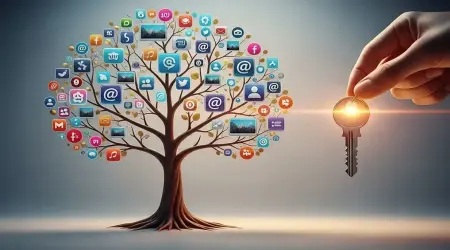
You register on a website. You give them your name and email. They use an email marketing platform (like Mailchimp or Klaviyo), a CRM system (like HubSpot or Salesforce), an analytics tool, a customer support platform, and possibly a third-party data enrichment service — all of which receive a copy of your email address as part of their normal operation.
Step 2: Company A's vendors get breached
You've never heard of most of these vendors. But each one now has your email in their system. When any one of them gets breached, your email is exposed — even though you never gave it to that vendor directly.
Step 3: The data cascades further
Breach data gets sold. Other companies purchase it. Data brokers enrich it. Your email, which originated from one sign-up at one company, is now in multiple downstream systems — each a potential breach point you have no visibility into.
This is why breach notifications arrive from companies you've never heard of. You didn't give them your email. Company A did — through a routine vendor relationship you were never told about.
Real 2026 Examples That Illustrate This
Udemy (April 2026): ShinyHunters claimed to have stolen 1.4 million records including names, addresses, phone numbers, employer details, and email addresses. The data created immediate phishing risk for learners, instructors, and employers — many of whom had never directly interacted with the system that was compromised.
Charter Communications (May 2026): ShinyHunters claimed responsibility for stealing 42 million customer records through social engineering and Microsoft Entra compromise. Third-party cloud platform access was the entry vector.
7-Eleven (May 2026): Over 600,000 franchise applicant records were compromised from a Salesforce environment — a third-party platform 7-Eleven used for application management. People who applied to work at 7-Eleven franchises never knew their data lived in a Salesforce system.
In each case, the breach didn't happen at the company most users would think of as holding their data. It happened at a vendor or platform in the company's supply chain.
The Data Sharing You Consented to (Without Knowing It)
The reason supply chain exposure is legal is that most privacy policies include provisions like these:
"We may share your information with service providers who assist us in operating our website and conducting our business."
"We work with trusted third-party vendors to provide analytics, marketing, and customer service functionality."
"Your information may be transferred in the event of a merger, acquisition, or sale of our business."
You technically consented to these provisions when you clicked "I agree." The vendors in Company A's supply chain are those "service providers" and "trusted third-party vendors."
Your email went to their systems with your consent — buried in language nobody reads.
How Many Vendors Actually Have Your Email From One Sign-Up?
The number is larger than most people expect.
A typical mid-sized website uses:
- Email marketing platform (Mailchimp, Klaviyo, Brevo)
- CRM system (HubSpot, Salesforce, Zoho)
- Analytics platform (Google Analytics, Mixpanel, Amplitude)
- Customer support tool (Zendesk, Intercom, Freshdesk)
- Data enrichment service (Clearbit, ZoomInfo)
- Advertising platform (Google Ads, Meta Ads — for retargeting)
- Payment processor (Stripe, PayPal — if you purchased)
That's potentially seven or more systems receiving your email from a single sign-up. Each is a separate breach risk. Each has its own security posture. Each has its own vendor relationships that extend the chain further.
What Makes Supply Chain Breaches Different From Regular Breaches
With a regular breach, you have some ability to make an informed decision. You know the company. You can assess their trustworthiness before signing up. You can choose not to give them your email if you don't trust them.
Supply chain breaches eliminate that option. You can do everything right — sign up only with companies you trust, read their privacy policies, use strong passwords — and still have your email exposed through a vendor you've never heard of, whose security practices you had no way to evaluate.
This is what makes supply chain exposure particularly frustrating: it's not caused by your own decisions. It's caused by the security practices of a company you didn't choose to trust and possibly didn't know existed.
The Temp Email Solution: Breaking the Chain at the Source
The only intervention that works upstream of supply chain exposure is preventing your real email from entering the chain in the first place.
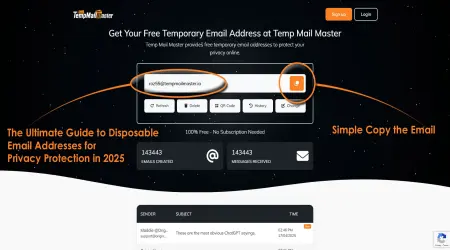
When you use a disposable email from TempMailMaster.io for a sign-up, your real address never enters Company A's system. It never gets shared with Company A's vendors. It never appears in their email marketing platform, their CRM, their analytics tool.
When Company A's email marketing vendor gets breached — as happened to dozens of vendors in 2026 — the address exposed is a disposable one that expired months ago. Untraceable to your real identity. Uncontactable by phishing campaigns. Worth nothing to attackers.
The supply chain still gets breached. Your real email just isn't in it.
For accounts where you genuinely need to maintain a relationship with the company — where you need ongoing email delivery for orders, subscriptions, or support — a permanent email alias (a forwarding address that doesn't reveal your real email) provides similar supply chain isolation while keeping the account functional long-term.
What You Can Do About Email Already in Supply Chains
For email addresses already in circulation through past sign-ups:
Check breach exposure regularly: haveibeenpwned.com shows which known breaches have exposed your email. New breach data gets added continuously — check at minimum quarterly.
Enable MFA on every account using your exposed email: If attackers have your email from a breach, they'll try it against other services. MFA prevents credential stuffing even when the email/password combination is known.
Change passwords on accounts using the same password as any breached account: Credential stuffing is automated and fast. Different passwords for every account eliminate the leverage breach data provides.
Submit data deletion requests to companies you no longer use: Under GDPR and CCPA, you can request deletion of your data — including from the vendor relationships those companies maintain. The process is imperfect but reduces the number of active downstream copies.
Use temp email going forward: Every new sign-up where you use a disposable address is one fewer entry point into the supply chain for your real email.
Case Study: Tracing My Email Through One Company's Supply Chain
I ran a deliberate experiment. I created a new email address, used it exclusively to sign up for one business software trial, and then submitted a formal data access request asking the company to list every third party they'd shared my email with.
The response came 22 days later. My email had been shared with: their email marketing platform, their analytics provider, their customer support system, their sales intelligence tool, and their advertising retargeting platform.
Five systems. One sign-up. Each a separate breach risk I hadn't considered when I typed my email into the trial sign-up form.
If any one of those five systems is breached, my email is exposed — through no fault of the original company I chose to trust.
This is the reality of modern data ecosystems. Supply chain exposure isn't an edge case. It's the default outcome of a normal sign-up.
FAQ
If I didn't sign up with a company, can I still request they delete my data? Yes. Under GDPR (EU residents) and CCPA (California residents), you have the right to request deletion of your personal data from any company that holds it — regardless of how they acquired it. The company must tell you how they got your data and delete it upon request.
How do I know which companies have my email from supply chain sharing? You generally can't know proactively. Submitting data access requests to companies you have signed up with will reveal some downstream sharing. Data broker sites (Spokeo, BeenVerified) sometimes show email addresses from multiple sources, giving clues about circulation.
Is supply chain breach exposure increasing? Yes, significantly. IBM X-Force reports supply chain attacks quadrupled over five years, and incidents doubled from 660 to 1,251 entities between 2024 and 2025 alone. The trend is accelerating as more services rely on shared cloud platforms and integrated vendor ecosystems.
Does using a temp email fully protect me from supply chain breaches? For sign-ups where you used the temp email: yes, your real address is protected. For existing accounts where you used your real email: no, the real address is already in those systems. Temp email prevents future exposure from new sign-ups; it doesn't retroactively remove exposure from past ones.
What if the temp email gets rejected at sign-up? Some services block known disposable email domains. If rejected, you can try a service with a less commonly blocked domain, use a permanent email alias service (like SimpleLogin), or — for services genuinely worth trusting — use your real email with the understanding of the supply chain risk involved.
References
- IBM X-Force Threat Intelligence Index 2026 https://www.ibm.com/think/insights/more-2026-cyberthreat-trends
- eSecurity Planet — Supply chain breaches May 2026 https://www.esecurityplanet.com/weekly-roundup/supply-chain-attacks-ai-security-and-major-breaches-define-this-week-in-cybersecurity-in-may-2026/
- Bright Defense — Recent Data Breaches 2026 https://www.brightdefense.com/resources/recent-data-breaches/
- Have I Been Pwned https://haveibeenpwned.com
- Safe Security — Vercel Breach Analysis https://safe.security/resources/blog/vercel-breach-third-party-risk-management/
- Trend Micro — OAuth Supply Chain Attack https://www.trendmicro.com/en_us/research/26/d/vercel-breach-oauth-supply-chain.html
- GDPR.eu — Right to erasure https://gdpr.eu/right-to-be-forgotten/
- California Privacy Protection Agency https://cppa.ca.gov
- EFF — Surveillance Self-Defense https://ssd.eff.org
- ENISA — Supply chain cybersecurity https://www.enisa.europa.eu
Published: June 2026 | Author: Arslan | Category: Cybersecurity & Email Privacy