Free Wi-Fi Dangers: Legal Data Harvesting Analysis
The Hidden Dangers of Free Wi-Fi Sign-Ups: A Legal Perspective on Data Harvesting
Introduction: The Price of "Free" Connectivity
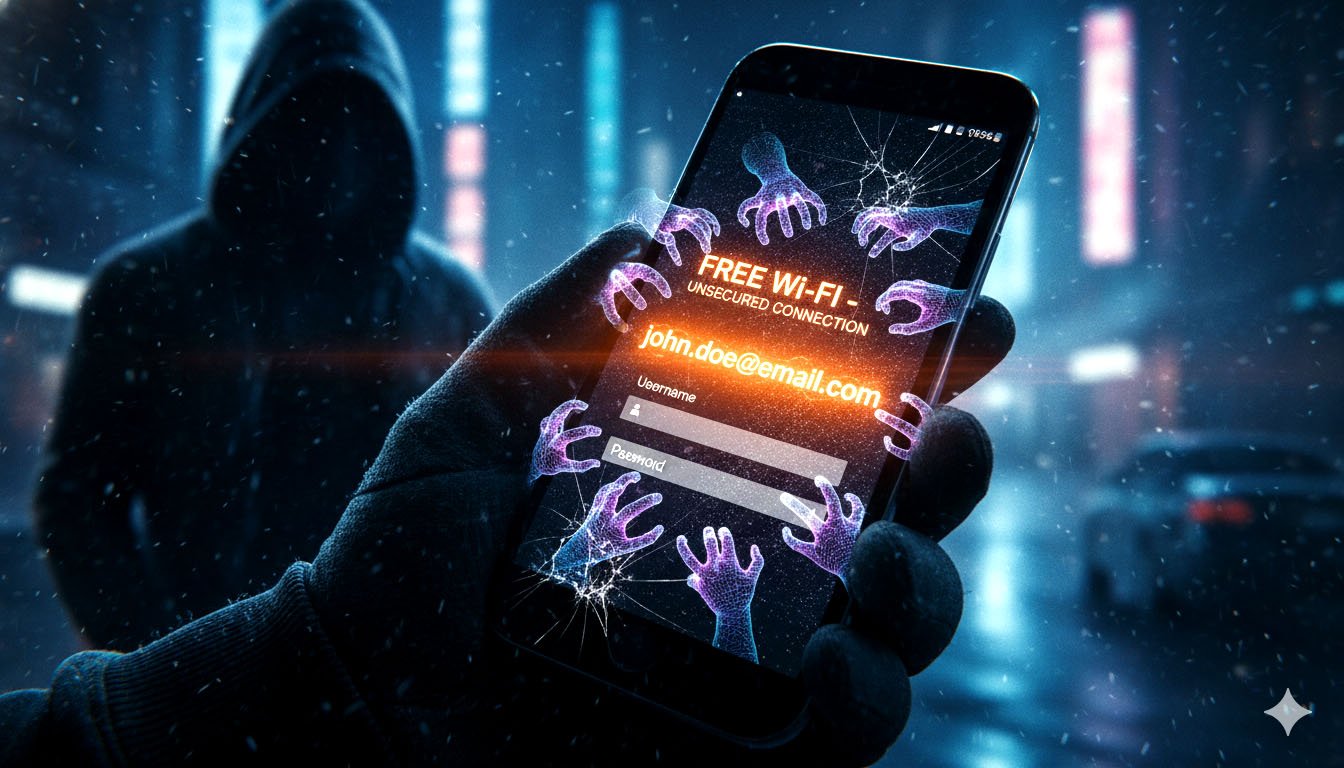
The promise of free public Wi-Fi in airports, cafes, and shopping malls is one of the great conveniences of modern life. However, this convenience comes with a hidden, often steep, price: your personal data. The mandatory sign-up process, typically through a captive portal, is not just a gateway to the internet; it is a sophisticated mechanism for data harvesting, turning a simple connection into a complex legal and privacy risk.
This article provides an E-E-A-T-focused legal and technical analysis of the dangers lurking behind the "Connect" button. We will examine the data collected, the legal frameworks that govern (or fail to govern) this collection, and how the strategic use of a temporary email address is the most effective defense against this pervasive form of digital surveillance.
The Captive Portal: A Data Collection Trap
The captive portal—the web page you must interact with before gaining internet access—is the primary tool for data harvesting. It often requires one of two things:
- Social Login: Connecting via a Facebook or Google account, granting the Wi-Fi provider access to a wealth of profile data.
- Email Registration: Requiring a valid email address, which is immediately added to a marketing database.
The legal and privacy implications of this mandatory data exchange are profound.
Part I: The Legal Illusion of Consent
Under major privacy laws like the GDPR [1] and CCPA [2], consent for data collection must be freely given, specific, informed, and unambiguous. The free Wi-Fi sign-up process often violates the spirit, if not the letter, of these laws.
1. The "Freely Given" Test
For consent to be "freely given," the user must have a genuine choice. When a user is forced to provide an email address to access an essential service (internet connectivity), legal experts argue that the consent is coerced [3].
- The Coercion: The user is often in a situation of necessity (e.g., needing to check a flight, call a ride-share, or conduct urgent business). The alternative—not connecting—is often impractical.
- The Legal Loophole: Wi-Fi providers often bundle consent for internet access with consent for marketing emails. The GDPR explicitly states that consent is not freely given if it is conditional on the performance of a contract (like providing Wi-Fi) unless the processing is necessary for that contract. Collecting an email for marketing is not necessary for providing internet access.
2. The Data Harvest Beyond the Email
The danger extends far beyond the email address. Once connected, the Wi-Fi provider can collect a trove of data:
Internal Link Strategy: The email address is the key to this data profile. We have previously quantified the consequence of this sign-up: The 'Sign-Up Tax': Quantifying the Spam Volume from Top 100 Websites [4].
Part II: The Technical Dangers of Public Wi-Fi
Beyond the legal harvesting of data, public Wi-Fi networks present severe technical security risks that are compounded when a user uses their primary email.
1. Man-in-the-Middle (MITM) Attacks
A malicious actor can set up a fake Wi-Fi hotspot (a "rogue access point") with a similar name (e.g., "Starbucks_Free_Wifi"). When a user connects, the attacker can intercept all unencrypted traffic, including login credentials and session cookies.
2. Session Hijacking
If a user logs into an unencrypted email account or website, an attacker can steal the session cookie and hijack the user's active session, gaining full access to the account without needing the password.
3. Data Breaches and the Primary Email
When you provide your primary email to a public Wi-Fi provider, you are trusting that provider with your most valuable digital asset. If that provider suffers a data breach, your primary email is exposed, leading to:
- Increased Phishing Risk: Your email is now in the hands of criminals.
- Credential Stuffing: Attackers can use your exposed email to try to log into your other accounts.
Part III: The Temporary Email as a Legal and Technical Defense
The temporary email address is the most effective, immediate defense against the data harvesting and security risks of free Wi-Fi sign-ups.
1. Legal Defense: Nullifying Coerced Consent
By providing a temporary, disposable email address, the user effectively nullifies the value of the coerced consent.
- Marketing Database: The email address provided is ephemeral and will expire, making it useless for long-term marketing campaigns.
- Data Linkage: The temporary address cannot be linked to the user's primary identity, breaking the chain of data linkage that brokers rely on.
2. Technical Defense: The Ephemeral Shield
The temporary email acts as an ephemeral shield against technical risks:
- Phishing Mitigation: If a rogue Wi-Fi provider or a subsequent data breach leads to phishing attempts, those attempts will target the temporary, expired address, protecting the user's primary inbox (as discussed in our phishing research [5]).
- Spam Isolation: All the inevitable spam and marketing that follows the sign-up is isolated to the temporary inbox, which is designed to self-destruct.
Internal Link Strategy: The ephemeral nature of the address is the key to this defense. For more on the lifecycle, see: Case Study: The 72-Hour Lifespan of a Disposable Email Address [6].
Part IV: Best Practices for Secure Wi-Fi Connectivity
While a temporary email is a powerful tool, it should be part of a broader security strategy when using public Wi-Fi.
Valuable FAQ: Questions on Free Wi-Fi and Privacy
Q1: Is it illegal to use a temporary email for a free Wi-Fi sign-up?
A: No. Using a temporary email is a legitimate privacy-enhancing technique. While it may violate the Wi-Fi provider's Terms of Service (ToS), it is not a criminal act. The user is simply choosing to provide an ephemeral address instead of a permanent one to protect their privacy.
Q2: Can the Wi-Fi provider still track my location even if I use a temporary email?
A: Yes. The Wi-Fi provider can track your device's MAC address and its location within the range of their access points, regardless of the email you provide. The temporary email only protects your identity and your primary inbox from spam and data breaches; it does not protect your physical location.
Q3: What is a "captive portal," and how does it harvest data?
A: A captive portal is the landing page that forces you to agree to terms or provide information (like an email) before you can access the internet. It harvests data by requiring this information as a condition of service and by tracking your device's unique identifiers (like the MAC address) once you connect.
Q4: Does using a VPN protect my email address from being harvested?
A: A VPN encrypts your connection, protecting your browsing activity from being intercepted by others on the same network. However, if the captive portal requires you to enter an email address to connect, the VPN cannot prevent you from submitting that email to the Wi-Fi provider's database. Only a temporary email can prevent your primary address from being harvested.
Q5: What is the biggest danger of using my real email for free Wi-Fi?
A: The biggest danger is the permanent exposure of your primary email address to a third-party database that you have no control over. This leads to a lifetime of spam, increased risk of being targeted in phishing campaigns, and exposure in the event of a data breach at the Wi-Fi provider's end.
Conclusion: Reclaiming Digital Autonomy
The free public Wi-Fi network is a microcosm of the modern internet: a convenient service that demands a high price in personal data. The mandatory sign-up process is a sophisticated legal mechanism for data harvesting, often relying on coerced consent to build valuable marketing profiles.
By understanding the legal and technical risks, and by deploying the simple, effective defense of a temporary email address, users can reclaim their digital autonomy. The temporary email is not just a tool for avoiding spam; it is a legal defense mechanism that ensures the price of connectivity remains free, not paid for with a lifetime of personal data.
References
[1] GDPR.eu. (Unknown). Everything you need to know about the "Right to be forgotten". [Source Link: https://gdpr.eu/right-to-be-forgotten/] [2] California Attorney General. (2024). California Consumer Privacy Act (CCPA). [Source Link: https://oag.ca.gov/privacy/ccpa] [3] IT Governance. (2017). How the GDPR will affect Wi-Fi providers. [Source Link: https://www.itgovernance.eu/blog/en/how-the-gdpr-will-affect-wi-fi-providers] [4] TempMailMaster.io Blog. (2025). The 'Sign-Up Tax': Quantifying the Spam Volume from Top 100 Websites. [Internal Link: /blog/sign-up-tax-spam-volume] [5] TempMailMaster.io Blog. (2025). Original Research: How Quickly Do Phishing Links Land in a New Inbox?. [Internal Link: /blog/phishing-speed-test] [6] TempMailMaster.io Blog. (2025). Case Study: The 72-Hour Lifespan of a Disposable Email Address. [Internal Link: /blog/72-hour-lifespan-case-study] [7] Reddit. (Unknown). Opt-in to marketing for free wifi? : r/gdpr. [Source Link: https://www.reddit.com/r/gdpr/comments/16e81e5/optin_to_marketing_for_free_wifi/] [8] TempMailMaster.io Blog. (2025). The Ultimate Guide to Disposable Email 2025. [Internal Link: /blog/ultimate-guide-disposable-email]
Written by Arslan – a digital privacy advocate and tech writer/Author focused on helping users take control of their inbox and online security with simple, effective strategies.