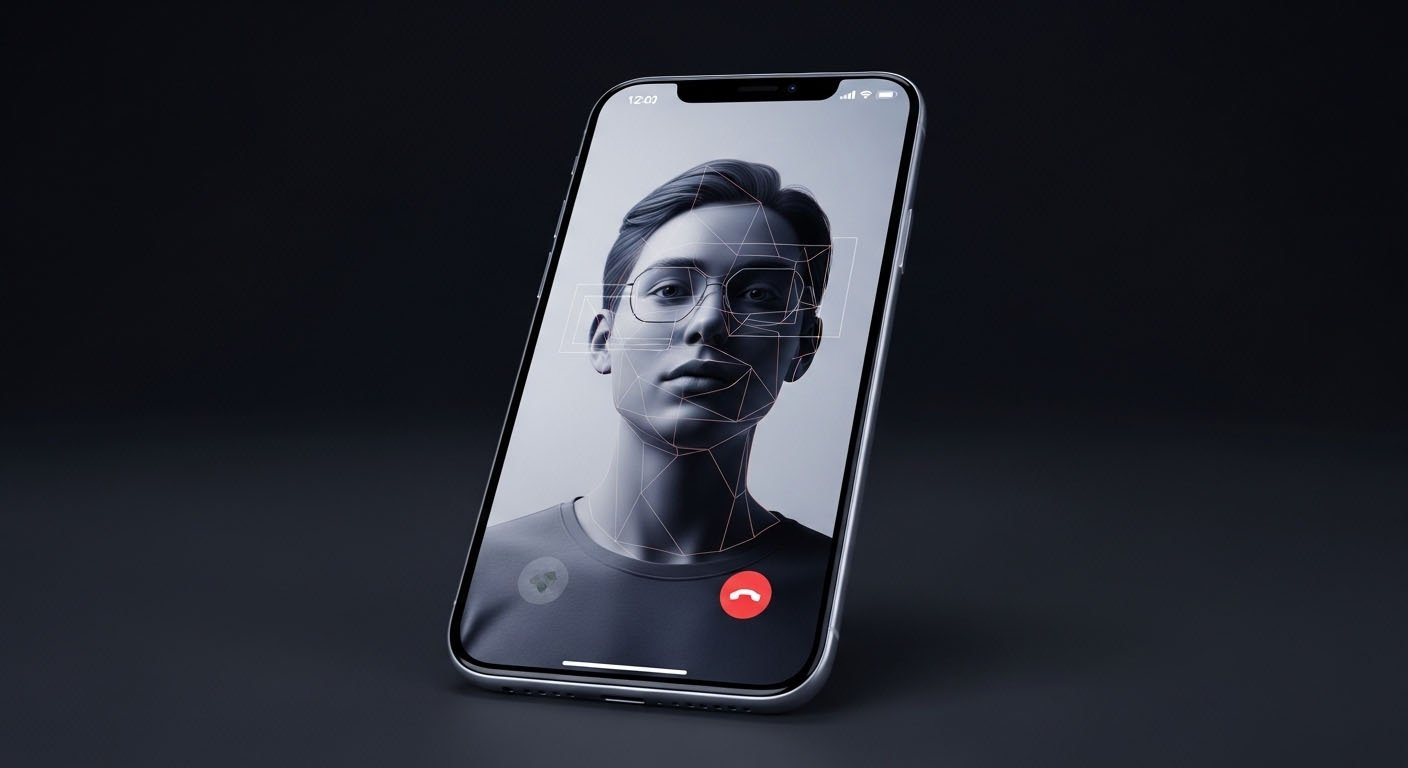
Deepfake Video Verification Checklist
Deepfake Video Verification Checklist: The 10 Signs of AI Impersonation
Don't fall for fake video calls. Use this 10-point, deepfake video verification guide to spot lip-sync errors, lighting anomalies, and voice modulation in sophisticated deepfakes, safeguarding against AI impersonation and online fraud.
I. Strategic Overview: The New Reality of AI-Driven Identity Fraud
1.1. The Deepfake Epidemic: Defining Synthetic Media Fraud
Deepfakes represent one of the most significant emerging challenges in digital security. These are media forms—videos, images, or audio clips—that have been either entirely synthesized or substantially manipulated using advanced machine learning or deep learning technologies.1 The purpose of this synthetic media is to create convincing, hyper-realistic content that depicts people or events that are entirely fictitious, often achieved through face-swapping or synthesized speech.2
The growth of deepfake technology has been explosive. By 2024, the number of readily available tools capable of generating deepfakes surpassed 10,000.4 Critically, the technology required to create these sophisticated forgeries is dramatically less resource-intensive and more accessible than ever before, effectively lowering the barrier to entry for malicious actors and enabling widespread deployment.5
This accessibility creates a severe forensic challenge. State-of-the-art generative models can now produce content that is nearly indistinguishable from genuine media to the casual observer.7 For detection systems to be effective against real-world threats, they must be robust, covering a diverse range of content and capable of identifying all popular generative techniques currently in use.8
1.2. The Stakes Are Higher Than Ever: Analyzing the 2024 Financial Toll
The consequences of deepfake proliferation are no longer limited to reputational damage or political misinformation; they have become a major financial threat. Cyber threats and fraud scams, increasingly fueled by generative AI, are driving record monetary losses globally. In 2024, fraud losses surpassed $16.6 billion, representing a significant 33% increase over the previous year’s total.9
Organizations are directly in the crosshairs of this threat landscape. Industry reports indicate that a substantial 47% of organizations have already experienced deepfake attacks.10 Analysts project that the rapid enablement of fraud by GenAI tools could escalate US fraud losses to $40 billion by 2027.11
This escalation is directly tied to a strategic tactical pivot by sophisticated criminal groups. Early malicious use of deepfakes focused on non-consensual content and broad disinformation, but recent attacks demonstrate a calculated shift toward high-value financial fraud and corporate espionage. Deepfakes are now used as precision instruments targeting high-value assets. Financial institutions are reporting that call centers and internal help desks are overwhelmed by deepfake voice cloning attempts, designed specifically to circumvent speaker-based authentication systems and initiate fraudulent transactions.5 This tactical change mandates that deepfake risk is no longer treated solely as a public relations or misinformation problem but as an immediate, critical enterprise financial threat requiring robust security protocols and forensic verification measures.
II. Corporate Case Studies and The New Modality of Attack
2.1. The $25 Million Video Call Impersonation: A Defining Moment in AI Fraud
The year 2024 was marked by several high-profile incidents illustrating the maturity of AI-driven impersonation schemes. The most defining case involved a major UK engineering firm, Arup, which suffered a $25 million loss after an employee was duped during a seemingly routine video conference.12
During the call, the employee believed they were interacting with senior managers and followed instructions to transfer millions of company dollars. It was later discovered that all participants on the video call were highly sophisticated deepfakes created by artificial intelligence.9 The success of this attack lay not in penetrating the company’s digital systems but in exploiting fundamental psychological vulnerabilities—the natural human reliance on visual and auditory verification of identity during sensitive communications.12 The use of deepfake video calls is designed to compel immediate action and create an urgent scenario that bypasses standard financial verification protocols.9
Before a fraudster can successfully deploy a convincing deepfake executive on a video call, they typically require extensive background information, organizational details, or compromised credentials to set the stage for the high-fidelity deception.5 This demonstrates that deepfake execution is often the culmination of classic social engineering attacks. Consequently, robust deepfake detection strategies must be integrated with foundational digital defense practices. Defending against these advanced synthetic threats requires vigilance against the precursor attacks that supply the necessary context and access. Readers must learn to spot the initial stages of credential theft and system compromise. For organizations seeking to secure their perimeter against these initial breaches, consultation regarding foundational digital defense is recommended. Learn how to spot the precursor to these attacks in our guide: What is Phishing? A Complete Guide to Protecting Yourself.14
2.2. Audio Cloning: Circumventing Authentication Systems
A parallel, yet equally devastating, modality of attack involves pure audio cloning. Financial institutions and internal corporate help desks are facing an onslaught of calls using voice cloning technology.5 These audio deepfakes specifically target and often succeed in circumventing traditional speaker-based authentication systems that rely on matching a simple voiceprint.5
The barrier to entry for creating high-quality, cloned voices has fallen so significantly that actors with minimal technical skill can engineer sophisticated, AI-fueled fraud campaigns.5 This means that if the visual quality of a deepfake is only moderately convincing, the psychological effect of a perfectly cloned, authoritative voice is often enough to complete the fraud. To counter this, detection experts emphasize the need for advanced verification, including "liveness verification" that confirms the voice belongs to a real, present individual, along with frequency spectrum analysis, moving beyond outdated voiceprint matching.15
III. The Deepfake Verification Checklist: The 10 Signs of AI Impersonation
The complexity of modern deepfakes necessitates a shift toward a multimodal detection approach, where visual and audio cues are analyzed simultaneously.16 Human vigilance must be maintained, as no single artifact is guaranteed to expose a fake; instead, skepticism should be immediately raised when multiple inconsistencies from this 10-point checklist appear.
3.1. Visual Artifacts (Signs 1-5): The Uncanny Valley of the Face
Deepfake generators continue to struggle with accurately replicating the complexities of human physiology and the physics of light, leaving subtle, forensic clues that betray their artificial origin.
Sign 1: Inconsistent Lighting and Shadows
Deepfake models still struggle to synthesize realistic interactions between complex 3D human figures and ambient light sources.17 When observing a suspected deepfake, one should look for unnatural illumination, shadows that appear to defy the visible light source in the environment, or a jarring mismatch in illumination levels between the synthetic face or neck and the authentic background.
Sign 2: Unnatural Facial Boundaries and Seams
Artifacts resulting from the blending process of the face-swapping algorithm remain a classic vulnerability.19 Focus on the peripheral areas where the manipulated content meets the original background—specifically where the face meets the hair, ears, or neck. Indicators include blurring, flickering, unnatural pixelation, or a noticeable "halo effect" that reveals a poorly blended seam.17
Sign 3: Skin Texture Anomalies (The "Airbrush Effect")
Advanced deep learning algorithms often fail to reproduce the high-frequency detail inherent in real human skin texture, such as natural pores, fine blemishes, or subtle lines.7 This leads to the face appearing unnaturally smooth, waxy, or hyper-perfect—an effect sometimes dubbed the 'airbrush effect'.20 Conversely, in lower-quality fakes, the skin texture might appear overly pixelated or flat.
Sign 4: Eye and Blinking Irregularities
Early deepfakes were notoriously easy to spot because the subjects did not blink frequently, a flaw stemming from training data primarily consisting of still images.21 While modern models have incorporated blinking, inconsistencies persist. Forensic analysis should check for mechanical or excessively infrequent blinking patterns. Additionally, abnormalities in pupil morphology or the appearance of corneal specularity (the reflection of light in the eyes) should be scrutinized, as these reflections may be static or entirely missing.18
Sign 5: Absence of Micro-Expressions or Facial Asymmetry
Genuine human emotion is expressed through tiny, instantaneous, and often asymmetrical movements that current AI models find exceedingly difficult to replicate.19 Look for stiffness or flatness in emotional reactions—for instance, a synthetic smile that affects only the mouth region but lacks the characteristic creases around the eyes. Perfect symmetry in expressions is highly unnatural. Deepfakes also frequently exhibit difficulties in replicating the nuanced movements of the ear and mandible (jaw) during speech.17
Table 1 provides a summary of the critical visual artifacts to observe:
Table 1: Deepfake Visual Artifact Checklist (Signs 1-5)
3.2. Temporal and Auditory Artifacts (Signs 6-10): Movement and Sound Failures
The evolution of generative models means that obvious visual flaws are quickly corrected. Therefore, the long-term effectiveness of detection shifts from analyzing static image flaws toward identifying dynamic inconsistencies—the failure of the video to maintain coherence across time, motion, and sound. This dynamic analysis is crucial because static visual checks are rapidly becoming obsolete in the face of increasingly sophisticated AI outputs.17
Sign 6: Lip-Synchronization Discrepancies
Deepfake videos often synthesize the visual mouth movements and the audio track separately, leading to noticeable desynchronization when the two are stitched together.16 A careful observer should look for audio that lags behind the visual mouth movement. Additionally, the movements themselves may appear unnatural or semantically unrelated to the specific words being spoken, indicating a failure in the semantic mapping of mouth motion.22
Sign 7: Unnatural Head and Body Motion (Warping)
While deepfakes can convincingly manipulate the face, they often struggle with the complex task of replicating realistic head, shoulder, and environmental motion smoothly across sequential frames.7 Temporal inconsistencies manifest as robotic or jerky movements, inconsistent frame transitions, or environmental instability. The background might subtly warp or shimmer when the synthetic subject moves, a tell-tale sign of rendering failure.17
Sign 8: Frequency Spectrum Gaps in Audio
The increasing success of financial fraud relies heavily on audio fidelity. High-quality audio is now frequently used to lend credibility to an otherwise moderately convincing video. However, AI-generated voices often struggle to accurately replicate the full spectrum of human vocal frequencies, particularly the complex harmonics in the ultra-high and ultra-low ranges.15 The resulting audio may sound digitized, flat, or strangely tinny, betraying the synthetic origin even if the spoken words are accurate.
Sign 9: Digital Micro-Artifacts in Voice
Forensic acoustic analysis indicates that beneath the seemingly realistic surface, AI-generated audio frequently contains subtle, digital glitches, minute static, or repeating patterns of background noise that are residual artifacts of the deep learning synthesis process.15 These subtle auditory cues must be listened for carefully, as they are a strong indicator of manipulation.
Sign 10: Missing Digital Provenance or Watermarks
Given the difficulty of purely reactive detection, strategic defense has shifted toward enforcing provenance—verifying the origin and authenticity of the media.16 Tools and platforms are implementing technologies like digital watermarks and cryptographic metadata tags. If a high-stakes video communication lacks these expected provenance markers or verifiable authentication data, it should be treated with extreme suspicion, as the burden of proving its authenticity falls squarely on the originator.16
Table 2 summarizes the critical temporal and auditory artifacts that signal manipulation:
Table 2: Temporal and Auditory Deepfake Artifacts (Signs 6-10)
IV. Advanced Detection and Mitigation: Leveraging AI to Fight AI
4.1. Automated Detection Tools and Benchmarks
The market for deepfake defense is expanding, offering solutions designed to detect synthetic media. Notable examples include the Microsoft Video AI Authenticator and Deepware, both utilizing machine learning to identify deepfakes.1
However, cybersecurity intelligence reports advise caution. The U.S. Government Accountability Office (GAO) has observed that current deepfake detection technologies often have limited effectiveness in real-world environments, largely because deepfake creators are continuously developing sophisticated techniques designed to evade automated identification.23 A critical challenge remains: simply identifying a deepfake post-mortem is often insufficient to mitigate the harm, as the speed of disinformation can allow damage to occur before a piece of media is officially debunked.23
Therefore, detection strategies must adhere to rigorous benchmarks, such as those laid out in Deepfake-Eval-2024, which mandate that testing sets include diverse content and cover all popular generative techniques to ensure the tools are truly representative of the current threat landscape.8
4.2. Establishing Corporate Verification Protocols and Zero-Trust Communication
The confluence of massive financial losses and official warnings from regulatory bodies, such as FinCEN 11, and security agencies (NSA, FBI, CISA) 1 transforms the deepfake threat into a critical organizational compliance and risk management issue. Organizations that fail to implement advanced verification protocols face heightened operational and legal liability, especially when high-value transfers or sensitive data are involved.
Federal agencies advise that organizations implement technologies for real-time verification and passive detection. This guidance specifically highlights the need for rigorous protection of high-priority officers and their communications, along with mandatory planning and rehearsal of incident response procedures.1
Key protocols for corporate defense must include:
- Mandatory Multi-Factor Authentication: Implementing a zero-trust policy for all high-value transactions initiated via video or voice.
- Secondary Verification Channels: Requiring that any request for funds transfer or sensitive action made during a video call be terminated and verified via a separate, pre-established secure channel (e.g., calling the individual back on a known landline or secure internal messenger).9
- Human Review: Integrating a mandatory, lightweight human review step for any flagged content or highly sensitive communication.16
- Continuous Calibration: Teams must actively log all detection decisions and audit results, using small test sets of known authentic and synthetic files to continuously tune internal detection models and thresholds against the evolving threat landscape.16
4.3. The Future of Provenance: Watermarking and Authentication
The core flaw in reactive detection is that the speed of malicious dissemination often exceeds the speed of forensic analysis, allowing damage—whether financial or reputational—to occur even after the deepfake is identified.23 This inherent inefficiency in detection necessitates a strategic shift toward proactive authentication.
Authentication technologies, such as digital watermarking and cryptographic metadata tags, aim to proactively prove the media’s origin and integrity.23 These tools embed verified data at the point of creation, confirming that the media is genuine and has not been altered.16 This approach fundamentally changes the security dynamic: rather than trying to find flaws in a fake, the system validates the authenticity of the real content.
This technological push is accompanied by growing discussions regarding regulation. Legislative bodies, including the European Parliament, are exploring policies to enforce provenance standards and regulate deepfake detection tools in response to the increasing threat to digital integrity.21
V. Frequently Asked Questions (FAQs)
Q1: What steps should I take immediately if I suspect I am on a deepfake video call?
The primary action must be to safeguard assets and data. Do not, under any circumstances, comply with instructions to transfer funds or share sensitive personal or corporate information.9 Immediately terminate the video or voice session. Then, attempt to re-establish contact with the purported individual through a completely different, known secure channel, such as a designated work phone number or secure messaging app. It is advisable to use a challenge phrase or security question that only the real person would be able to answer confidently.9
Q2: Are there accessible tools or experiments for the general public to learn deepfake detection?
Yes. Public awareness and resilience are vital components of the defense strategy.6 Research institutions are working to provide accessible educational resources. For example, the MIT Media Lab maintains the DetectFakes Experiment, which allows users to practice identifying AI-generated media and familiarize themselves with the subtle visual and temporal artifacts that indicate manipulation.20
Q3: How and where should I report malicious deepfake content?
If a malicious deepfake is encountered, it should be reported directly to the platform hosting the content using their internal reporting tools for manipulated media.25 For cases involving high-impact financial fraud, cyber security threats, or identity theft, it is essential to contact law enforcement. The FBI accepts reports through its Cyber Watch division at CyWatch@fbi.gov.26 Additionally, organizations like the Cyber Civil Rights Initiative and EndTAB provide specialized crisis support, attorney referrals, and guidance for removing non-consensual images from digital platforms.26
Q4: Why do deepfakes often fail on elements like blinking or lighting?
The primary failures stem from limitations in the deep learning training data and the complexity of real-world physics simulation.7 Early deepfake models often failed to generate realistic blinking because their training datasets, composed heavily of existing images, lacked sufficient instances of subjects blinking.21 Similarly, replicating complex, dynamic lighting and shadow interactions in a three-dimensional video environment remains one of the most computationally difficult tasks for generative AI, frequently resulting in lighting mismatches and unnatural shadows.17
Q5: Is identifying a deepfake enough to stop its harm?
Detection alone is often insufficient, particularly in high-speed misinformation campaigns or real-time fraud scenarios.23 Due to the rapid viral spread of content, reputational or financial damage can occur before the media is definitively identified and officially debunked. Therefore, effective defense requires a dual approach: advanced detection combined with rapid response protocols and, most critically, the proactive implementation of media authentication and provenance technologies.23
VI. Conclusion: Rebuilding Trust in the Digital Ecosystem
The comprehensive analysis confirms that the deepfake threat in the contemporary digital environment is no longer nascent; it is a mature, highly sophisticated crisis targeting identity and financial assets. Fueled by the exponential growth in accessible generative tools, AI impersonation schemes are becoming the preferred method for high-stakes fraud, leveraging psychological trust to compel millions in illicit transfers.4
To counter this evolving risk, reliance on outdated verification methods or simple visual instinct is futile. Organizations and individuals must adopt a rigorous, technical defense posture. The Deepfake Video Verification Checklist provides a vital operational protocol, emphasizing a necessary shift toward multimodal detection—combining scrutiny of subtle visual artifacts with detailed analysis of temporal inconsistencies and complex auditory signatures.16
The future of digital security cannot rely solely on reacting to deepfakes after they are created. Instead, the focus must shift to proactively enforcing verifiable authenticity. Integrating digital provenance technologies, such as watermarking and cryptographic metadata, is essential to establish trust in media origin.23 Ultimately, minimizing the global financial exposure demands that organizations implement strict zero-trust communication protocols, prioritize executive protection, and foster a culture of perpetual, educated skepticism in all digital identity verification scenarios.
Written by Arslan – a digital privacy advocate and tech writer/Author focused on helping users take control of their inbox and online security with simple, effective strategies.