AI & Anonymity: The Future of Temporary Email Inboxes by 2030
AI & Anonymity: The Future of Temporary Email Inboxes by 2030
Introduction: The Coming Email Revolution
Imagine a world where your inbox automatically filters not just spam, but also predicts your needs, handles routine responses, and protects your privacy without any conscious effort on your part. This isn't science fiction—it's the future of email, shaped by artificial intelligence and privacy-enhancing technologies that will fundamentally transform how we communicate digitally.
As we approach 2030, email stands at a crossroads. On one hand, AI-generated spam and sophisticated phishing attacks are becoming increasingly prevalent, with AI helping spammers create more convincing emails that bypass traditional filters . On the other, advanced machine learning and privacy-focused technologies like temporary emails are evolving to counter these threats while giving users unprecedented control over their digital identities.
The evolution of email will impact everyone from professionals drowning in inbox overload—receiving 120-130 emails daily—to privacy-conscious individuals seeking to minimize their digital footprint . This article explores how AI and temporary email technologies will merge to create smarter, safer, and more efficient communication systems by 2030, transforming email from a source of stress into a seamlessly managed communication hub.
The Current Email Landscape: Where We Are Now
The Inbox Overload Crisis
Email volume has reached staggering levels, creating what experts term "inbox overload"—a state where professionals receive so many messages that their inboxes become unmanageable. Recent data reveals that the average professional now receives between 121-130 emails per day, a more than 30% increase from a decade ago . This constant flood of messages has tangible consequences:
- Cognitive overload that reduces mental bandwidth and decision-making quality
- Missed important communications buried under lower-priority messages
- Increased stress levels and higher rates of burnout among knowledge workers
- Productivity losses as workers spend hours daily managing their inboxes
The problem extends beyond volume alone. Studies indicate that only 25-30% of emails received are actually important, with the remainder consisting of newsletters, internal updates, and various forms of spam . This signal-to-noise ratio makes effective email management increasingly challenging without sophisticated filtering tools.
Evolving Security Threats in the AI Era
While email volume presents one challenge, security threats represent an even more pressing concern. Traditional spam filters that relied on rule-based systems and keyword detection are becoming increasingly ineffective against AI-powered attacks . These legacy systems struggle with several limitations:
- Inability to handle evolving spam techniques without constant manual updates
- Difficulty recognizing context in sophisticated phishing attempts
- High false-positive rates that mistakenly flag legitimate business emails
The rise of generative AI has dramatically escalated these threats. Cybercriminals now use AI to craft highly personalized phishing emails that mimic legitimate communications with startling accuracy . These AI-generated attacks demonstrate improved grammar, better brand voice imitation, and contextually relevant content that fools both humans and traditional filters .
The business impact is substantial. According to recent reports, 75% of organizations experienced at least one successful email attack in the past year, with false positives costing businesses approximately $24,000 per quarter in fully-loaded analyst time just to investigate legitimate emails mistakenly flagged as threats .
The Temporary Email Solution
In response to these challenges, temporary emails have emerged as a powerful tool for protecting privacy and managing inbox clutter. These disposable email addresses serve as buffers between users and potential spam sources, allowing people to:
- Maintain primary inbox cleanliness by redirecting promotional emails to temporary addresses
- Protect against data breaches by using different addresses for different services
- Preserve anonymity for sensitive communications or when testing new services
Modern temporary email services have evolved beyond simple spam protection. Many now offer features like customizable lifespans, anonymous reply capabilities, and integration with productivity workflows . As privacy concerns grow—driven by increasing regulation and user awareness—these services are becoming mainstream privacy tools rather than niche solutions for technical users.
The AI Revolution in Email Security and Management
AI-Powered Security: Fighting Fire with Fire
As AI-enhanced email threats proliferate, the same technology is being deployed defensively. Third-generation email security platforms now use large language models (LLMs) as central analytical engines rather than supplementary tools . This architectural shift enables fundamentally different capabilities:
- Dual evidence collection that analyzes both threatening and legitimate indicators simultaneously
- Context-aware analysis that understands business communication patterns
- Reduced false positives through better understanding of normal vs. suspicious content
These advanced systems function like judicial processes for emails. Each message gets its "day in court," with AI acting as both prosecutor and defender while an impartial LLM "judge" weighs the evidence and renders a verdict . This approach maintains business continuity by ensuring legitimate emails aren't unnecessarily quarantined while still identifying sophisticated threats.
The results are substantial improvements in security efficiency. Where legacy systems might flag a CFO's urgent payment approval during quarterly close as suspicious (due to urgent language, large amount, and after-hours timing), AI-native systems recognize the legitimate business context and allow it to proceed automatically with high confidence .
Machine Learning in Spam Detection
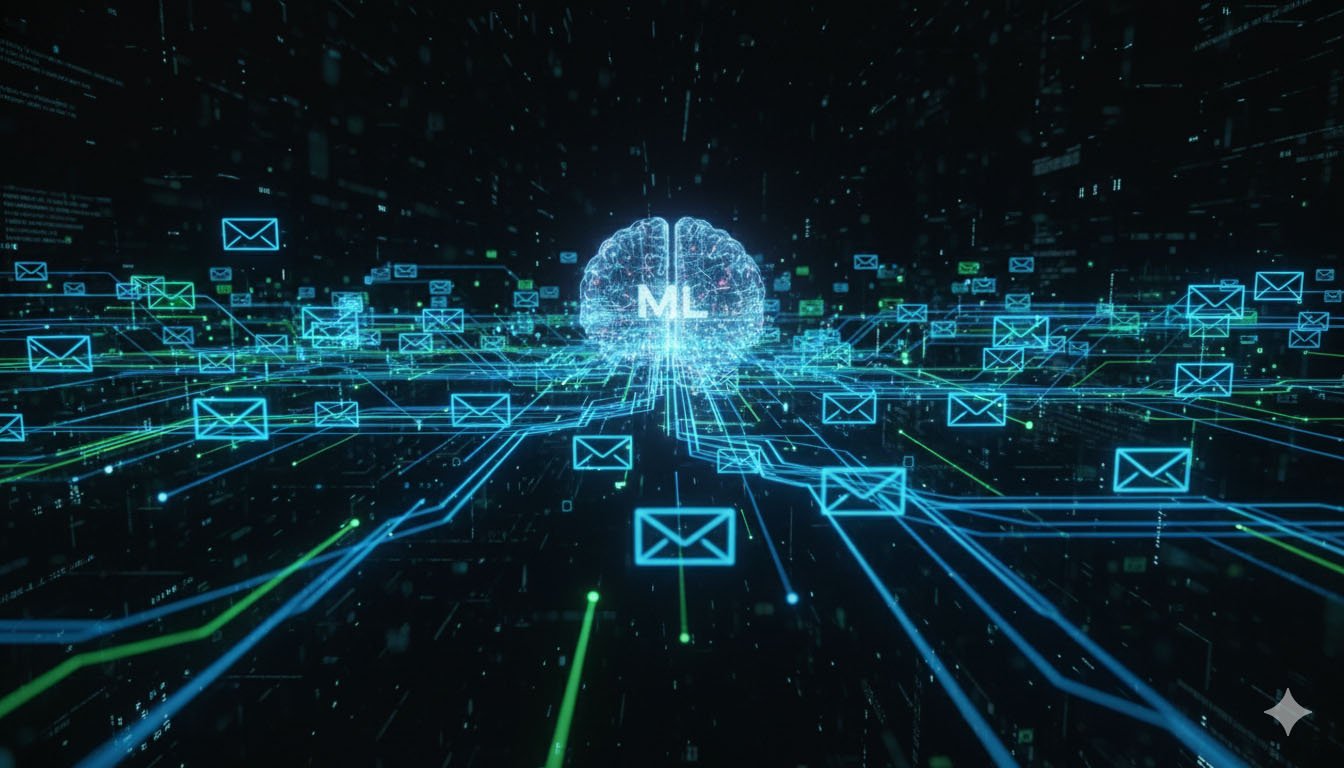
Machine learning has revolutionized spam detection by moving beyond simple pattern matching to sophisticated behavioral analysis and anomaly detection. Modern ML-powered spam filters employ several advanced techniques:
- Natural Language Processing (NLP) to analyze email context, tone, and semantics
- Deep learning networks that automatically identify complex patterns in email content and metadata
- Real-time adaptation that continuously learns from new threats and user feedback
- Sender reputation analysis that evaluates historical performance and engagement patterns
These systems analyze hundreds of data points simultaneously, learning from billions of email interactions to make increasingly sophisticated decisions about inbox placement . Unlike static rule-based systems, ML models continuously evolve—when users mark emails as spam or move messages to their inbox, the algorithms learn and adjust future decisions accordingly.
This dynamic approach creates significant advantages for both email providers and users. Gmail's recent upgrade to its spam filter, for instance, uses a text classification system called Resilient & Efficient Text Vectorizer that can spot adversarial manipulations like invisible characters, emojis, and special characters that previously bypassed detection .
Predictive Threat Intelligence and Personalization
Looking toward 2030, AI's role in email security will expand to include predictive threat intelligence and highly personalized filtering. These advancements will transform email security from reactive to proactive:
- Predictive analytics that identify emerging threat patterns before they become widespread
- Behavioral biometrics that recognize individual writing styles to detect account compromises
- Cross-platform intelligence that correlates email threats with other security signals
- Personalized security models that adapt to individual communication patterns and risk profiles
The same AI capabilities will also enhance email management beyond security. Experts predict that by 2030, email will become fully automated and 100% personalized, with AI crafting messages tailored to individual behaviors, history, preferences, and interests . This hyper-personalization will apply equally to legitimate marketing and security systems, creating a continuous innovation cycle between attackers and defenders.
Table: AI's Dual Role in Email Evolution
The Evolution of Temporary Email Technology
From Simple Disposables to Smart Email Management
Temporary email services are undergoing a dramatic transformation from basic disposable addresses to sophisticated privacy management platforms. Where early temporary email services offered simple, short-lived addresses for spam avoidance, next-generation services provide:
- Custom domain integration that maintains professional branding while preserving privacy
- Anonymous reply capabilities enabling two-way communication without identity exposure
- AI-powered management that automatically categorizes, routes, and responds to messages
- Intelligent expiration based on email content and user behavior rather than fixed timeframes
These advancements position temporary emails as strategic tools for both personal and professional use. Businesses already leverage custom domain temporary addresses for scenarios like client-project@consultingfirm.com or campaign-brand@agency.com, maintaining professional appearance while controlling inbox access and automating follow-up processes .
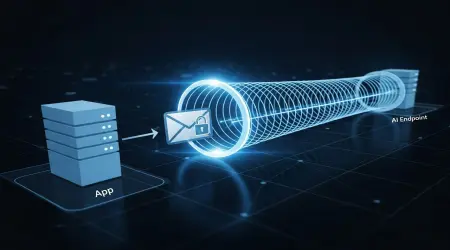
The underlying technology has also evolved significantly. Modern temporary email systems use secure relay infrastructure that strips identifying information from messages while maintaining conversation continuity. This enables true anonymous communication rather than simply providing a temporary receiving address .
AI-Powered Smart Aliases and Management
Artificial intelligence is transforming temporary email from a passive tool into an intelligent communication assistant. Emerging AI capabilities in temporary email services include:
- Predictive alias creation suggesting optimal addresses based on context and past use
- Automatic categorization intelligently sorting incoming emails by purpose and importance
- Lifecycle management automatically adjusting alias expiration based on usage patterns
- Content analysis scoring email importance and flagging potentially malicious content
Between 2025-2027, we can expect these systems to evolve further with natural language processing for voice-commanded alias creation, behavioral learning that optimizes privacy strategies automatically, and predictive privacy that anticipates threats and proactively adjusts protection levels .
These advancements will make temporary email services more accessible to non-technical users while providing sophisticated protection mechanisms. Instead of manually creating disposable addresses for each service, users will simply describe their privacy needs ("I need to sign up for a fitness app trial but don't want ongoing marketing"), with AI handling the technical implementation automatically.
Enhanced Functionality: Beyond Basic Disposables
The functionality of temporary email services is expanding well beyond basic message reception. Modern platforms now offer or are developing:
- Cross-platform identity management with seamless integration across social media, messaging apps, and cloud services
- Blockchain-based decentralized systems creating censorship-resistant communication networks
- Zero-knowledge verification proving legitimacy for important communications without revealing personal information
- Quantum-resistant encryption future-proofing communications against emerging computing threats
These innovations address limitations of earlier temporary email services while expanding their usefulness. Blockchain integration, for instance, promises truly decentralized email routing with cryptographic identity verification and immutable privacy preference records . This eliminates single points of failure and prevents service providers from accessing user communications.
Similarly, zero-knowledge verification enables use cases previously impossible with temporary emails, such as proving professional credentials for research access or age verification for restricted services without revealing specific identity details .
Table: Temporary Email Evolution Timeline
Predictions for 2030: The Fully Transformed Inbox
The Seamlessly Managed Inbox
By 2030, AI will have transformed the email experience from a constant management challenge to a seamlessly automated communication hub. Key features will include:
- Fully automated prioritization that perfectly identifies important communications without user input
- Predictive responses that handle routine communications automatically based on user preferences
- Integrated task management that converts email content into actionable items without manual processing
- Cross-platform unification that merges email with other communication channels into a single managed interface
These advancements will fundamentally change our relationship with email. Rather than spending hours each week on inbox management, users will interact with a curated communication stream that surfaces only what requires their attention while automatically handling everything else .
The business impact will be substantial. Research indicates professionals currently lose approximately one hour daily to email management inefficiencies . By 2030, AI-driven automation could recover most of this lost productivity while reducing the cognitive load and stress associated with constant inbox monitoring.
Advanced Security Integration
Email security in 2030 will evolve beyond separate filtering systems to become deeply integrated protection spanning multiple layers:
- Behavioral analysis that detects subtle anomalies in communication patterns indicating compromised accounts
- Cross-channel threat correlation that connects email threats with other security signals for earlier detection
- Adaptive authentication that dynamically adjusts verification requirements based on perceived risk
- Self-healing systems that automatically respond to and recover from security incidents
These systems will leverage both global threat intelligence and highly individualized behavioral models to provide protection that feels invisible during normal use but immediately responsive to emerging threats. The distinction between "email security" and broader "digital security" will blur as protection becomes unified across communication channels.
Business email compromise attacks, which currently cost organizations millions annually, will be dramatically reduced through AI-powered anomaly detection that recognizes subtle deviations in writing style, timing, and request patterns that humans would likely miss .
Privacy as a Default Setting
Perhaps the most significant transformation by 2030 will be the shift toward privacy-by-default in digital communications. This will manifest through:
- Widespread temporary email adoption becoming standard practice for most internet users
- Integrated privacy features in mainstream email providers rather than separate services
- Automated privacy optimization with AI assistants managing complex privacy preferences
- Regulatory frameworks that formally recognize and protect privacy rights in digital communications
This shift responds to growing user demand for control over personal data amid increasing digital surveillance and data breaches. Temporary email technologies will evolve from separate services to built-in features of communication platforms, making privacy protection accessible to all users regardless of technical expertise .
The business implications are profound. Organizations will need to adapt their marketing and communication strategies for a world where temporary email addresses are the norm rather than the exception. This may drive increased emphasis on value-driven engagement rather than list-building, as the ability to reach users becomes dependent on ongoing consent rather than one-time email collection.
FAQ: Addressing Common Questions About AI and Temporary Emails
How will AI improve email security without compromising privacy?
AI enhances email security while preserving privacy through several mechanisms:
- On-device processing where possible, analyzing emails without transmitting personal data
- Federated learning that improves models across many users without sharing individual data
- Zero-knowledge proofs that verify legitimacy without revealing content
- Differential privacy that adds statistical noise to protect individual information in aggregate data
Modern AI security systems increasingly employ "zero-memory" architectures that analyze each email using current signals and organizational context, then discard the analysis after rendering a verdict . This approach provides maximum analytical capability without creating persistent privacy risks through data retention.
Will temporary emails replace primary email accounts?
Temporary emails are unlikely to completely replace primary accounts but will instead become integrated components of comprehensive email strategies. Experts predict that by 2030, temporary identities will become the default for many online interactions while permanent emails remain essential for:
- Primary relationships with important contacts and services
- Account recovery and identity verification
- Long-term communications requiring persistent access
- Legal and official correspondence requiring stable identities
The future lies in seamless management between permanent and temporary addresses, with AI automatically selecting the appropriate address for each context and managing expiration of temporary addresses .
How can businesses adapt to increasing use of temporary emails?
Businesses can successfully navigate the shift toward temporary emails by:
- Focusing on engagement quality rather than simply growing email lists
- Developing value-first strategies that give users reasons to maintain access
- Implementing progressive profiling that builds relationships over time
- Respecting privacy preferences and making unsubscribe processes effortless
- Exploring alternative channels for important communications when appropriate
Forward-thinking organizations will recognize that temporary emails actually benefit legitimate businesses by reducing spam complaints, improving engagement metrics, and creating more accurate performance measurements .
What role will blockchain play in future email systems?
Blockchain technology promises to enable several email advancements by 2030:
- Decentralized email routing that eliminates single points of failure or control
- Cryptographic identity verification that prevents spoofing and impersonation
- Immutable privacy preference records that ensure user choices are respected
- Censorship-resistant communication particularly important in restrictive regimes
- Self-sovereign identity integration giving users complete control over their digital identities
These blockchain-based systems will likely complement rather than replace traditional email infrastructure, initially serving users with heightened privacy needs before potentially expanding to broader adoption .
Are there ethical concerns with AI in email security?
The use of AI in email security does raise several ethical considerations that developers and organizations must address:
- Bias in training data that could disproportionately flag certain types of communications
- Transparency challenges in how AI systems make filtering decisions
- Accountability questions when AI systems mistakenly block important communications
- Environmental impact of energy-intensive AI computations
- Job displacement concerns for security analysts whose work becomes automated
Responsible implementation requires ongoing human oversight, regular auditing for biased outcomes, transparency about AI usage, and consideration of environmental impacts through optimized algorithms and efficient hardware .
Conclusion: Preparing for the Email Revolution
The convergence of artificial intelligence and temporary email technologies will fundamentally transform our digital communication experiences by 2030. The inbox of the future will be smarter, safer, and more respectful of privacy than today's overwhelmed communication channels.
This transformation won't happen overnight but through gradual advancements in both AI capabilities and privacy-enhancing technologies. The organizations and individuals who thrive in this new environment will be those who:
- Embrace AI-assisted email management rather than clinging to manual processes
- Adopt privacy-first communication strategies that respect user preferences
- Implement layered security approaches that combine AI detection with human oversight
- Remain adaptable as email technologies and threats continue evolving
The future of email points toward intelligent automation handling routine management while human intelligence focuses on meaningful communication and relationship-building. By embracing these coming changes, we can look forward to a world where email once again becomes a tool that serves rather than stresses us, where our privacy is protected by default, and where our attention can focus on what truly matters.
Explore how temporary email solutions can already today help you regain control of your inbox while protecting your privacy as we move toward this AI-driven future. The revolution in email technology is coming—and it can't arrive soon enough for today's overwhelmed inboxes.
Written by Arslan – a digital privacy advocate and tech writer/Author focused on helping users take control of their inbox and online security with simple, effective strategies.