
Email Trapping: How to Stop Test Emails Reaching Real Customers
Email Trapping: The Ultimate Guide to Stopping Test Emails From Reaching Real Customers
In the high-stakes world of digital communication, few moments are as heart-stopping as realizing a test email—meant only for internal QA eyes—has been deployed to your entire customer list. It’s a modern-day delivery disaster. A misplaced "Hello, ${test_user}" in a password reset email, a broken link in a critical order confirmation, or a placeholder image in a marketing blast can shatter user trust, damage your brand's reputation, and lead to tangible financial loss.
This isn't just a minor oops; it's a systemic failure in your quality assurance process. The solution? A robust, foolproof strategy known as email trapping.
This comprehensive guide will dive deep into the art and science of trapping outbound emails, transforming your QA process from a vulnerable gamble into an impenetrable fortress. We'll explore how using dedicated virtual inboxes allows you to inspect every aspect of your transactional and marketing communications before they ever touch a customer's inbox.
What is Email Trapping? Beyond the Basic Definition
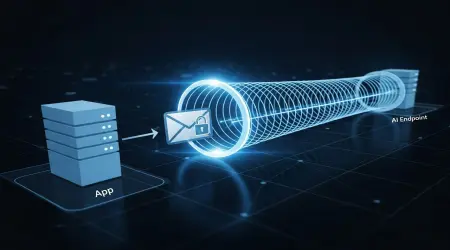
At its core, email trapping is the deliberate and strategic process of intercepting and capturing all outbound emails generated by your application during the development, staging, and quality assurance (QA) phases. Instead of these emails shooting off into the void or, worse, to real users, they are safely "trapped" within a controlled environment.
Think of it as a digital safety net. But it's far more than just a catch-all; it's an advanced inspection and analysis lab for your emails.
A sophisticated email trapping system allows you to:
- Intercept Every Email: Capture 100% of outbound SMTP traffic from your application, including transactional emails (welcome series, password resets, order confirmations) and marketing campaigns.
- Inspect Content and Rendering: View the email exactly as it would appear across different clients (Gmail, Outlook, Apple Mail) and devices (desktop, mobile).
- Analyze Headers and Technical Data: Scrutinize email headers for correct SPF, DKIM, and DMARC authentication, which are critical for inbox placement and avoiding spam folders.
- Validate Links and CTAs: Safely click and test every link, button, and call-to-action without affecting live analytics or triggering real-world processes.
- Check for Personalization and Dynamic Content: Ensure that variables like {{first_name}}, {{order_number}}, and {{reset_link}} are populated correctly and don't display raw code.
The High Cost of "Oops": Why Trapping Outbound Emails is Non-Negotiable
Skipping a formal email trapping process might seem like a time-saver, but the risks are monumental. Let's break down the real-world consequences of a delivery disaster.
1. Erosion of Brand Trust and Professionalism
Your emails are a direct line of communication with your users. A test email landing in a customer's inbox screams unprofessionalism. It tells them that your systems are not robust and that you don't value their experience enough to implement proper checks. Trust, once lost, is incredibly difficult to regain.
2. Compromised Security and User Data
A mis-sent email can be a significant security risk. For instance, a test email for a password reset function might contain a valid link. If that link is sent to a real user, it could potentially allow them unauthorized access to another user's account, especially if the system logs the event. Trapping these emails in a virtual inbox QA environment prevents any live, security-sensitive communications from being accidentally triggered.
3. Tangible Financial Loss
The financial implications are direct and severe:
- Support Ticket Surge: Your customer support team will be inundated with confused and concerned users, pulling resources away from genuine issues.
- Cancellations and Churn: In e-commerce, a broken order confirmation or a promo code labeled "TEST_50_OFF" can lead to abandoned carts and immediate cancellations.
- Reputation Management Costs: Cleaning up the mess requires communication, apologies, and potentially financial compensation, all of which cost money.
4. Corrupted Analytics and Data
If test emails are being sent to real users and those users interact with them (by clicking links, marking as spam, or instantly deleting), your analytics become polluted. Your open rates, click-through rates, and spam complaint metrics become unreliable, making it impossible to gauge the true performance of your campaigns.
The Anatomy of a Bulletproof Email Trapping System
Implementing an effective email trapping strategy isn't about just changing a "TO" address in your code. It's about creating a parallel, isolated email ecosystem for your non-production environments.
Core Component 1: The Virtual Inbox Network
The foundation of any trapping system is a set of virtual inboxes. These are disposable, dedicated email addresses that you configure your staging/QA environment to send all non-critical emails to.
- Dedicated Domain: Use a separate domain (e.g., yourcompany-qa.com) or a subdomain specifically for testing. This prevents any chance of cross-contamination with your primary domain's sender reputation.
- Catch-All functionality: Configure a "catch-all" address on this domain (e.g., @dev.yourcompany-qa.com). Any email sent to a non-existent address at this domain will be trapped, allowing you to test complex scenarios without pre-creating specific addresses.
- Management Interface: A central dashboard, like the one offered by Temp Mail Master, where you can view, search, and manage all trapped emails from a single pane of glass.
Core Component 2: Environmental Configuration
This is the technical magic that makes it all work. You must configure your application's email settings differently for each environment.
- Development/Staging Environment: The SMTP settings or API endpoints should point exclusively to your email trapping tool or the configured catch-all domain. No real customer email addresses should ever be in the database of these environments.
- Production Environment: This remains untouched, pointing to your live email service provider (SendGrid, Amazon SES, Postmark, etc.).
Pro Tip: Use environment variables (ENV_VARS) to manage these settings. This ensures that the code remains the same across environments, but the destination for emails changes automatically based on whether the app is running in staging or production.
Core Component 3: The QA Inspection Checklist
Once an email is trapped, the real QA begins. Your team should have a standardized checklist to run through for every email type.
- ✅ Sender Name and Address: Is the "from" name and address correct and professional?
- ✅ Subject Line: Is it free of placeholder text and typos?
- ✅ Preheader Text: Does the preview text complement the subject line?
- ✅ Dynamic Content & Personalization: Are all {{variables}} correctly replaced with the intended data?
- ✅ HTML and Plain Text Rendering: Does the email render correctly in dark mode, on mobile, and in major email clients?
- ✅ Link Validation: Does every button and hyperlink point to the correct, live (or staging) URL? This is a critical step to prevent deployment disasters.
- ✅ Image Loading: Do all images load, and do they have appropriate alt text?
- ✅ Email Headers (Advanced): Are authentication headers (SPF, DKIM) present and valid? This is crucial for preventing delivery disasters related to spam filtering.
For a deeper dive into the technical side of email analysis, our guide on how to decode email headers for better deliverability can be an invaluable resource for your development team.
Implementing Email Trapping in Your Workflow: A Step-by-Step Guide
Let's translate the theory into action. Here’s how to integrate email trapping into your CI/CD (Continuous Integration/Continuous Deployment) pipeline.
- Identify Your Email Streams: List all automated emails your system sends (user signup, password reset, invoice, shipping notification, etc.).
- Choose Your Trapping Tool: Select a solution that provides a robust virtual inbox QA system. Ensure it offers an API for automation, a clean management UI, and the ability to handle high volumes.
- Configure Your Staging Environment: Point your staging app's email driver to the SMTP server or API of your trapping tool. Use the dedicated testing domain.
- Seed Your Database with Test Data: Populate your staging database with user records that have email addresses under your testing domain (e.g., test_user_1@dev.yourcompany-qa.com).
- Execute Test Scenarios: Methodically trigger every email in your list.
- Create a new user account to trap the welcome email.
- Initiate a password reset to trap the security email.
- Place a test order to trap the confirmation and shipping emails.
- Analyze in the Trap: Go to your trapping tool's dashboard. Open each trapped email and run it through your QA inspection checklist.
- Automate Where Possible: Use the tool's API to create automated tests that can check for the presence of an email, validate links, and confirm subject lines as part of your build process.
- Sign-Off and Deploy: Only after every trapped email has passed all checks should the code be approved for deployment to production.
To streamline the creation of test data for this process, leveraging a service that provides instant, disposable addresses is key. You can learn more about this in our article on the power of disposable email addresses in modern development.
Beyond Basic Trapping: Advanced Use Cases
A mature email trapping process goes beyond simple content checks.
- Load and Stress Testing: Send a high volume of emails through your trapping system to ensure your email queue and infrastructure can handle peak loads without crashing or slowing down.
- Spam Score Testing: Some advanced tools can analyze your trapped email content and provide a predictive spam score, allowing you to tweak language and formatting before it impacts your deliverability.
- Localization Testing: Trap emails for different language and region settings to ensure date formats, currencies, and translations are accurate.
Frequently Asked Questions (FAQs)
Q1: Can't I just use a single Gmail or Outlook address for testing?
While possible, it's highly inefficient and risky. Personal inboxes lack the tools for organized QA, can hit sending/receiving limits, and don't offer catch-all functionality. Most importantly, it's easy for a test email to get lost in a cluttered personal inbox, leading to missed errors.
Q2: How is email trapping different from an email sandbox like Litmus or Email on Acid?
Great question. Sandbox services are fantastic for design and client-side rendering testing. You manually paste your HTML into their tool to see how it looks. Email trapping, however, is an integrated, end-to-end process test. It proves that your application correctly generates and sends the entire email, with all dynamic data and logic, in a real-world simulation. They are complementary practices.
Q3: We use a third-party service for our emails (e.g., SendGrid). Can we still trap them?
Absolutely. Most modern Email Service Providers (ESPs) offer "test mode" API keys or the ability to set up dedicated IP pools and subdomains for staging. You would configure your staging environment to use these test-mode settings, which then route all emails to a pre-defined virtual inbox within your trapping system instead of sending them for real.
Q4: What's the biggest mistake teams make when first implementing email trapping?
The most common mistake is not fully committing. They might trap most emails but leave a few legacy systems or one-off scripts pointing to real addresses. A successful strategy requires a full audit of all outbound email sources and a 100% commitment to routing them through the trap in non-production environments.
Q5: Does email trapping help with GDPR/Privacy compliance?
Indirectly, yes. By ensuring that test and erroneous emails containing user data never leave your controlled virtual inbox QA environment, you significantly reduce the risk of a data breach via mis-sent communication. It's a critical control in your data privacy and security framework.
Conclusion: Stop Gambling, Start Trapping
In today's competitive landscape, your email communication is not a secondary feature; it's a core part of the user experience and a direct reflection of your brand's reliability. Allowing delivery disasters to happen is a gamble with stakes that are far too high.
Implementing a disciplined email trapping strategy using dedicated virtual inboxes is no longer a "nice-to-have" for elite engineering teams; it's a fundamental requirement for any business that relies on automated communication. It's the definitive way to prevent deployment disasters, protect your brand, secure user data, and ship with confidence.
Stop hoping your test emails don't leak. Start ensuring they can't.
Written by Arslan – a digital privacy advocate and tech writer/Author focused on helping users take control of their inbox and online security with simple, effective strategies.