
Temp Mail for Whistleblowers & Journalists
Beyond the Dark Web: How Temp Mail Protects Whistleblowers and Journalists
Introduction: The High-Stakes World of Anonymous Communication
In an era of pervasive digital surveillance and increasing corporate and governmental scrutiny, the ability to communicate anonymously is not a luxury—it is a fundamental necessity for those who expose wrongdoing. Whistleblowers and investigative journalists operate in a high-stakes environment where a single digital misstep can lead to the compromise of a source, the collapse of an investigation, or severe personal and professional repercussions.
While much attention is paid to sophisticated tools like the Tor network and end-to-end encrypted chat applications, the email address remains the most common and often the most vulnerable point of contact. This is where the concept of temporary email moves "Beyond the Dark Web" and into the realm of essential, practical security for high-risk users.
Temporary email, by providing an ephemeral, non-attributable communication channel, offers a critical layer of defense, ensuring that the initial contact between a source and a journalist is both secure and untraceable. This article explores the unique role of temporary email in protecting these vital actors in a free society.
The Paradox of Digital Anonymity
The challenge for whistleblowers is the Digital Footprint Paradox: to expose information, they must communicate, but every act of digital communication leaves a trace that can be used to identify them.
Part I: The Whistleblower's Need for Ephemeral Contact
The primary goal of a whistleblower is to make initial, secure contact with a journalist or a trusted organization. This first step is the most dangerous.
1. The Threat of Metadata and Correlation
Even if the content of an email is encrypted, the metadata—the sender's email address, the recipient's address, the time, and the IP address—is often exposed.
- IP Address Logging: A temporary email service that does not log IP addresses is crucial. If a whistleblower uses a temporary email service while connected to a public Wi-Fi network (further protected by a VPN), the ephemeral email address ensures that no permanent link is established to their device or location.
- Correlation Attacks: Law enforcement or corporate security teams can use a known permanent email address to correlate activity across multiple platforms. The disposable nature of a temporary email prevents this correlation, as the address is used once and then destroyed.
2. The Role of the "Burner" Inbox
For a whistleblower, the temporary email acts as a "Burner Inbox"—a single-use, high-security drop-off point.
- Creation: The whistleblower creates a temporary email address (e.g., ProjectPhoenix@tempmailmaster.io).
- Contact: They use this address to send a brief, encrypted message to the journalist's secure email (e.g., Proton Mail).
- Destruction: The whistleblower immediately destroys the temporary inbox, ensuring that no history of the outgoing message remains on the server side.
- Reply Channel: The journalist can reply to the temporary address, knowing the message will be received, but the whistleblower is not required to maintain the address, thus minimizing their exposure time.
Part II: The Journalist's Defense: Protecting the Source
For the journalist, temporary email is a tool for source protection and investigative integrity.
1. Vetting and Verification in a Clean Environment
Journalists must vet their sources without exposing their primary communication channels.
- Isolated Communication: A journalist can instruct a source to use a temporary email for the initial contact. This isolates the conversation from the journalist's primary email, which may be subject to organizational monitoring or targeted phishing attacks.
- Testing for Tracking: The journalist can use the temporary email to test the source's communication method for tracking pixels or other surveillance mechanisms before moving to a more secure, end-to-end encrypted channel.
2. The Ephemeral Nature as a Legal Shield
In legal battles over source identification, the ephemeral nature of the temporary email provides a critical defense.
- Zero-Access Storage: If the temporary email service employs a zero-log policy and secure deletion, there is no data to hand over, even under a subpoena. This is a far stronger defense than relying on the legal protections of a permanent email provider, which may be forced to comply with government requests.
- The "Right to Pseudonymity" in Practice: As argued in our previous analysis [1], the use of a temporary email is a practical exercise of the right to pseudonymity, allowing the source to communicate under a non-attributable identity without revealing their true self.
Part III: Beyond the Dark Web: Practical Security Protocols
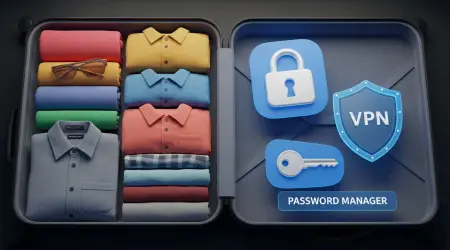
The most effective use of temporary email for whistleblowers and journalists involves combining it with other security best practices.
1. The Multi-Layered Security Protocol
2. The Criticality of Secure Deletion
The value of a temporary email for this use case hinges on its secure deletion policy. A service that merely "hides" the inbox is a liability. Whistleblowers and journalists must choose a service that guarantees:
- Immediate Deletion: The inbox and all its contents are destroyed immediately upon user request or after a short, defined time limit (e.g., 72 hours) [2].
- Secure Overwrite: The data is not just deleted from the index but is cryptographically overwritten, ensuring no forensic recovery is possible [3].
Valuable FAQ: Temp Mail for High-Risk Communication
Q1: Is a temporary email service as secure as a dedicated encrypted email provider (like Proton Mail)?
A: They serve different purposes. Encrypted providers (like Proton Mail) are for long-term, high-security, two-way communication where both parties are verified. Temporary email is for initial, non-attributable, ephemeral contact where the source's identity must be protected at all costs. The best practice is to use a temporary email for the first contact, then transition to an encrypted provider once trust is established.
Q2: Can a temporary email address be traced back to the user's IP address?
A: It depends entirely on the temporary email provider's logging policy. A truly secure provider will have a zero-log policy and will not store the IP address used to access the inbox. This is a critical feature to look for when choosing a service for high-risk communication.
Q3: What is the risk of using a public temporary email service?
A: Public services (where anyone can view an inbox by guessing the address) are extremely dangerous for whistleblowers. They expose the communication to anyone, including the entity being exposed. High-risk users must only use private, session-based temporary email services where the inbox is only accessible via a unique, secure session token.
Q4: How can a journalist verify a source using a temporary email?
A: Verification is a multi-step process. The temporary email is only for the initial, secure hand-off of a small piece of verifiable information (e.g., a document title or a specific internal code). Once this is verified, the journalist should immediately guide the source to a more robust, end-to-end encrypted channel (like Signal or a PGP-encrypted email) for the main communication.
Q5: Does using a temporary email violate any laws?
A: No. Using a temporary email to protect one's privacy or to communicate with a journalist is a legal exercise of the right to privacy and freedom of the press. It only becomes illegal if the communication is used to facilitate a crime, which is a violation of the service's Terms of Service and is actively monitored for by reputable providers.
References
[1] TempMailMaster.io Blog. (2025). The 'Right to Pseudonymity': A Philosophical and Practical Argument for Disposable Email. [Internal Link: /blog/right-to-pseudonymity] [2] TempMailMaster.io Blog. (2025). Case Study: The 72-Hour Lifespan of a Disposable Email Address. [Internal Link: /blog/72-hour-lifespan] [3] TempMailMaster.io Blog. (2025). The Security Audit: What Happens to Your Data When a Temp Mail Expires?. [Internal Link: /blog/security-audit] [4] Proton.me Blog. (2025). How to communicate securely with whistleblowers. [Source Link: https://proton.me/blog/whistleblower-communication] [5] Freedom of the Press Foundation. (n.d.). Secure communication. [Source Link: https://freedom.press/digisec/guides/secure-communication/] [6] SimpleLogin. (n.d.). Anonymous Whistleblowing and News Tips with SimpleLogin. [Source Link: https://anonform.com/anonymous-whistleblowing-and-news-tips-with-simplelogin/]
Written by Arslan – a digital privacy advocate and tech writer/Author focused on helping users take control of their inbox and online security with simple, effective strategies.