7 Benefits of a Disposable Email (And When Not To)
Reviewed by: TempMailMaster Editorial Team
Research references: FTC, CISA, NIST privacy and security guidance.
Last updated: July 2026
Somewhere in your inbox is a confirmation email from a store you bought one thing from years ago, a newsletter you've meant to unsubscribe from every week since, and a password reset link from a site you don't remember creating an account on. None of that happened because you were careless. It happened because you used one email address for everything, and eventually everything found its way back to it.
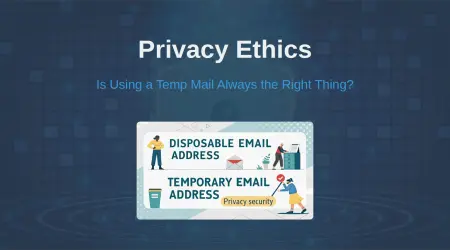
There's a simpler fix than fighting your inbox one unsubscribe link at a time: stop handing that address out in the first place. That's what a disposable email is for — an address you use for a short window, for one purpose, and then let go of. Here's where that actually pays off, and where it doesn't.
Spam stays contained to the address that caused it
Say you download a free template from a marketing site, or create an account to read one article on a subscription news site. Six months later, that one signup has somehow fed three more mailing lists, and your inbox has a permanent undercurrent of promotions you don't remember agreeing to.
With a disposable address, that chain has nowhere to go. The address that caused the spam is the one that receives it, and once it's not useful anymore, you stop checking it instead of hunting for an unsubscribe link buried in a footer. It's less "managing spam" and more skipping the problem entirely.
The trade-off: if a company you actually wanted to hear from ends up on that address by accident, you'll miss it. Save disposable addresses for signups you'd genuinely be fine losing, not ones you might want back.
Less of your identity gets handed to companies that don't need it
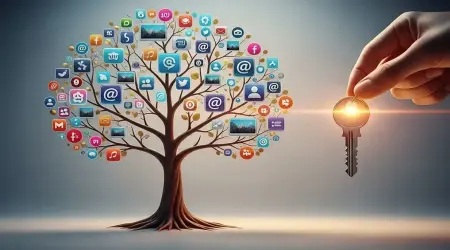
Every account tied to your real email adds one more place that knows a version of you — your name, maybe your location, your habits based on what you click in their emails. None of that is sinister on its own, but it adds up, and it's rarely something you actually agreed to think about at signup.
A disposable address breaks that link before it forms. The company gets an inbox that receives its one confirmation email and nothing else — no name behind it that connects easily to your other accounts. This is close to what's sometimes called pseudonymity: using an identity that's real enough to function without being tied to the rest of your life. Our piece on the right to pseudonymity goes into why using a name that isn't your legal one is a legitimate privacy choice, not something to feel guilty about.
Need a temporary inbox for a one-time signup?
Generate a disposable email instantly without creating an account.
A breach somewhere else stops being your problem
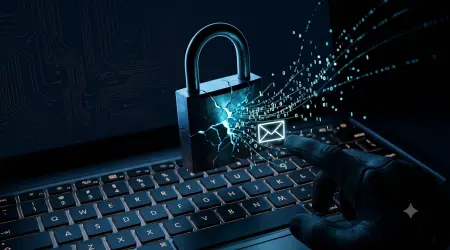
Data breaches aren't rare anymore — they're closer to weather. A niche forum you joined years ago to ask one question, a coupon site you used once, a community that shut down since: any of them can get breached long after you've forgotten they exist, and your email address is usually the first thing exposed.
If that account used your real email, you're now one row in a leaked database, and depending on what else was stored — a reused password, a security question answer — the damage can spread past that one site. If it used a disposable address instead, the breach is still real, but it stays contained: nothing connects it back to your primary inbox or the accounts attached to it. Our guide on what happens to your email after a data breach walks through what to actually check if you're ever notified.
Trying something new stops feeling risky
There's a specific hesitation before signing up for a free trial: is this one email now, or fifty emails a month for the next two years? That hesitation is rational — plenty of services are built to make cancelling harder than signing up.
A disposable address removes the bet. You get to evaluate the trial on its own terms, and if it's worth keeping, you switch to your real email when you subscribe properly. If it isn't, you walk away and the address goes with it.
Worth knowing: a growing number of services now block known disposable domains at signup, precisely because so many trials get abused this way. If one rejects a temp address outright, that's not a bug — it's the same trade-off working in the other direction.
Gated content stops costing you months of marketing
Downloading one whitepaper shouldn't cost you a monthly drip campaign, but that's often exactly what "gated content" means in practice — an email required before a PDF, a discount code, or a webinar recording unlocks. The content is usually worth the email address; the six months of follow-up sequences afterward usually aren't.
A disposable address lets you take what you came for without opting into the funnel behind it. You're not deceiving anyone — the gate asked for an email address, and you provided one that works for exactly as long as you need it to.
It's fast enough that you'll actually use it
Privacy advice tends to ask for more effort than most people are willing to give on a random Tuesday: configuring a VPN, setting up an alias service, reading a provider's terms before signing up. Reasonable, in theory — and quietly skipped by most people in practice.
A disposable inbox skips that entirely. There's no account to create for the tool itself, nothing to set up, nothing to remember: you land on the page, an address already exists, you copy it. That low friction is arguably the real point — a privacy habit only helps if it survives contact with how impatient people actually are online.
Your primary address stays out of riskier hands
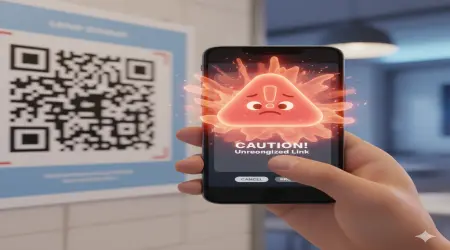
Phishing attempts don't target random addresses; they target ones that show up often, because familiarity is what makes a fake password-reset email or a fake shipping notice convincing. The less your real address circulates on sites you don't fully trust, the smaller the pool of places a convincing phishing attempt could plausibly come from.
Using a disposable address for lower-trust signups keeps your primary inbox comparatively quiet, which makes it easier to notice when something in it looks off. It's not a substitute for the basics — a unique password and two-factor authentication on your real accounts still matter more than any single habit — but it does reduce how often your main address is the thing an attacker is working from. If you want to go deeper, our guide on what phishing is and how to spot it, and our overview of two-factor authentication, are both worth reading alongside this one.
Disposable email compared with your primary email
None of this means one replaces the other — they're built for different jobs. Side by side, the split is clearer:
| Feature | Disposable Email | Primary Email |
|---|---|---|
| Best suited for | One-time or low-trust signups | Ongoing accounts you rely on |
| Spam exposure | Contained to that one address | Can accumulate over years |
| Breach exposure | Isolated if the site is breached | Can expose linked accounts |
| Account recovery | Usually not possible once discarded | Fully supported |
| Long-term communication | Not reliable — expires or is abandoned | Built for this |
| Trust with services | Sometimes blocked by strict signup filters | Generally accepted everywhere |
Disposable Email vs Email Alias vs Secondary Email: Which One Should You Use?
Disposable email isn't the only way to keep your real inbox out of a signup form. Two other options come up constantly — email aliases and a plain second email account — and each solves a slightly different problem. Here's how they actually compare:
| Disposable Email | Email Alias | Secondary Email Account | |
|---|---|---|---|
| Best for | One-time or low-trust signups | Ongoing accounts you want to filter or unsubscribe from easily | A separate identity you check regularly but keep apart from your main one |
| Privacy level | Highest — no account, no name attached | Medium — tied to your real account, but hides your main address from the sender | Lower — still a full, traceable account in your name |
| Account recovery | Not possible once discarded | Usually recoverable through your main account | Fully supported like any normal email account |
| Expiration | Minutes to a few days, by design | Permanent unless you delete or disable it | Permanent |
| Recommended use cases | Free trials, gated downloads, one-off signups | Newsletters, subscriptions, shopping accounts you might want to keep organized | Freelance work, hobby communities, any semi-permanent separation from your main email |
None of the three is universally better. A disposable address is the right tool when you don't need the account back. An alias is the right tool when you want to keep the account but control what reaches your main inbox. A secondary account is the right tool when you need a stable, separate identity you'll actually return to.
Who Should Use Disposable Email?
Disposable email isn't for everyone in every situation, but a few groups get consistent, practical value out of it:
- Privacy-conscious users — anyone who'd rather not have one email address linked to everything they've ever signed up for.
- Developers testing applications — QA workflows often need multiple throwaway addresses to test signup flows and verification emails without polluting a real inbox.
- People downloading gated content — a disposable address gets past the email wall on a whitepaper or resource without signing up for the marketing list behind it.
- Users testing free trials — evaluating a service honestly, without an inbox full of "don't leave us" emails afterward.
- Newsletter testers — anyone comparing multiple newsletters side by side, or checking what a publication's emails look like before subscribing with a real address.
Common Mistakes People Make With Disposable Email
A few mistakes come up often enough that they're worth calling out directly:
- Using it for accounts that actually matter — banking, work email, or any subscription you'll want to keep is the single most common misstep, since there's usually no way back once the address expires.
- Assuming it means complete anonymity — a disposable address hides your email identity, but it doesn't hide your IP address, payment details, or anything else you enter on the same site.
- Ignoring recovery limitations — signing up for something with a disposable address and only realizing later that a password reset or confirmation email has nowhere to land.
- Using a public inbox for sensitive information — disposable inboxes are often viewable by anyone who knows or guesses the address, so financial details, medical information, or anything private should never pass through one.
When not to use a disposable email
Everything above assumes the account itself is disposable too — something you'd be fine losing. That's not true of most of your online life, and there are situations where a temporary address actively works against you.
- Banking, tax, and government accounts, where identity verification and long-term access matter more than privacy
- Any account you'll need to recover later — most disposable inboxes can't receive a password reset once the address has expired
- Long-term professional or personal communication, where people need a stable way to reach you
- Services involving ongoing support, warranty claims, or delivery updates tied to a real, checkable identity
It's also worth separating privacy from evasion. Using disposable email to protect your inbox is different from using it to repeatedly get around something a service is entitled to enforce — claiming a one-per-person trial more than once, posting reviews under different identities, or dodging a ban. That line matters enough that we've written about it at length: we asked a privacy ethicist whether using temp mail is always the right call, and the honest answer is no. Protecting your inbox is a legitimate use. Convincing a service you're several different people isn't.
For the accounts that do stay on your real email long-term, a strong, unique password paired with two-factor authentication does more for their security than any inbox habit. Our guide to building strong passwords covers what actually holds up against modern cracking attempts.
How disposable email tools work
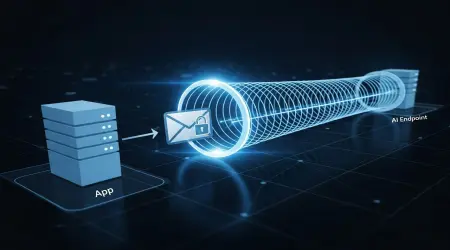
The mechanics are simpler than they look. A service like TempMailMaster.io generates an address on a domain it controls, and any mail sent to that address lands in a shared inbox visible right on the page — no account, no password, nothing to set up on your end.
A few things follow from that setup, worth knowing before you rely on one:
- Most disposable inboxes only receive mail; they generally can't send
- The address and its messages usually expire after a set window — sometimes minutes, sometimes longer
- Because the inbox isn't private in the traditional sense, it should never be used for anything sensitive — financial details, medical information, or anything you wouldn't want visible if the link were guessed
For the fuller picture of what temporary email is and how it fits into a broader privacy routine, our guide on how temporary email works covers it in more depth.
FAQ
Is a disposable email safe to use?
It's safe for what it's designed for: receiving low-stakes mail from accounts you don't need long-term. It isn't private in the sense of encrypted or access-controlled, so treat anything sent to it as something you wouldn't mind a stranger seeing.
Can I use a disposable email for online shopping?
For a one-time purchase where you don't need order updates or easy returns, it can work — but you'll likely lose access to shipping notifications and any account recovery. For anything you might reference later, your real email is the safer choice.
Will I lose access to something important if the address expires?
Yes, usually with no way to recover it. Treat every disposable address as fully temporary from the moment you create it. If there's any chance you'll need that account again, don't use one.
Can websites tell I'm using a disposable email?
Many can. A large share of signup forms check incoming addresses against lists of known disposable domains and block or flag them, which is why some services won't accept a temp address at all.
Is it against a website's terms of service to use a temporary email?
It depends on the service. Some explicitly disallow it; most don't address it at all. Using one to protect your inbox is different from using one to repeatedly bypass a rule a service is entitled to enforce, like a one-trial-per-person limit.
Are disposable emails legal?
Yes — creating and using a disposable email address is legal in virtually every jurisdiction. What can cross a line is what you do with it: protecting your privacy on a low-trust signup is different from repeatedly bypassing a service's terms, like claiming a one-per-person trial more than once or evading a ban. The tool itself isn't the issue; how it's used is.
Can I use temporary email for verification codes?
For many low-stakes signups, yes — the code arrives in the disposable inbox like any other email. But a meaningful share of services now block known disposable domains specifically to prevent this, so it won't always work. And even when it does, avoid using one for verification on any account you'll need to recover or trust long-term — once the address expires, so does your way back in.
The bottom line
A disposable email isn't a privacy upgrade you install once and forget — it's a tool you reach for in specific moments: the newsletter you're not sure about, the trial you want to actually evaluate, the PDF that isn't worth a marketing funnel. Used that way, it does something narrower and more useful than "protecting your privacy" in the abstract: it keeps the accounts you don't care about from ever touching the ones you do.
The accounts that matter — banking, work, anything tied to your real identity — still deserve your real email, a strong unique password, and two-factor authentication. Disposable email isn't a replacement for any of that. It's what keeps everything else from becoming their problem too.
References
Federal Trade Commission — Data Breach Consumer Guidance: consumer.ftc.gov/search-terms/data-breach
Cybersecurity and Infrastructure Security Agency (CISA) — Phishing Guidance: Stopping the Attack Cycle at Phase One: cisa.gov/resources-tools/resources/phishing-guidance-stopping-attack-cycle-phase-one
National Institute of Standards and Technology (NIST) — Digital Identity Guidelines (SP 800-63): nist.gov/identity-access-management/projects/nist-special-publication-800-63-digital-identity-guidelines
Electronic Frontier Foundation (EFF) — Privacy: eff.org/issues/privacy