
How to Secure Your Smart Home Devices (Alexa, Google Home, etc.)
The Complete Family Identity Theft Protection Checklist (2025 Edition)
I. Introduction: Why Identity Theft is a Family Epidemic in 2025
Identity theft has transcended its status as a minor annoyance to become an epidemic of organized, high-volume financial crime that targets the core stability of the modern family unit. The sheer magnitude of this threat demands immediate attention and a complete overhaul of traditional security protocols. Data collected in 2024 revealed that the Federal Trade Commission (FTC) received over 1.1 million identity theft reports, signaling a pervasive problem across the United States.1 More alarming than the volume of reports is the financial escalation: total reported losses associated with fraud skyrocketed nearly 23% in 2024, reaching a staggering $12.7 billion.1
This massive increase in total financial loss, despite a slight drop in the median loss per reported case, points toward a critical shift in criminal methodology. It suggests that fraudsters are moving away from simple, high-frequency, low-value transactions toward highly organized, sustained, and high-value fraud schemes. These sophisticated operations often include large-scale account takeovers and the nurturing of synthetic identities, which can take months or years to execute but yield exponentially larger financial payloads.
The family unit represents a unique vulnerability. Shared personal identifiable information (PII), often stored across interconnected devices and networks, means the compromise of a single Social Security number (SSN) can enable fraud that impacts the entire household for years. As digital life becomes synonymous with daily life, security strategies that were effective even two years ago are now obsolete. The 2025 mandate for protection dictates that security must shift dramatically from reactive monitoring of existing accounts to the proactive isolation and fortification of all personal data touchpoints. This proactive stance is essential to combat the rising tide of AI-driven deception and invisible synthetic fraud.
II. The Evolving Threat Landscape: New Risks for the Modern Family
The core challenge facing identity protection in 2025 is that criminal sophistication has surpassed traditional security measures. The threats are no longer just phishing emails and dumpster diving; they are technologically advanced, utilizing machine learning to bypass human and algorithmic defenses.
A. AI-Powered Deception: Deepfakes and the Crisis of Verification
The rise of generative Artificial Intelligence (AI) has placed tools capable of high-fidelity deception into the hands of cybercriminals. This marks a profound crisis in digital verification, as the ability to trust what one sees or hears online is rapidly diminishing.
The sheer volume of deepfake content is escalating exponentially. Projections indicate that the number of deepfake files will surge from approximately 500,000 in 2023 to an anticipated 8 million in 2025, an astonishing projected annual increase of 900%.3 This increase translates directly into a higher risk of targeted fraud. Fraud attempts utilizing these tools spiked by 3,000% in 2023, and criminals are actively employing deepfakes to bypass verification checks, with a 3,000% rise in attempts detected in 2024 alone.3 On average, a new deepfake attempt occurs every five minutes, illustrating the industrial scale of this fraud.4
The alarming effectiveness of these deepfakes renders human detection unreliable. Human accuracy rates for spotting high-quality deepfake video content stand at a mere 24.5%.3 This data reveals that nearly three out of four highly convincing video deepfakes can fool a human observer, making sole reliance on visual or auditory confirmation fundamentally flawed. Attackers exploit this by utilizing deepfakes in spear-phishing and social engineering attacks, cloning the voices of executives or family members to manipulate victims into unauthorized transfers or revealing credentials.5
Furthermore, the vulnerability is not uniform. Geographically, North America saw a staggering 1,740% growth in deepfake fraud between 2022 and 2023, confirming that US and Canadian families are primary targets for identity harvesting and exploitation.3 Alongside synthetic media, digital document forgeries have also increased by 244% year-over-year in 2024, accounting for 57% of all document fraud.3
This analysis suggests that the primary threat has shifted from merely the theft of PII to the compromise of PII validation. When deepfakes and high-quality forgeries enable attackers to overcome traditional biometric, voice, or document verification systems, the integrity of Know Your Customer (KYC) processes is fundamentally threatened. The security strategy must therefore adapt to distrust visual and auditory cues and instead rely on non-replicable, layered authentication methods.
Table 1: Deepfake Identity Fraud Projections (2025 Context)
B. Synthetic Identity Fraud (SIF): The Invisible Threat
Synthetic Identity Fraud (SIF) represents one of the fastest-growing and hardest-to-detect forms of financial crime, largely because it does not require the complete theft of an existing person’s active identity. Instead, SIF involves creating a new, fictitious persona by combining a real person’s information, most commonly a stolen SSN, with fabricated details such as a fake name, date of birth, or mailing address.7
This fraud is notoriously difficult to detect because it often does not map to a clear victim who would receive fraud alerts or complain about unauthorized activity, unlike traditional identity theft.8 Consequently, financial institutions frequently miscategorize the resulting losses as "bad debt" rather than criminal fraud.
The most common victims of SIF are strategically chosen populations who are statistically less likely to monitor their credit files: children, the elderly, and homeless individuals.7 For children, whose SSNs are often clean and unused, the fraudster can "nurture" the synthetic identity over time, applying for small credit lines to establish trust and generate a favorable credit profile. This patient approach culminates in a "bust out" scenario, where the fraudster executes high-value transactions or loans and then disappears, leaving the victim’s legitimate SSN tied to massive debt.9
This method constitutes a strategic exploitation of administrative neglect. SIF thrives because the victims are typically not using or monitoring their credit. The resulting latency allows the synthetic persona to age and establish credibility, which is why proactive credit monitoring and mandatory freezes for vulnerable family members are absolutely essential, rather than optional precautions.
C. The Internet of Thieves (IoT): Securing Your Smart Home
The proliferation of Internet of Things (IoT) devices in the modern home—from smart thermostats and lighting systems to security cameras and virtual assistants—has introduced numerous potential attack vectors. Each internet-enabled device functions as an entry point for cybercriminals, providing a vulnerability that can be exploited to gain unauthorized access to personal data and the wider home network.10
The vulnerability often stems from manufacturers rushing products to market without robust security measures or failing to support them with long-term updates. Instances such as the Federal Trade Commission revealing how Ring's subpar security allowed insiders to access and share private customer videos demonstrate the profound risk posed by manufacturer negligence.10
Hackers exploit these flaws not just for data theft but also for the loss of physical privacy. A compromised surveillance or audio device allows intruders to watch and listen, gathering intelligence about the family’s routines, habits, and financial dealings.11 This passively gathered PII can then be utilized to move laterally across the home network, infiltrating more sensitive devices like laptops or phones where financial information is stored.10
Crucially, data harvested from insecure smart home devices, including voice prints and routine information, can be used to feed machine learning models. This enables the creation of highly personalized and convincing deepfakes, which are then deployed in targeted social engineering attacks, completing a sophisticated cycle of technology-enabled intrusion and fraud. Thinking of every internet-enabled node in the home as a potential entry point underscores the severity of the problem.
III. Family Protection Checklist: Digital Fortification
Establishing a robust digital defense system requires more than simple diligence; it demands the implementation of enterprise-grade security tools and protocols accessible to the average family.
A. Password and Credential Management
The foundation of any security plan rests on credential strength. Basic passwords are no longer adequate against modern brute-force attacks. Passwords must be a minimum of eight characters in length and employ complexity, combining uppercase and lowercase letters, numbers, and symbols.12 Never should common codes, birthdates, or, most critically, a Social Security number be used as a password.12
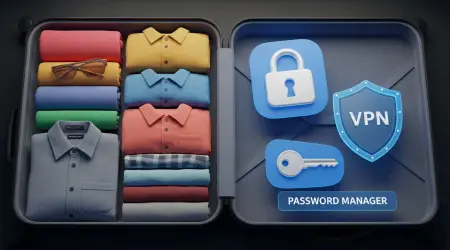
However, requiring family members to generate and memorize unique, complex passwords for dozens of accounts, and demanding they be changed every 60 days, is impractical for human compliance.12 The only viable solution is the adoption of a reputable, family-oriented password manager. These tools (such as 1Password or Dashlane) provide end-to-end encryption, securely managing and storing credentials, and are vital for protecting sensitive family documents—financial records, legal agreements, and birth certificates—in encrypted digital vaults.14 The password manager functions as the enabling technology that makes compliance with modern security standards feasible.
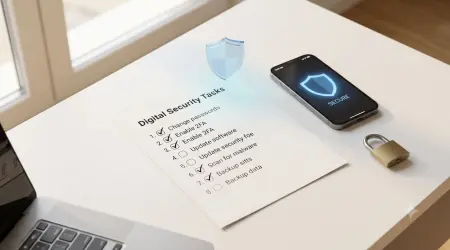
This digital fortification must be paired with Multi-Factor Authentication (MFA). MFA adds a crucial second layer of verification, typically falling into three categories: something you know (password), something you have (device/key), and something you are (biometrics).15
It is imperative that families move away from SMS-based codes for MFA, as these are vulnerable to SIM swap fraud. SIM swap fraud involves criminals tricking a mobile provider into porting a victim's number to a SIM card the criminal controls, thereby redirecting all calls and texts, including MFA verification codes.16 Given that SIM swap fraud increased by over 1,000% in recent years, relying solely on SMS negates the security benefit for high-value accounts.16 Instead, prioritization must be given to more secure methods, such as authenticator apps (which generate time-based codes) or dedicated hardware security keys.15 Furthermore, establishing emergency access protocols within the password manager is a critical administrative step to ensure family members do not get permanently locked out of essential accounts during a crisis.14
B. Email Privacy and Phishing Defense
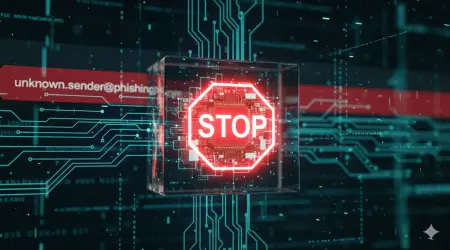
Email remains the primary vector for identity theft, particularly through phishing attacks. Family members must be trained to recognize the signs of phishing, especially messages that incorporate a false sense of urgency, threats, or claims of immediate penalties to claim a reward or avoid a catastrophe.17
The fundamental rule is to never provide personal information in response to an unsolicited request or click on an embedded link.18 If a contact appears legitimate (e.g., claiming to be a bank or government agency), the recipient must independently contact the institution using a verified phone number or website, not the contact information provided in the suspicious email.18
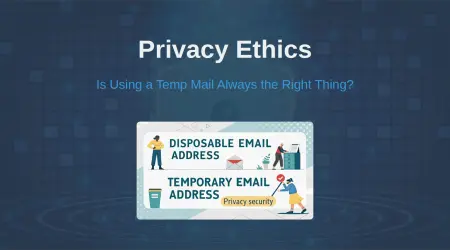
To further mitigate this risk, families should integrate the use of Disposable Email Addresses (DEAs). DEAs are temporary, throw-away email addresses tied to nonexistent inboxes that expire after a set time.19 By using a DEA for non-essential sign-ups, newsletters, or trial services, users can obtain the required access without revealing their permanent, primary contact information.20
This tactic provides a crucial layer of PII isolation. If a low-value website suffers a data breach, only the temporary address is exposed, reducing the risk of spam and subsequent targeted phishing attempts that leverage breached data.20 This is particularly relevant in the age of AI, where highly personalized and convincing phishing campaigns rely on large troves of linked PII. By strategically minimizing the exposure of the primary email address through DEAs, the attack surface for sophisticated AI phishing and social engineering is significantly reduced.
[For more information on reducing phishing risk through email privacy, consult resources on using disposable addresses for sign-ups and spam prevention.]
Finally, security extends to physical documents. To prevent "dumpster diving," all sensitive documents intended for disposal—including bank statements, receipts, utility bills, ATM receipts, and pre-approved credit offers—must be thoroughly shredded.12 Physical copies of sensitive PII, such as SSN cards and tax records, should never be carried on one's person and must be secured in a locked location at home.13
C. IoT and Home Network Security
Securing the smart home requires treating the network as a multi-layered defense structure. The first step is fortifying the router by immediately changing the default password and employing strong encryption (WPA3).
The most critical step in minimizing vulnerability is network segmentation. This involves creating a segregated "Guest" or "IoT" network specifically for all smart devices, cameras, speakers, and other low-security nodes. This segregation prevents attackers, should they compromise a vulnerable IoT device, from moving laterally to infiltrate primary computing devices (laptops, desktops, smartphones) where sensitive financial data and credentials are kept.
Furthermore, default credentials on every new IoT device must be changed immediately upon setup, as manufacturer defaults are notoriously weak.10 Any device that is old, unsupported, or no longer receiving manufacturer security updates should be retired immediately, as it poses an unacceptable risk of becoming an open backdoor into the family network.
IV. Family Protection Checklist: Safeguarding Vulnerable Members
Identity thieves systematically target family members who are least likely to monitor their personal information, specifically children and the elderly. Targeted measures are required for these groups.
A. Protecting Children from Identity Theft
Children are high-value targets because their SSNs are clean and unused, making them ideal candidates for Synthetic Identity Fraud. In 2024, the FTC received over 21,000 identity theft reports involving victims aged 19 and under.21
The long-term consequences of childhood identity theft are catastrophic because the fraud often remains undiscovered until the victim reaches early adulthood. At that point, the victim may face denied student loans, high insurance rates, difficulty renting an apartment, and a damaged credit score resulting from years of accumulated fraudulent debt.22
The single most powerful preventative measure a parent can take is placing a security freeze (or credit freeze) on a minor’s credit file. Since minors typically do not have a credit history, this freeze creates a record that prevents a credit file from being generated in the child’s name, halting the initial stages of SIF.7 This action must be carried out separately with all three major credit bureaus (Experian, TransUnion, and Equifax).24
It is important to understand the distinction between a credit freeze and a credit lock. A credit freeze is mandated by federal law, is free of charge, and remains indefinitely until the parent or guardian chooses to lift it.25 A credit lock, conversely, is a proprietary service offered by the credit bureaus, may require fees, and does not carry the same legal protection.26 The freeze is the recommended standard of defense.
Successfully implementing the child credit freeze is not only a protection mechanism but also enforces family data governance. The process requires parents to locate and secure high-value PII for both themselves and the child, compelling the family to verify that these crucial documents are stored safely and correctly.
Table 2: Essential Documents for Placing a Child's Credit Freeze
B. Parental Control and Online Safety Education
Protection extends beyond credit files into the digital behavior of minors. Discussions about online safety must be continuous, open, and age-appropriate, reflecting that for modern children, online life and offline life are often indistinguishable.28
For all age groups, core rules must be enforced:
- PII Restriction: Children should never reveal personal information, such as their home address, phone number, school name, or location.29
- Credential Security: Only a screen name should be used, and passwords must never be shared, even with close friends.30
- Digital Permanence: Children must understand that "images are forever." Once a picture is shared, consent is lost, and the content can be manipulated or used against them.29
For older children and teenagers, the focus shifts to recognizing stranger danger in modern platforms, including multiplayer gaming worlds, social media direct messages, and chat rooms, where criminals actively operate.31 To facilitate proactive monitoring, devices should be kept in communal areas of the home, such as the kitchen or lounge, and internet usage should be supervised.33 Most importantly, parents must encourage a "no judgment" policy, reassuring children that if they encounter anything disturbing or realize they have made a mistake online, they can report it without fear of anger or retribution.29
C. Protecting Elderly Relatives
The elderly demographic is also statistically high-risk; individuals aged 61 and over account for roughly one quarter of all identity fraud cases reported.16 This population is highly targeted by impostor scams, where criminals pose as government entities (like the IRS or Medicare) or as distressed family members, often leveraging deepfake voice cloning (vishing) to create highly convincing solicitations.1 They are also high-risk victims for SIF.7
Safeguarding elderly relatives requires simplification of technology paired with rigorous monitoring. Relatives should:
- Be educated specifically on the threats of urgent, unsolicited calls asking for transfers or PII verification.
- Establish supervised or delegated credit monitoring and fraud alerts.
- Where possible, assist them in setting up MFA on financial and email accounts. If digital authenticator apps are confusing, simpler hardware security keys or biometric verification may be preferable to insecure SMS codes.15
- Ensure critical documents and SSN cards are secured, and they do not carry these items unnecessarily.
V. The Worst-Case Scenario: Immediate Recovery Checklist
If identity theft is suspected, minimizing damage requires immediate, systematic action. The goal in the critical 48 hours following discovery is to stop the bleed and generate the official documentation needed for long-term recovery.
A. Initial Triage: The Critical 48 Hours
Recovery follows a strict administrative process guided by federal protocols.
Step 1: Contact Fraudulent Companies/Creditors
The initial contact must be made with the fraud department of every company or financial institution where unauthorized activity is known to have occurred.35 The victim must explain that identity theft has taken place and request that the fraudulent accounts be immediately closed or frozen to prevent further charges.35 Concurrently, all logins, passwords, and PINs for existing, legitimate accounts must be changed, even if they were not directly affected, to prevent further account takeover attempts.
Step 2: Place a Fraud Alert
To immediately prevent criminals from opening new lines of credit, the victim must contact one of the three major credit bureaus (Equifax, Experian, or TransUnion) and request an initial one-year fraud alert.36 The bureau receiving the request is federally obligated to notify the other two. This alert requires lenders to take extra steps to verify identity before granting credit, effectively pausing new financial activity in the victim’s name.
B. Establishing Your Recovery File
Once immediate financial damage is contained, the administrative process begins to repair the credit history and remove liability. This phase is entirely dependent on generating the correct documentation.
Step 3: Report Identity Theft to the FTC
The victim must file a detailed report online at the official IdentityTheft.gov website.37 This site provides a personal recovery plan, including pre-filled letters and a checklist. The most crucial action here is to
immediately print and save the FTC Identity Theft Affidavit/Report.35 This official document serves as the cornerstone for disputing fraudulent charges with creditors and credit bureaus.39
Step 4: File a Police Report (If Applicable)
Filing a police report with the local police department is a critical step, especially if the victim knows the identity of the thief or requires undeniable proof for major creditors.40 When filing, the victim must present a copy of the FTC Identity Theft Report, government-issued photo ID, proof of address, and any tangible evidence of the theft (e.g., fraudulent bills or IRS notices).39
Step 5: Correct Credit Reports
Armed with the FTC Identity Theft Report, the victim must write to all three credit bureaus—Experian, TransUnion, and Equifax—and request that the fraudulent information be blocked or removed from the credit file.39
This entire recovery process relies on documentation control. The FTC Identity Theft Report, the Police Report, and subsequent letters from creditors confirming non-liability are the legal tools needed to shift the burden of proof and remove fraudulent debt from the victim's name.39 The speed of initiating the fraud alert is vital for stopping ongoing financial damage, while the subsequent documentation is essential for the laborious, long-term credit repair process.
Table 3: Immediate 4-Step Identity Theft Recovery Checklist (FTC Guidance)
VI. Valuable Frequently Asked Questions
Q1: What is the difference between synthetic identity fraud and traditional identity theft?
Traditional identity theft involves the unauthorized use of an existing, active person’s complete identity, often to access existing funds or open accounts in their name. Conversely, Synthetic Identity Fraud (SIF) is a more nuanced process that fabricates an entirely new persona. SIF combines legitimate fragments of PII (such as a child’s SSN) with invented details (fake name, address) to create a new credit file.7 SIF is harder to detect because there is no immediate victim to report the crime, and financial institutions frequently mistake the fraud for simple bad debt, allowing the synthetic persona to be nurtured over time before a high-value theft is executed.9
Q2: Should I use a credit freeze or a credit lock for my children?
Families should consistently opt for a credit freeze, also known as a security freeze, particularly for minors. Credit freezes are mandated under federal law, are entirely free of charge, and remain in place indefinitely until the consumer chooses to lift them.25 A credit lock, while offering instant activation and deactivation, is a proprietary service provided by credit bureaus, may involve recurring fees, and lacks the full legal backing and consumer rights associated with a freeze.26 The freeze provides superior, long-term, no-cost protection for vulnerable populations.
Q3: How can disposable email addresses help protect against AI phishing scams?
AI-driven phishing attacks are becoming highly sophisticated because they leverage large pools of breached data to craft messages that are personalized and convincing. By using a Disposable Email Address (DEA) for non-essential websites, newsletters, or sign-ups, individuals minimize the risk of their primary, permanent email being exposed in a third-party data breach.20 If a DEA is compromised, the primary inbox remains secure, reducing the volume of incoming spam and significantly lowering the probability of falling victim to a targeted, highly convincing AI-generated phishing or social engineering attempt.20
Q4: How long does it take for child identity theft to be discovered?
Child identity theft often remains undiscovered for many years, sometimes for more than a decade. Because minors typically do not use credit, the fraudulent activity goes unreported until the victim reaches early adulthood (often between the ages of 18 and 21) and attempts to apply for their first student loan, car loan, credit card, or apartment rental.22 By the time the theft is uncovered, the victim’s financial future may be severely impacted by years of accumulated fraudulent debt and a heavily damaged credit profile.
VII. Conclusion: A Commitment to Continuous Vigilance
The threat landscape in 2025 dictates that identity protection is no longer a static process but a fluid commitment to continuous adaptation and layered vigilance. The explosive growth of AI deepfakes and the insidious rise of Synthetic Identity Fraud require defenses that fundamentally change behavior, moving beyond simple password management to the strategic isolation of personal data.
Successful family protection rests on three non-negotiable pillars: Comprehensive Digital Fortification (through mandatory MFA, robust password management, and PII isolation via disposable email addresses); Proactive Protection for Vulnerable Relatives (mandating credit freezes for children and supervised digital protocols for the elderly); and Administrative Preparedness (ensuring the immediate availability of the FTC Identity Theft Report and associated documentation for rapid recovery).
Ultimately, the most sophisticated technological defense is inert without human awareness. Continuous, open dialogue about digital safety, stranger danger in modern platforms, and recognizing the signs of advanced phishing and vishing are the most powerful defense mechanisms a family can deploy against the evolving, organized threats of the digital age.
Written by Arslan – a digital privacy advocate and tech writer/Author focused on helping users take control of their inbox and online security with simple, effective strategies.